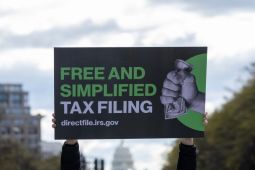
A view of an IRS Direct File promotional sign at the Internal Revenue Service Building on April 5, 2024 in Washington, D.C. (Photo by Tasos Katopodis/Getty Images for Economic Security Project)
A Treasury watchdog report found that the tax agency projected $61.2 million in costs for the free electronic filing tool in fiscal 2025 but spent just $16.2…
People use IRS Direct File at the Internal Revenue Service Building on April 05, 2024 in Washington, DC. (Photo by Tasos Katopodis/Getty Images for Economic Security Project)
The legislation would make the free electronic filling tool a permanent program and bar the Treasury secretary from sabotaging it through other agreements.
A sign marks the location of the Office of Personnel Management headquarters building on Jan. 29, 2025, in Washington, D.C. (Photo by J. David Ake/Getty Images)
The anonymous survey emphasizes the high “initial cost to the federal government” of an IRS-run tool vs. programs “paid and operated directly by a tax preparation company.”
After building the IRS’s free electronic filing tool, the Economic Security Project’s Future of Tax Filing fellows are writing a playbook for it to “come back someday”…
A person promotes the Direct File pilot program at the Internal Revenue Service building on April 5, 2024 in Washington, D.C. (Photo by Tasos Katopodis/Getty Images for Economic Security Project)
Erin M. Collins, National Taxpayer Advocate for the Taxpayer Advocate Service, attends a House Committee on Oversight and Reform hearing on Oct. 7, 2020 in Washington, D.C. (Photo by Toni L. Sandys/Getty Images)
A person promotes the Direct File pilot program at the Internal Revenue Service building on April 5, 2024 in Washington, D.C. (Photo by Tasos Katopodis/Getty Images for Economic Security Project)
A GOP policy rider zeroes out funding for government-run tax preparation software, a week after the agency said its free electronic filing program would be made permanent.