- Sponsored
How AI embedded in pre-certified applications can fast-track modernization
Federal agencies are under immense pressure to modernize legacy IT environments and the processes they support. Artificial intelligence offers a new way to bridge siloed systems and automate mundane computing tasks. Yet, agencies continue to face delays in adopting AI, in part because complying with federal security and regulatory requirements remains so complex.
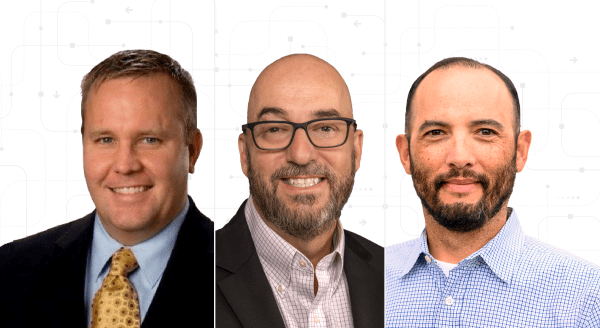
Hunter Downey, National Vice President of Cloud Solutions and AI at SAP National Security Services (SAP NS2), argues that a faster, more effective approach to AI adoption could help agencies reduce those barriers — and improve security simultaneously. Rather than treating regulatory compliance as an unavoidable bottleneck for AI deployment, federal agencies should take a closer look at AI tools embedded in the software architecture of pre-certified enterprise software applications that run on government-approved sovereign cloud platforms.
“From a cloud provider perspective… security is not an adjective. It’s something that we have to do. AI is different,” he said during a recent podcast interview with FedScoop. Downey said it’s important to distinguish between generative AI — how a user interacts with technology to get information more quickly — and agentic AI, which performs a prescribed task. “What’s most important is [making] sure the connections to where the data is stored are secure, whether you’re a user or a system-to-system connection,” he explained.
Transitioning from enterprise software running on traditional commercial cloud architectures to U.S.-based, government-authorized platforms offers enhanced national security and greater fiscal sustainability, he argued.
“Five to 10 years ago, the conversation of who’s managing the cloud systems was not paramount. But now it matters. We need to make sure that there’s transparency and resources [agencies] can trust for mission-critical…data, and the people that support it,” he said.
During the interview, Downey urged agency leaders to consider focusing greater attention on:
- Reframing compliance as customer specifications. By specifying that providers must deliver applications on platforms that meet strict federal standards, agencies benefit from established innovations while shifting the burden of security compliance to providers, allowing agencies to move faster.
- Eliminating data routing vulnerabilities. Commercial cloud models may frequently use international data centers, which can route backups or engineering support through foreign jurisdictions. U.S. cloud deployment ensures that all data and software naturally reside within the continental U.S., are managed exclusively by vetted U.S. citizens, and are safeguarded end-to-end under domestic legal enforcement.
- Harnessing generative and agentic AI for decision advantage. While generative AI streamlines information retrieval, agentic AI enables autonomous analysis and execution. That requires secure, auditable data connections. Rather than evaluating AI success solely by administrative time saved, agencies should focus more on whether AI delivers accurate data to enable faster mission-critical decisions.
Relying on AI embedded directly inside core enterprise applications helps ensure that government workers receive accurate, uncompromised intelligence without switching tools or risking sensitive data leaks, Downey said. It also promotes secure data connections designed to protect sensitive queries from unauthorized exposure, ensuring that executives can trust AI-generated analysis during high-consequence operational events.
Listen to the full podcast conversation on how leveraging pre-certified enterprise applications can fast-track AI adoption.
This article and the original podcast interview were produced by Scoop News Group for FedScoop and sponsored by SAP NS2.