Energy Department unveils 24 AI research partners in Genesis Mission push
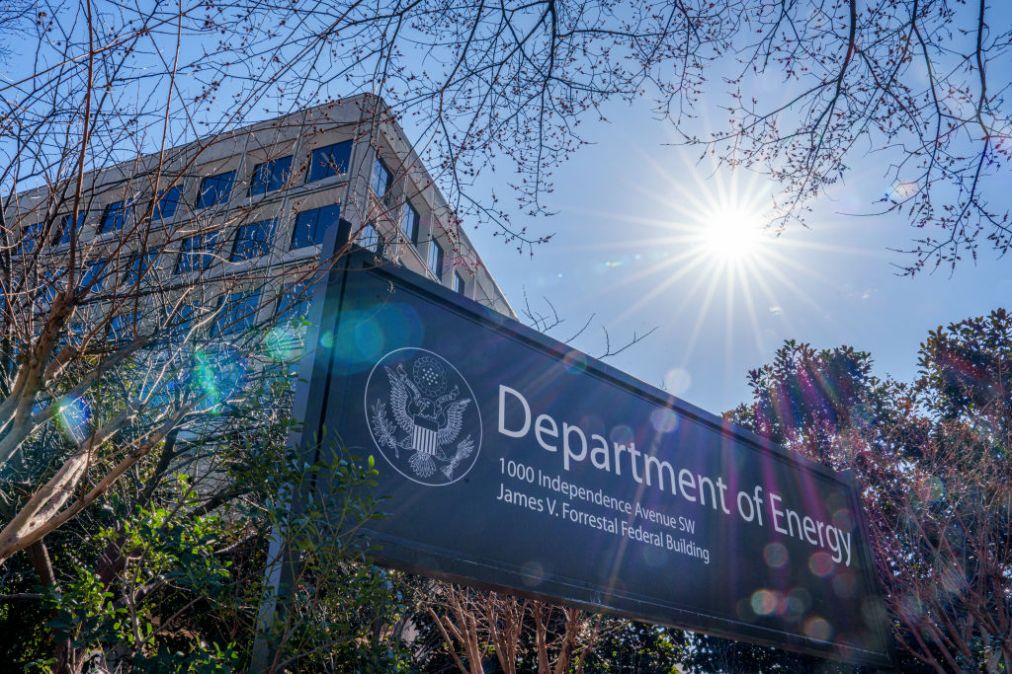
The Department of Energy has forged partnerships to fuel its Genesis Mission goals with 24 technology companies, including cloud hyperscalers Google, Microsoft and Amazon Web Services and artificial intelligence powers OpenAI and Anthropic.
“These agreements help advance President Trump’s Executive Order to build the national AI platform for scientific discovery and uplift the entire U.S. R&D ecosystem,” Darío Gil, the DOE’s under secretary for science and director of the Genesis Mission, said in the Thursday announcement.
The 24 AI partners signed memorandums of understanding, and many attended a White House roundtable or Hill meetings Thursday.
“OpenAI’s VP of Science Kevin Weil met with Department of Energy officials because we want to deepen our collaboration with the national labs and enable more researchers to use frontier AI models alongside their existing tools,” an OpenAI spokesperson told FedScoop. “The result will be faster progress across biology, energy, and the physical sciences, and a clearer path for turning AI-driven discovery into an advantage for U.S. competitiveness.”
The plethora of partnerships is the latest development in a string of announcements in recent weeks tied to the Genesis Mission, which launched via a November executive order. The department tabbed $320 million to fuel the AI-related goals last week, and Gil emphasized speed and a sense of urgency when he appeared before Congress the same day.
But to move fast, the federal government can’t do it alone. Collaboration between public and private entities is a cornerstone of the AI strategy as the U.S. looks to out-innovate foreign adversaries and improve scientific efficiency domestically.
Some of the 24 AI partners were officially brought on board, in part, due to having active projects with the DOE.
AWS, for example, is working with the Idaho National Laboratory in developing AI tools to reduce costs and speed up development timelines. OpenAI is also familiar with DOE’s national labs, operating across the system to integrate AI models into research settings.
Other organizations, such as Genesis Mission collaborator Radical AI, are eager to get in on the action, despite not having active projects with the department.
The New York-based AI company “went back and forth” to customize the memorandum of understanding it signed to hone in on its expertise building a closed loop system, according to CEO Joseph Krause. The company’s lab features AI- and robotic-powered hypotheses, research and analysis that captures data throughout experiments that is then used to feed the innovation loop.
“There is a focus on execution,” Krause, who attended the White House roundtable Thursday, told FedScoop. “Ideas are good … but it’s about putting things in motion and executing and that was something we discussed today.”