Energy Department to present early iteration of Genesis Mission platform this year
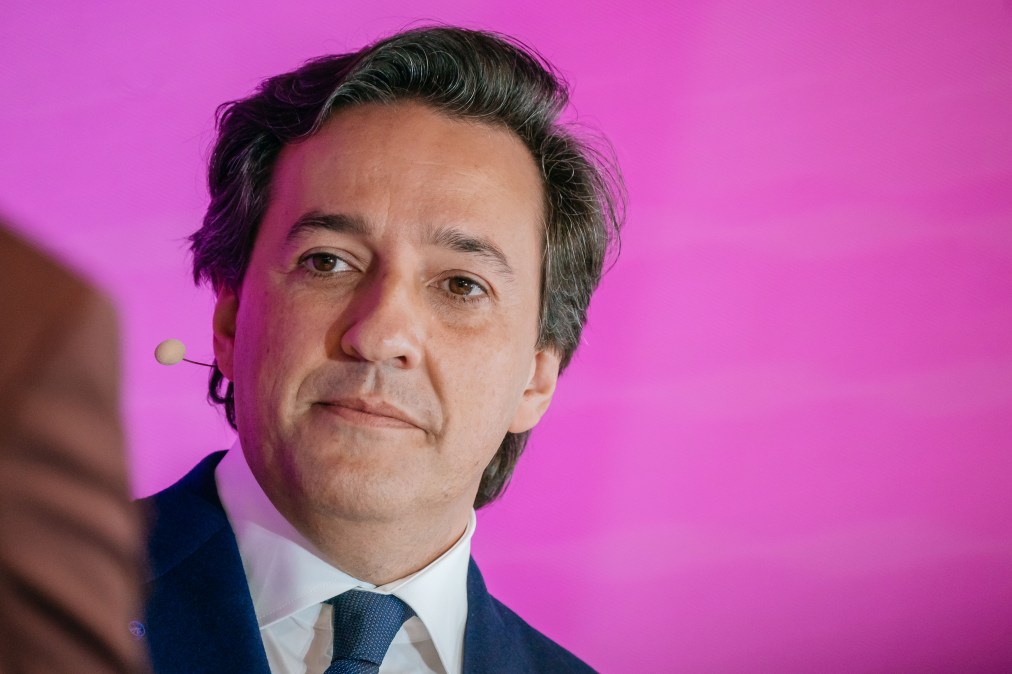
The Department of Energy is rapidly building out multidisciplinary teams to support the Genesis Mission as it prepares to unveil a minimum viable product later this year, according to a senior agency official. The format for the demonstration is to be determined, but progress is palpable.
“We’re going to show quite a lot of results this year,” Darío Gil, DOE’s under secretary for science and director of the Genesis Mission, said in an interview with FedScoop. “We’re going to show results on our progress of building AI supercomputers … the software and the agentic framework.”
The agency also plans to showcase the efforts behind the data curation used to train “next generation” AI and the results tied to the application of AI in science and engineering, he added.
The Genesis Mission launched in November 2025 by way of an executive order that tasked the Energy Department with leading a national, coordinated effort to accelerate innovation and discovery with the latest advancements in AI, quantum and high-performance computing. As part of the initiative, the agency is working to build an integrated platform that draws on federal scientific datasets and expertise from public and private sectors.
A demonstration of the Genesis platform’s initial capabilities is required by mid-year, according to the deadlines outlined in the presidential directive. Even sooner — by the end of March — the Energy secretary will need to lay out plans for a risk-based cybersecurity strategy that will protect the datasets powering the platform.
“We know how capable AI-driven cyberattacks will be, and that’s why from day one in everything that we do, we have a red-team, blue-team element to it,” Gil said. “In the demos that the teams were showing me [last Thursday], it was already a built-in thing.”
The teams simulate AI attacks to test defenses, then they iterate based on lessons learned.
“We’re going to use the most powerful AI network to attack ourselves, and we’re going to use the most powerful AI to defend ourselves,” Gil said.
The teams are also thinking through security broadly, from information sharing to counterintelligence.
Looking ahead, Gil wants to quickly assemble teams of stakeholders from the national labs, academia, tech industry and philanthropic organizations. These teams will be informed by responses to the Energy Department’s request for information that closes next week.
As the second quarter grows closer, Gil expects there will be updates on the agency’s physical infrastructure progress.
“There are thematic, big milestones by month, but they tend to be more than one thing,” Gil said. “Because we have to keep executing while still expanding the pipeline.”
The role of AI
AI is a big part of the Genesis Mission, but it’s not everything.
“Sometimes it’s overly centric on the AI,” Gil said of coverage and discussion of the Genesis Mission. “The part that people don’t appreciate is that it’s AI for something — for science, for engineering. Sometimes it just gets reduced.”
Internally at the Energy Department, Gil said they’ve made it a point to decenter AI from the work and, instead, focus on the specialty of the lab or person or organization.
“We’re not saying, ‘Hey, folks in high energy physics, the most important thing in the world is AI, do AI,’” Gil explained. “What we’re asking is to take AI very seriously as in what it means to your discipline and your area.”
The framing of AI as a solution to a problem, rather than the goal in and of itself, has contributed to higher team levels of enthusiasm and engagement, according to the energy official.
“That’s the reason it has resonated,” Gil said. “Otherwise, people will be like, ‘That’s not my cup of tea.’”
AI, he added, is just the newest instrument that researchers should leverage in their workflows.
“It is a story that puts the science and the engineering first, as the foundation of our mission,” Gil said. “It puts our people, our institutions — meaning our laboratories — first, but we recognize that science and engineering are going to be forever transformed because of what’s unfolding.”
The leadership strategy
As director of the Genesis Mission, Gil said his leadership strategy hinges on four dimensions: mission, team, infrastructure, budget.
“When you list those things like that, they sound obvious and simple,” Gil said. “But my experience is that very often you end up in a situation where those are not in balance.”
The official compared the four-pronged strategy to the legs of a table.
“If one of them is not working, the table is always tilted … you’re always dealing with crisis,” Gil said. “My job as a leader is to make sure that those four elements are solid, and we can build something lasting.”
There is clarity of mission and the work to build out necessary infrastructure is ongoing, according to Gil, who pointed to the initiative’s goal of doubling the productivity and impact of America’s research and development engine via a new platform that brings together advancements in quantum, AI and high-performance computing.
The team is led by DOE and the national labs in partnership with industry, academia and sister agencies. Formal teams are expected to be announced in the coming weeks and will be centered on the 26 challenges identified by the DOE offices. The department announced 24 private industry AI collaborators in December and hosted an event last week for potential partners in academia and philanthropy.
Gil said his role is more to inspire than give step-by-step instructions on how to best execute.
“There’s an element of structure … [but] when we are dealing at the scale of the nation, you just cannot micromanage people,” he said. “The scale of it is too big, too many people, too many options, too many difficulties.”
The Energy Department is keeping its total budget closer to the chest — Gil declined to say how much the Genesis Mission was expected to cost.
“My role, in the end, is to be responsible and accountable for the success of the mission,” Gil said. “I take the responsibility that the president and the secretary entrusted me with incredibly seriously. If we get all those four right, we’re going to be wildly successful.”