A Department Of Homeland Security and Customs and Border Protection sign is displayed at the CBP headquarters on May 18, 2025 in Washington, D.C. (Photo by Kevin Carter/Getty Images)
Department of Homeland Security officers are seen outside of a federal immigration office after a man was fatally shot by U.S. Immigration and Customs Enforcement agents, on July 14, 2026 in Scarborough, Maine. (Photo by Ryan Murphy/Getty Images)
Months past the deadline, the agency has generally filled in its risk management sections for high-impact use cases, but it also walked back some deployment statuses and…
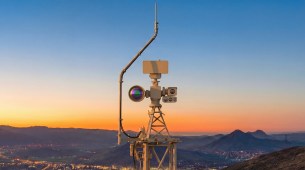
CBP awarded GDIT a $71 million task order for autonomous towers that can track hundreds of targets simultaneously using machine learning and other technologies.
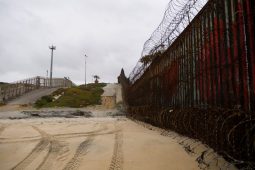
Surveillance towers stand between new sections of the primary and secondary steel bollard-style border wall along the US-Mexico border on May 10, 2021 in San Diego County, California. US-Mexico frontier. (Photo by Patrick T. FALLON / AFP) (Photo by PATRICK T. FALLON/AFP via Getty Images)
The agency has had four vendors pass an "autonomy test," Customs and Border Protection Commissioner Rodney Scott said during a budget hearing Thursday.
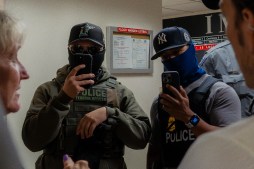
Two ICE agents film the press using smartphones in the hallway outside the immigration court at 26 Federal Plaza in New York on July, 11 2025. (Photo by MADISON SWART/Hans Lucas/AFP via Getty Images)
The watchdog’s analysis of northern border facilities found staffing levels for information systems specialists below targets and no plans for remediation, though the agency is now working…
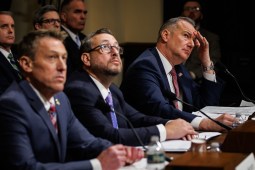
U.S. Customs and Border Protection Commissioner Rodney Scott, director of U.S. Citizenship and Immigration Services Joseph Edlow, and Acting Director of U.S. Immigration and Customs Enforcement Todd Lyons watch a video clip during a House Homeland Security Committee hearing on Feb. 10, 2026 in Washington, DC. The Department of Homeland Security has faced criticism over law enforcement tactics targeting undocumented immigrants and the killing of two U.S. citizens in Minneapolis. (Photo by Samuel Corum/Getty Images)
ICE agents leave a residence after knocking on the door on Jan. 28, 2026 in Minneapolis, Minnesota. The U.S. Department of Homeland Security continues its immigration enforcement operations after two high-profile killings by federal agents in recent weeks. (Photo by Stephen Maturen/Getty Images)
From searches of mobile devices to facial recognition, the Homeland Security division has nearly doubled its use cases since July 2025, according to the Wednesday report.
U.S. Customs and Border Protection Commissioner Gregory Bovino with his security team while a group of citizens opposed to the country’s immigration policies protested him in Minnesota on Jan. 21, 2026. (Photo by Lokman Vural Elibol/Anadolu via Getty Images)
Three lawmakers introduced a bill that would require certain employees of the Department of Homeland Security to wear clearly visible, scannable QR codes.