Trump’s Tech Force treads familiar ground for former government tech leaders
As the Trump administration pushes forward with a new federal tech hiring program, former government technologists say the initiative, dubbed Tech Force, sounds all too familiar and comes just months after multiple tech units saw their teams shrink amid the federal government overhaul.
In the days following the announcement of the new initiative, former federal workers told FedScoop they welcomed another program to bring tech talent into the government, but they noted the irony of such an effort following the Trump administration’s workforce reductions.
Amy Paris, a former product manager at the U.S. Digital Service, said the Trump administration laid off, fired, or offered deferred resignations to “amazingly talented” engineers and data scientists earlier this year and is now searching for replacements with less experience.
“It’s comical,” Paris said, likening it to something out of a scripted TV show. “What are they actually doing that’s different than the services that they replaced?”
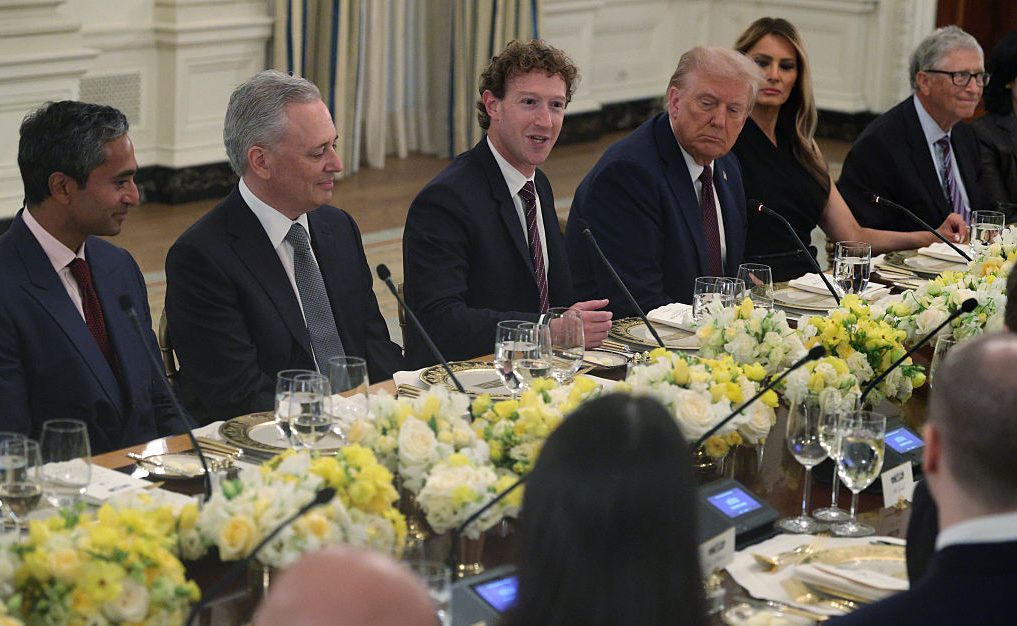
The Office of Personnel Management announced the Tech Force initiative Dec. 15, stating it aims to help fill technology hiring gaps in federal agencies with workers who will sign onto two-year stints. The program focuses on getting early-career engineers in government and offers buy-in from private-sector companies willing to lend out more management-level workers for government gigs. Major technology companies like xAI, Meta, and Microsoft have already signed onto partnerships.
The human capital agency said it hopes to recruit about 1,000 individuals for its first cohort, including early-career engineers, data scientists, and engineering managers from the private sector.
But the hiring effort comes after months of terminations and incentivized departures.
As a result of the Trump administration’s federal workforce reduction, the government lost roughly 317,000 federal workers, according to figures from the Office of Personnel Management. This included the disbanding of 18F — a team of tech consultants and engineers that developed open-source tools for digital services — and the DOGE takeover of USDS, which provided technology assistance to the government.
A familiar, but ironic, goal
Goals to recruit tech talent into government are not new or partisan, with the original USDS dating back to the Obama administration in 2014. But in the case of Tech Force, some former workers suggested that it inadvertently highlights the inefficiencies of the administration’s partisan push to reduce the size of government.
Merici Vinton, who spearheaded the launch of the IRS’s free online tax assistant tool Direct File as a member of the U.S. Digital Service, said she’s always excited to see government programs focused on bringing in technical talent. As one of the first employees at the Consumer Financial Protection Bureau, Vinton herself set up the federal government’s first in-house tech and digital team.
But Vinton, who is currently an executive fellow at UC Berkeley, said the Trump administration also created workforce issues by forcing workers out of government, firing people, and ending programs. Killing Direct File at IRS put people “on notice,” she said, and many decided to leave the agency.
“It feels pretty inefficient to … get rid of a lot of great talent, only to either rehire them or to launch a new initiative to kind of replace that talent,” Vinton said.
A former official in the Biden White House who also worked at the Tech Talent Project echoed this sentiment, telling FedScoop in a background statement: “Tech Force is building on and replicating previous efforts.”
“They are re-doing a lot of the work we had done in the previous administration, when we successfully hired hundreds of technologists across departments, and grounded on the knowledge of existing processes of digital teams as part of the hiring surge that they then foolishly let go this year,” that source said.
Recent hires were targeted for termination in the early days of the Trump administration. Agencies conducted mass terminations of probationary employees — those hired or promoted in the past roughly one to two years, depending on the agency.
In an interview with FedScoop on Monday, OPM Director Scott Kupor pushed back on the idea that the administration’s workforce reductions impacted the same positions Tech Force now aims to fill.
Kupor said the skills gap that the new program targets existed “well before” those workforce changes, and pointed specifically to a need for workers who understand modern software development techniques or who have a deep understanding of AI.
When asked about probationary firings in particular, Kupor said those efforts affected a relatively “small number” of workers — fewer than 7,000. While he didn’t have data about recent tech and AI hires that were impacted, Kupor said he doubted organizations would have let those workers go.
“Based on all the conversations I’ve had with the [chief information officers] and the organizations, I would have been really hard pressed to believe that any people would have let go of somebody who had AI talent that they wanted to keep in the administration, just given that we know how scarce that skill set is,” Kupor said.
One former technology leader — who spoke on the condition of anonymity to be more candid like others in this story — said the Tech Force may ring familiar, but they believe this is due to the complexity of government and managing different stakeholders’ objectives in a large organization.
That former tech leader said they were less concerned that the new initiative might be hypocritical, pointing to the multitude of actors in the government space all trying to do different things. They also said they hoped the program would be successful.
“I don’t expect every decision to be consistent,” the source told FedScoop, “even if the irony is not lost on me,” adding they hope the initiative is successful despite that irony.
Even with that, the former tech leader said Tech Force does “have to answer some real questions” about its relationship to USDS or the U.S. Digital Corps, a two-year fellowship established under the Biden administration to place early-career technologists. The Digital Corps was inspired by nonprofit Coding It Forward’s Civic Digital Fellowship.
Kupor told reporters last week that Tech Force will not “conflict” with the work of the U.S. DOGE Service, which replaced USDS at the beginning of the Trump administration. “DOGE still exists,” he said, but described that project as a “much smaller cohort of folks” — about 70 to 75 employees — who work on a contract basis for “discrete projects” at various agencies.
The Tech Force, by contrast, aims to “take a much bigger swing in terms of the number of people” it can bring in and its hires will be directly employed at those agencies, the OPM director added during the announcement.
At the same time, a different take
In some ways, the program is unique from previous efforts.
Jennifer Pahlka, board chair and founder of the Recoding America Fund and former deputy chief technology officer in the Obama White House, told FedScoop in a written statement that with a bigger focus on engineering rather than product management and design, “Tech Force has a different flavor than past efforts.”
“This effort will appeal to some people who would not have considered public service before,” Pahlka said. “But the purpose remains pretty consistent: the federal government can’t control its own destiny without the people who can understand and adapt the systems that make agencies run.”
Ultimately, having that talent in government rather than through contracts, which are often more compliance-focused, the government can shift to more “purpose-fit, adaptable products,” Pahlka said.
But some cautioned that the focus on engineering skills leaves many other important tech-related roles unfilled. The former Biden White House official, for example, said the engineering roles are being overindexed, when the government needs “the AI-enabling roles that sustain responsible product development, including user researchers, content designers, sociologists/ethics experts, and more.”
During the Biden administration’s own push to hire AI talent, roles were separated into AI and AI-enabling classifications to represent both technical positions and support functions, such as project managers or technical recruiters.
Separately, the initiative prioritizes recruiting early-career technologists, with Kupor stating that just 7% federal employees currently fall into this category. The OPM director told reporters last week that “early career” can be defined in different ways, but he generally thinks of it as fewer than five-to-seven years of work experience.
The move quickly drew comparisons to recruitment strategies used by programs like USDS. While former government technologists told FedScoop that some programs experimented with early-career recruitment, most focused on securing tenured talent for government work.
These workers expressed concerns that Tech Force’s early-career approach risks the high-impact work technologists are called to do in government.
“We wanted people that had 10-plus years of experience,” one former tech talent recruiter with USDS told FedScoop. That meant, “not even five years of experience,” they added. “We wanted someone that had the battle wounds, if you will, from the private sector.”
The focus on early-career talent also makes the salaries the Tech Force is offering all the more enticing. The former tech talent recruiter for USDS said if the program targets people with three to five years of experience for jobs in the $150,000 to $200,000 range, “they will find those candidates.”
Paris, who spent four years at the USDS, echoed this sentiment, saying the technology unit was “designed” to recruit “highly experienced people.”
Finding success in government — with its bureaucracy, rules, and new things to learn — is less likely if a recruit has only a couple of years in industry under their belt, Paris said. For success in the field, Paris said technologists will work on services that “affect millions of people’s lives,” using the IRS Direct File project as an example, which she said was made up mostly of senior engineering staff.
Paris speculated that the choice to pursue early-career workers may relate to the “highly politicized” nature of the federal workforce.
“It’s really hard to understand how someone with a lot of experience is going to come into a risky environment right now, like the federal government,” she said, though she added that it is a “pretty bad economy” for young developers and that might make the jobs more appealing.
Kupor pushed back on these concerns, telling FedScoop he does not “buy for a second” the argument against recruiting early workers and is “not worried” about the approach.
OPM is looking for workers with “deep technical skills” who can learn the required government methods, Kupor said. As part of this approach, OPM is eliminating degree and tenure requirements that often come with the government’s General Schedule pay scale.
“If I can hire a 22-year-old who, quite frankly, can perform at the level of GS-15 in terms of their technical capabilities,” Kupor said, “then, under this program, I can pay them at that level. And to me, that’s actually a much more efficient way to actually bring in talent.”
Kupor defended the focus on engineering roles as well, arguing it’s the area of greatest need. When it comes to modern development skills, Kupor said: “We just do not have the right number of people to be able to handle all the modernization efforts that are going on.”
He also signaled that the initiative may be used as a test case for pooled hiring across the government. Agencies are currently working on gathering their headcounts, and Kupor said there may be more common needs that arise.
Relationship with industry
Another somewhat unique Tech Force quality is its apparent formalization of a relationship with private sector companies — though former federal workers pointed out government technologists often cycle back to the private sector naturally.
Mathias Rechtzigel, who most recently worked in the U.S. Digital Corps and initially joined the government through the original U.S. Digital Service, said many USDS program alumni returned to the private sector and brought with them knowledge of government at the end of their terms.
For his own part, Rechtzigel said he’s using his understanding of the executive branch in his current role at a tech startup that works with low-income people and potential gig workers.
“Everybody has their own different ideas of what they want to do with their career,” Rechtzigel said. “And some of them go back to the private industry to try to make a bunch of money, and some of them go back to the private industry to try to make things better for groups of people.”
What the Tech Force will have to account for is ensuring that the exchange doesn’t breach ethics.
Vinton said the handoff to the private sector was interesting, but the government needs to be careful not to create a conflict of interest. In government, Vinton said, “there’s a lot of things that you need to do to make sure that the data and the IP that you have access to remains confidential.”
Implementing that exchange will likely be difficult, she said, particularly when it comes to ensuring “you’re protecting the government IP, you’re protecting confidentiality, and, most importantly, the privacy of the users.”
Kupor reiterated his previous comments that the administration doesn’t see ethics as a “major roadblock” to the program based on conversations with ethics professionals. People will have to comply with those obligations when they come into government and when they leave, he said.
Most of the hired Tech Force will not be in a situation where they are “leveraging major technology procurement and purchasing decisions, so that should make it a lot easier,” Kupor said. At the same time, he added, ethics rules can be “overly burdensome,” and there may be an opportunity to “re-look at them” to help promote people going back and forth between the public and private sectors.
Ultimately, some of the formers were hopeful that the program could signal a new direction for the administration.
“Creating more doors means that more people can have the opportunity to work with government,” Rechtzigel said. “I don’t think that they approached it that way in 2025, and I hope that this is a change of strategy in 2026.”