Foreign service officers pursuing legal action after State moves forward with RIFs
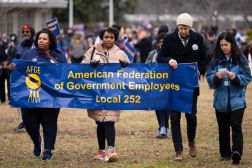
The American Foreign Service Association said it’s pursuing legal action following the State Department’s decision to finalize separations of foreign service officers later this week.
In a statement Tuesday, the AFSA said it was “appalled” by the department’s decision to move forward with official separations of those workers on Dec. 5, arguing the move “flies in the face of the current funding law, which clearly prohibits using any federal resources to carry out layoffs during this period.”
“AFSA is working closely with the American Federation of Government Employees (AFGE) and will be pursuing legal action,” AFSA said. “We urge the State Department to demonstrate respect for the law, for its employees, and for the mission they serve.”
The decision to execute the reductions-in-force and response from AFSA are the latest actions in a standoff between impacted foreign service officers and the State Department over language undoing and pausing RIFs in the continuing resolution that ended the government shutdown.
In addition to funding the government through January, the legislation included language that prevents an array of RIF actions both retroactively (between the Oct. 1 beginning of the shutdown and when the bill was enacted) and proactively (from that enacted date to Jan. 30).
Specifically, Section 120 of that bill states that between the enacted date and the end of January, “no federal funds may be used to initiate, carry out, implement, or otherwise notice a reduction in force to reduce the number of employees within any department, agency, or office of the Federal Government.”
While likely intended to reverse the RIFs that were announced by the administration in retaliation of the shutdown, the delayed date for foreign service officers’ official separations put them within the timeframe outlined in the legislation.
FedScoop previously reported on the potential impact and the foreign service union’s initial plea to halt any separations ahead of the resolution’s passage. By Nov. 21, some — but not all — of the impacted workers had received a communication that their administrative leave was extended, though their futures were still unclear.
But finally, on Monday, workers began receiving communications that they would be separated later this week. According to the language of those letters shared with FedScoop, the department told workers that it made its decision after “formal written guidance from both the Office of Management and Budget and Department of Justice Office of Legal Counsel.”
It told workers that completing RIFs announced before the shutdown doesn’t violate either the Antideficiency Act — federal statute that governs operations during an appropriations lapse — or the continuing resolution itself (H.R. 5371).
“Given this determination, the Department will finalize your separation or involuntary retirement on Friday, December 5,” the communication said.
A State Department spokesperson defended the decision in a Tuesday statement, pointing again to those legal determinations.
“Since the State Department’s lawful reduction in force (RIF) process was commenced and initiated well before the lapse in appropriations, the eliminated positions are not impacted by the language in the recent Continuing Resolution,” the statement from the spokesperson read. “Legal opinions published by both OMB and DOJ confirm that outcome. The State Department will proceed with executing the RIF process as planned.”
However, one of the lawmakers responsible for securing that very provision says otherwise.
In a written statement to FedScoop, Sen. Tim Kaine, D-Va., said the provision “is clear: any RIF that was initiated on or since October 1 is null and void, and any RIF not completed by October 1 is halted.”
“That means workers whose RIFs were still being processed when the government shut down cannot be terminated, will continue to be paid, and must be returned to the status they had on September 30,” Kaine said.
As part of a resolution passed by Congress and signed into effect by the president, Kaine said, the congressional intent to shield workers from firings is clear. That’s something “that will strengthen federal workers’ cases in any litigation to hold the Administration to account for attempts to disregard the law.”