New bill aims to narrow AI hiring gap between government and industry
Hiring practices for artificial intelligence and other technical roles at federal agencies would get an overhaul to better compete with the private sector under a new bipartisan, bicameral bill.
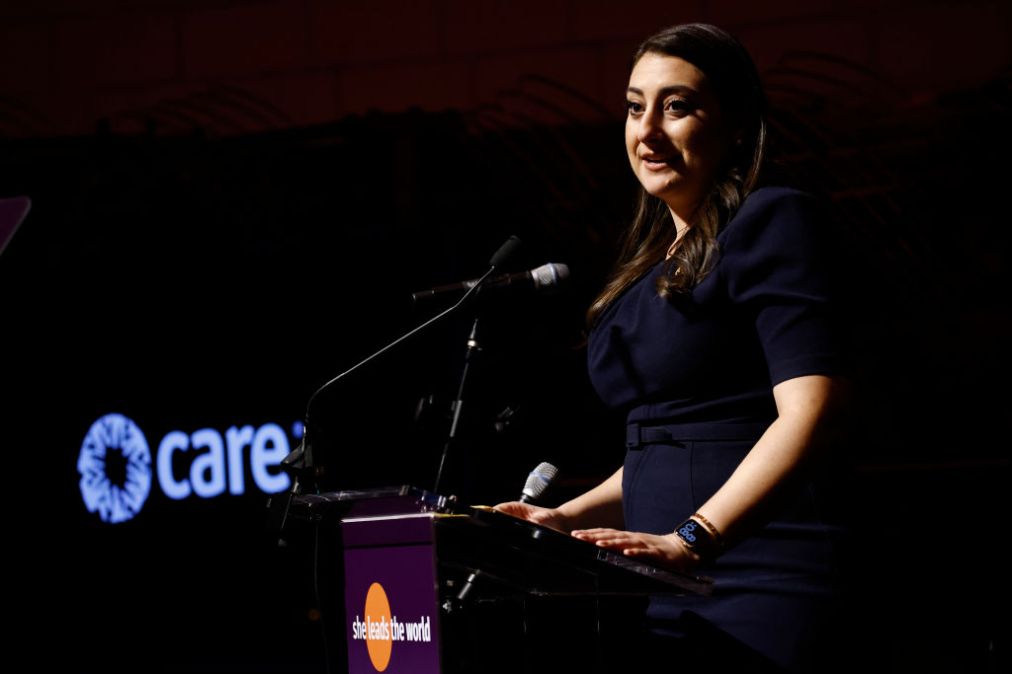
The AI Talent Act, introduced Wednesday by Reps. Sara Jacobs, D-Calif., and Sens. Andy Kim, D-N.J., and Jon Husted, R-Ohio, aims to improve agencies’ ability to recruit and retain AI talent.
Jacobs said in a press release that the legislation was designed with the private sector’s ability to pay tech talent more money and hire more quickly in mind, a fact that she said leaves “critical roles unfilled and U.S. potential untapped.”
“The United States can’t fully deliver on its national security mission, lead in responsible AI, and compete in the AI race if our federal agencies don’t have the talent to meet this moment,” Jacobs said. “That’s why I’m proud to introduce the bipartisan and bicameral AI Talent Act to modernize hiring, recruit and retain top technical experts into public service, and guarantee the United States has the in-house capabilities to innovate safely, protect our country, and deliver for the American people.”
Said Husted: “AI will dominate the technology landscape of the future, and our country must be prepared. To win the AI race, we need every part of our government to understand and use this technology effectively. This bill would bring critical AI expertise into federal agencies, and I’m proud to lead it to make sure we’re hiring for the future.”
The bill, which also counts Reps. Shontel Brown, D-Ohio, Pat Fallon, R-Texas, and Jay Obernolte, R-Calif., as co-sponsors, calls for the creation of agency tech & AI talent teams charged with improving recruiting, candidate evaluation, assessments and job announcements.
It would also task the Office of Personnel Management with establishing a centralized team focused on bringing those types of subject matter experts into the federal government. That team would lead pooled hiring, develop shared resources, provide training and offer additional support to agency HR teams. OPM would also be authorized to create specialized teams focused on “high-need hiring priorities beyond AI and tech,” per the press release.
“The AI Talent Act gives federal agencies the tools they need to recruit experts with real, demonstrated skills so we can responsibly adopt AI and strengthen mission delivery across government,” Obernolte said in a statement. “This bipartisan bill helps ensure the United States continues to lead the world in innovation by bringing the best equipped people into public service at the right time.”
Said Brown: “It’s past time to modernize the federal government’s hiring process so we bring in the skilled workers needed to stay competitive in fast-growing fields like Artificial Intelligence.”
Other measures in the legislation include the leveraging of shared services, including an online platform to validate technical assessments across agencies and qualified candidate pools — which the bill refers to as “shared certificates” — to check the technical proficiency of applicants.
The bill also proposes a phase-out of automated self-assessments after five years and opens the door for agencies to stand up talent teams focused on cybersecurity, IT, data science and other “high-need” areas.
“We should have strong bipartisan support for the importance of recruiting talent in government and uplifting the next generation of public servants,” Kim said in a statement. “By providing specialized tools to recruit for expertise in emerging technologies like AI, this legislation can make us more competitive and build a well-equipped federal workforce to leverage AI for a more secure and stable future.”