Why we need the National Center for Atmospheric Research

The Trump administration earlier this month announced plans to dismantle the National Center for Atmospheric Research (NCAR) in Colorado, which has been an anchor scientific institution since 1960. Office of Management and Budget director Russell Vought announced the decision on social media, calling NCAR a source of “climate alarmism.”
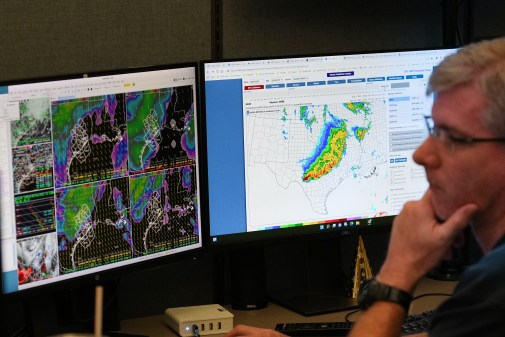
Every day, NCAR’s work protects Americans from threats they never see. It makes weather forecasting accurate enough that we trust it implicitly. When this infrastructure works, it is invisible. But if dismantled, it will become visible through failure. If this proposal proceeds, Americans will ask why their flights are grounded for weather that “doesn’t look that bad,” why crops failed despite forecasts, and why floods arrived without adequate warning. The answer will be that we allowed the demolition of a critical research center that keeps us safe.
The organizations we lead, The Impact Project (TIP) and Open Environmental Data Project (OEDP), work to protect data and provide it to those who need it most. TIP is a nonpartisan data aggregation and visualization initiative that tracks the local impact of government change and builds tools for decisionmakers to know how to act in a rapidly changing environment. Through pilots, workshops and research, OEDP strengthens the role of data in environmental and climate governance. We believe in the power of data to protect us and stand for our right to access the data that explains our world and helps us make informed decisions. NCAR’s destruction threatens communities and undermines our ability to predict and prepare for extreme weather and disasters.
We have just published an open letter to Congress co-signed by 20 data-focused organizations
and more than 100 individuals with expertise across climate, environment, and public health data. We are continuing to gather signatories who share our profound concern and objection to the administration’s proposal to dismantle NCAR. Congress has a critical role in preserving this vital earth science research institution through federal funding and oversight, and we are urging Congress to save it. Here are our reasons:
NCAR was established by the National Science Foundation in 1960, and is a nerve center of global atmospheric and climate research. It is a crown jewel of U.S. science: strictly non-political, nonpartisan, and operational in nature. NCAR scientists conduct the foundational science that allows companies, the military, and individuals to navigate a changing environment.
NCAR’s scientists — who study wildfires, air pollution, and ocean currents — have been protecting Americans for decades. From making air travel safer and more efficient, to wildfire and flood modeling, NCAR scientists are world leaders in research essential to understanding our world and protecting our communities.
NCAR’s closure would be disastrous for American innovation. NCAR consistently brings together partners across sectors to ensure their work remains at the cutting edge of science and technology, like ongoing research on reinsurance, artificial intelligence and on autonomous vehicles.
Dismantling NCAR would not only be bad for public safety, science, and innovation, it would be bad for the budget. NCAR is a perfect example of the whole being greater than the sum of its parts; any attempt to distribute the capacities of NCAR across agencies or research institutions will end up costing taxpayers millions of dollars and make our country less secure and less innovative.
Vought suggests that some of the research conducted at NCAR will move elsewhere, but you cannot scatter 830 world-class experts in a rushed purge and expect to reassemble that expertise later. Even if some of the research conducted at NCAR was relocated, the agencies and institutions that might have otherwise had the expertise necessary to carry on this work may lack capacity to do so after a year of devastating cuts.
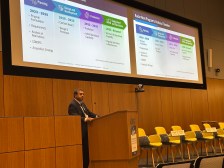
NCAR’s 2025–2029 strategic plan centers around four themes: building national resilience, understanding the earth system, empowering the scientific community, and inspiring our scientific future. These goals are essential to securing community safety and maintaining America’s global leadership in atmospheric science. It’s vital for this work to continue, and for Congress to act quickly to save it.
Abby André is executive director of The Impact Project, Jonathan Gilmour is a co-founder of The Impact Project, and Brittany Janis is executive director of the Open Environmental Data Project.