House passes bill to force SBA’s hand on AI reporting
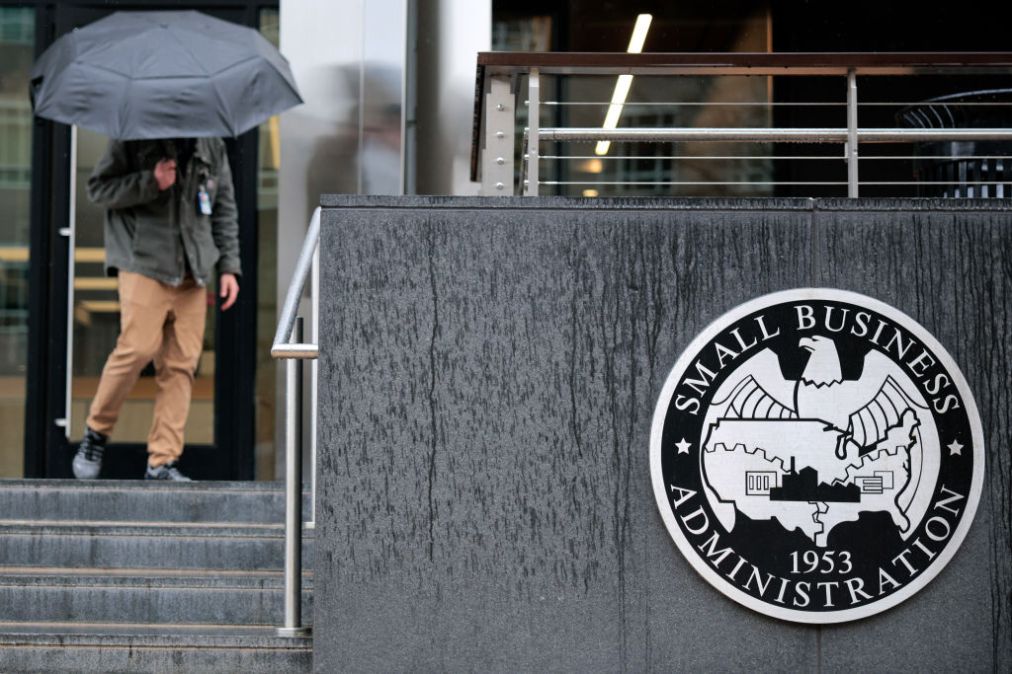
The House is ramping up an effort to make the Small Business Administration more transparent about its artificial intelligence work, passing a bill Tuesday that would require the agency to deliver an annual report to Congress on its use of the emerging technology.
The SBA Artificial Intelligence Utilization Act (H.R. 8881) advanced out of the House Small Business Committee last month, following the release of a Government Accountability Office report that highlighted years of SBA noncompliance with federal AI use case reporting requirements. The agency posted its first-ever AI use case inventory in March, two months after the Office of Management and Budget deadline.
The legislation from Reps. Brad Finstad, R-Minn., and George Latimer, D-N.Y., calls on the SBA administrator to provide the House and Senate Small Business committees with a yearly report that documents AI and machine-learning use, while detailing risks and benefits of cases, the necessity of human involvement, and if an AI tool “adequately fills a need of the Administration,” per the bill text.
Finstad said on the House floor Tuesday that the legislation ensures that Congress can adequately oversee how effectively and responsibly the SBA is using AI.
“AI could be a useful tool for the SBA to process information and ease its implementation, but it also raises questions about transparency, oversight, and risks,” Finstad said. “This does not mandate the use of AI or prohibit innovation in our Small Business Administration, but instead it ensures commonsense congressional oversight into how these tools are being used.”
House Small Business Committee Chair Roger Williams, R-Texas, linked the bill’s provisions with a governmentwide effort to prevent fraud in federal programs, enabling the agency to better identify suspicious activity and flag improper payments.
“By providing regular information to the SBA [and its] use of artificial intelligence, this legislation will help promote a more efficient and accountable government, while ensuring that innovation is paired with appropriate oversight and human judgment,” Williams said.
The Small Business Cybersecurity Assistance Evaluation Act (H.R. 8880) from Reps. Lateefah Simon, D-Calif., and Rob Bresnahan, R-Pa., also cleared the lower chamber Tuesday. The legislation directs the GAO’s comptroller general to conduct a study on federal cyber assistance to small businesses.
The GAO audit would assess current federal cyber initiatives and programs available to small businesses, including a look into risks, threats, vulnerabilities, preparedness, and ways to guard against fraud and scams.
Williams cited data indicating that small businesses are 210% more likely than large companies to experience a cyber incident, while more than half of small businesses report having no cybersecurity measures in place. Rep. Johnny Olszewski, D-Md., said these gaps create “glaring weaknesses in Main Street America’s cyber posture, weaknesses that cyber criminals are all too willing to exploit to steal funds, proprietary information, and other critical assets.”
Simon said the legislation will ensure that Congress receives “the best data available” to help small businesses guard against cyberattacks.
“Many small business owners do not have dedicated cybersecurity staff or the resources to protect themselves,” the California Democrat said. “A single cybersecurity attack could mean the difference between survival and failure for our mom-and-pop businesses residing on our main streets.”
The House also discussed the Small Business Technological Act (H.R. 915) from Reps. Mark Alford, R-Mo., and Susie Lee, D-Nev., though Williams held off on a vote because a quorum was not present. The legislation would authorize the SBA to provide 7(a) loans to small businesses to buy modern business software, cloud-computing services, AI tools and other technologies that support operations.
Alford said that in today’s economy, small businesses can’t compete effectively without modern technology like cloud-based accounting systems, inventory management software, emerging AI tools and more.
“Under SBA’s 7(a) loan program, there has been unnecessary uncertainty about whether these investments qualify as eligible business expenses,” he said, “and that confusion has slowed access to capital and really made it tougher for our entrepreneurs to operate and to modernize. This bill resolves that uncertainty.”