AI can speed research compliance — if agencies can explain the output

As researchers face mounting regulatory complexity, expanding research portfolios, and persistent resource constraints, compliance teams are increasingly turning to AI to move faster and gain better visibility into risk.
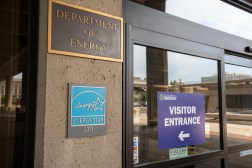
That momentum is already visible at the federal level. Recently, the Department of Energy announced partnerships with leading AI providers to accelerate scientific discovery across national labs and research programs. This initiative highlights both the potential of AI at scale and the need to ensure AI-driven research outputs are explainable, validated, and defensible.
While the push for speed is understandable, prioritizing efficiency without defensibility can introduce new risks rather than resolve existing ones.
For research compliance, the most important question is whether agencies can explain, reproduce, and document those results during audits or compliance reviews.
The upside of scale and visibility
When used responsibly, AI offers clear advantages for federal research oversight. It can take on routine compliance work, cut down on manual review, and handle large volumes of information far faster than human teams. That includes analyzing grants, publications, patents, disclosures, and collaboration records across large and diverse research portfolios.
AI can also flag anomalies that humans might overlook, enabling more continuous compliance monitoring and timely insight for agencies. Just as importantly, it helps non-subject-matter experts by organizing complex information and providing context, allowing compliance professionals to make more efficient, well-informed judgments.
The risk of unverified and inaccurate decisions
Compliance environments demand transparency, making it critical for decisions to be traceable, reproducible, and supported by evidence. However, this is where many AI systems struggle.
Models that cannot clearly explain how conclusions are reached — or that produce inconsistent results — introduce real operational risk. Bias embedded in training data can be amplified over time, leading to uneven outcomes. And while generative AI continues to improve, hallucinations remain a concern. In a compliance setting, acting on incorrect or unsupported information can have lasting consequences.
Those risks only grow when AI is over-automated. When outputs are treated as final conclusions rather than decision-support inputs that need humans in the loop, agencies can lose critical context and oversight. In research compliance, it is imperative that AI is not placed on autopilot.
Furthermore, accuracy is only part of the equation. AI also introduces significant security and governance considerations. Agencies need clear visibility into where data is sent, how it is processed, and how access is controlled. In sensitive research environments, even the questions posed to an AI system may require careful handling. Additional risks include insufficient audit logging, unclear data retention practices, and model inversion, where outputs could be reverse-engineered to expose confidential inputs.
These risks can also compound over time. As regulations evolve, models built on outdated assumptions can quietly degrade. Without ongoing validation, agencies may find themselves relying on tools that no longer meet current compliance requirements.
Why research security raises the stakes
Research security brings these challenges into sharper focus. Federal agencies are navigating a growing set of requirements tied to national policy, funding conditions, and international collaboration, while working to protect taxpayer-funded research, safeguard intellectual property, and reduce the risk that sensitive or dual-use work is misused.
Effective risk assessment depends on identifying patterns rather than binary conclusions. Indicators such as undisclosed affiliations, collaboration networks, funding acknowledgements, patent relationships, and research field sensitivity must be evaluated together, as no single signal provides sufficient context on its own.
AI can help surface this evidence at scale, but it should not replace human judgment. Agencies need to trace flagged activity back to source records, preserve time-stamped documentation, and clearly explain why further review or mitigation is warranted.
A practical path forward
Responsible use of AI in research compliance starts with clear boundaries. High-impact decisions should always include human oversight, while data inputs are minimized and protected and outputs are continuously validated against ground truth.
Agencies also need to be deliberate about where AI is applied. Breaking compliance into discrete components — rather than relying on broad, automated decisions — helps reduce risk while preserving efficiency.
As AI capabilities continue to advance, new applications, such as identifying overlap with government-defined critical technologies, will become increasingly useful. Even then, AI’s role should remain focused on surfacing evidence, not making determinations.
The bottom line for federal leaders
AI can significantly improve the speed and scale of research compliance. In government settings, however, effectiveness ultimately depends on strong documentation and clear accountability.
When agencies cannot explain how an AI-assisted decision was reached, they may struggle to reproduce or support that decision during audits or compliance reviews. The organizations that succeed will be those that adopt AI deliberately, prioritize transparency, and clearly define where human responsibility begins and ends.
In research compliance, defensibility matters as much as efficiency — and AI must support both.
Heidi Becker is a product manager for Dimensions Research Security at Digital Science.