DHS shutdown puts strain on security, information-sharing ahead of World Cup
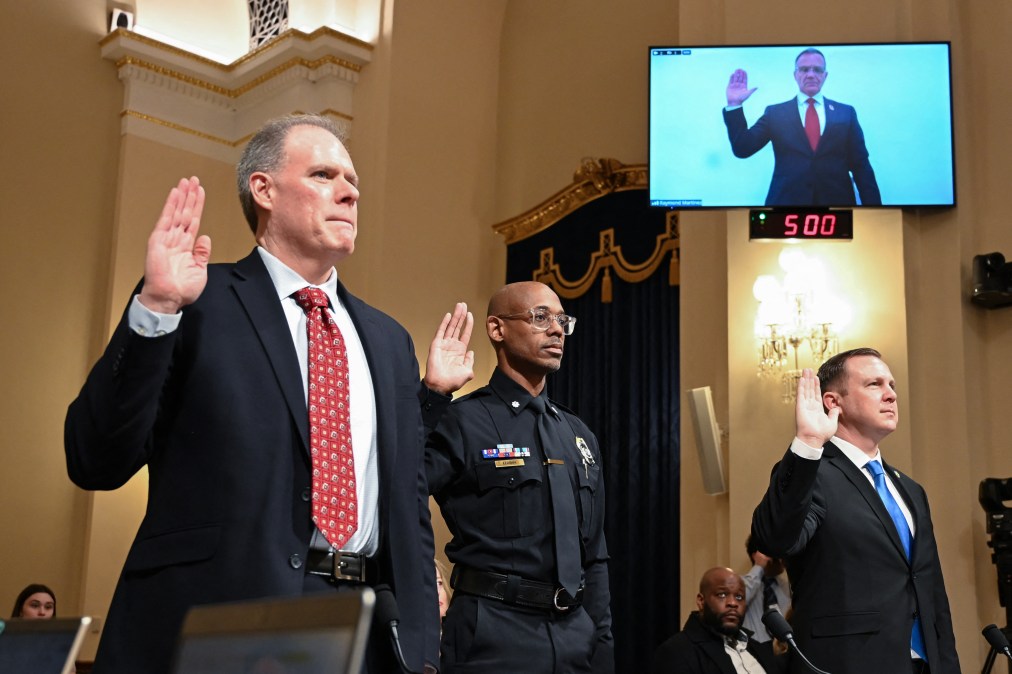
The partial shutdown of the Department of Homeland Security is impacting the preparation of cities hosting the 2026 FIFA World Cup, according to stakeholder testimony Tuesday.
Beginning Sunday, Secretary Kristi Noem halted all non-disaster-related Federal Emergency Management Agency response efforts and scaled back FEMA operations to “bare-minimum, life-saving operations only.”
Host city representatives said the agency has yet to send out the $625 million investment — referred to as the FIFA World Cup Grant Program — that Congress already appropriated as part of the One Big Beautiful Bill Act. The FIFA World Cup Grant Program is meant to support security activities, including training and readiness exercises, cybersecurity defense and operational requirements associated with increased information sharing and analysis needs.
With just over 100 days before the World Cup festivities begin, officials advocated for the release of funding during a House Homeland Security hearing.
“The FIFA funding would be critical for our staffing and our mutual aid partners to come in and assist,” Joseph Mabin, deputy chief of the Kansas City, Mo., police, told lawmakers. “We just don’t have enough officers within my own department to cover all the threats.”
Kansas City is set to host four team base camps, an 18-day fan festival and six matches at Arrowhead Stadium over three weeks, including a quarterfinal game. The Kansas City-hosted events cross 10 counties and two states, adding complexity to communication and coordination, Mabin said.
The city is expecting to welcome more than 650,000 visitors, an influx that Mabin characterized as requiring the largest coordinated deployment of mutual aid partners in the city’s history.
“The FIFA World Cup Grant Program is necessary to fund the personnel equipment and operational needs required to deliver a safe event,” Mabin said. “Before the first whistle blows later this year, we want to ensure that information flows faster than threats, that partnerships are stronger than vulnerabilities and that everyone experiences a safe and secure World Cup.”
Without the FEMA funds, Mabin said the security posture is degraded.
Miami is running up against similar friction due to the lack of funds. The Florida city is set to host seven of World Cup games, including a quarterfinal and a bronze final match. Like Kansas City, Miami is also planning a multiday fan festival and watch parties. The complementary World Cup events are in jeopardy without the necessary funds, according to Ray Martinez, COO of the 2026 FIFA World Cup Miami Host Committee. He gave a 30-day deadline before cancellations would begin.
“The local agencies are very anxious,” Martinez said Tuesday. “Without receiving this money, it could be catastrophic for planning and coordination.”
Other FEMA-funded operations are feeling the strain, too, such as the National Fusion Center Association. The organization has yet to receive its 2025 allocation and is facing difficulties tied to lagging investment, according to its president, Mike Sena.
The FEMA funds, if received, would go toward supporting personnel tasked with analysis, threat liaison officers to do outreach and training, and technology designed to fuel the World Cup events around the country. Without it, Sena told the Homeland Security committee Tuesday, “we will be blinded to the threats.”
Officials said the DHS shutdown and funding delay, as well as the resulting capacity crunch, haven’t completely washed away security and information-sharing capabilities, but time is of the essence.
Technology troubles
The funding alone won’t solve all the challenges facing host cities. Stakeholders will need to use the investment to ameliorate interoperability challenges and tool sprawl.
Sena said the Federal Bureau of Investigation uses a different communications tool than DHS, and the two organizations use different tools than local law enforcement.
“The problem we have with much of these technologies is that none of them connect to each other,” Sena said. “Many of them have similar tools and resources, but, ultimately, because folks don’t want to pick a favorite, and everyone has their own, it’s hard for people to communicate.”
While progress has been made in recent years to build bridges between the tech, gaps remain. There are multiple areas where tips are collected and stored, for example.
“They aren’t consolidated, and so we don’t know what we’re missing until bad things happen,” Sena said. “Even during the Super Bowl, there was a belief that we were missing some tips and leads. One of our partners actually called in a tip to see if somebody would send us the tip, and it never came.”
The flow of communication challenges and data silos exacerbate risks.
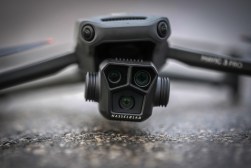
Host cities’ ability to detect and mitigate drone activity is another budding area of concern, according to the three stakeholders.
DHS launched a drone-focused office in January as it looked to rapidly procure and deploy the technology ahead of the World Cup and America250 events, backed by a $115 million investment.
FEMA aimed to boost drone-tracking infrastructure and detection capabilities across host cities via $250 million in funding allocations announced in January.
“We’re piggybacking on the federal government to be able to source those technologies,” Martinez said, pointing to resource constraints and the size of the area needing coverage. Funding lapses present problems.
“We’re continuing to work with our federal partners in communicating what our overall drone plan will be and collaborating with on the deployment of the resources,” Martinez said. “The gap for us is really in the funding. It is absolutely critical to be able to get this funding.”
“Our fear is that decisions will be made based on budget, instead of threat assessment,” he added.