NRC efficiency plan to reuse DOE, DOD data met with skepticism
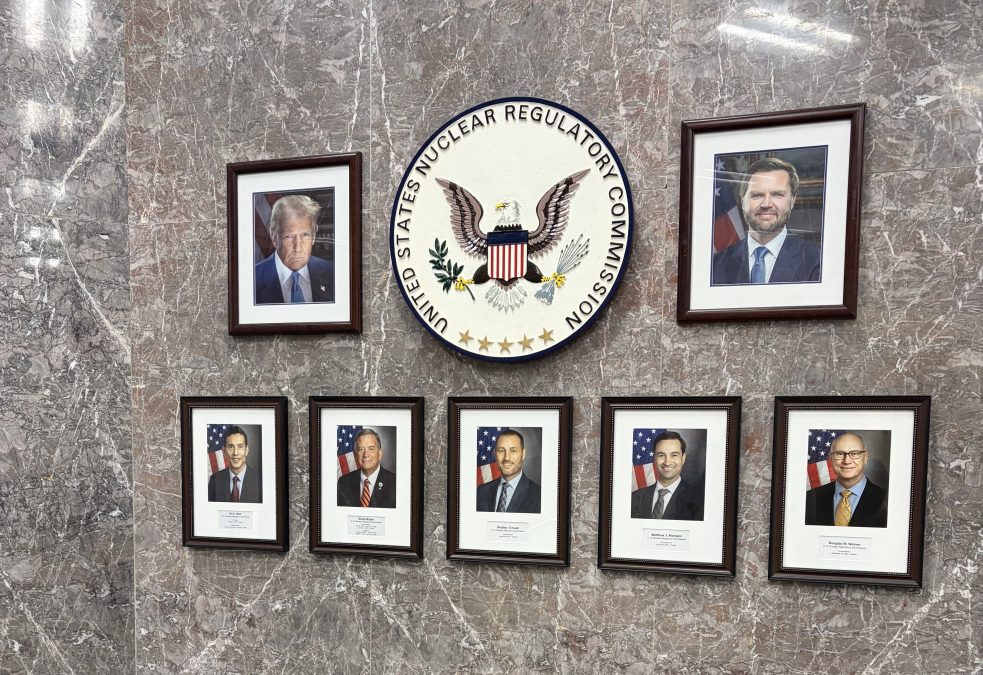
Not all lawmakers — or Nuclear Regulatory Commission leaders — have bought into the agency’s pursuit of efficiency as it works to fast-track licensing processes amid high attrition and growing workloads.
During the agency’s fiscal 2027 budget hearing Wednesday, senators questioned how the NRC was hedging against risks, especially as it looks to streamline reactor reviews with data from the Department of Energy and the Defense Department.
“There is no rubber-stamping that is going to happen at the agency with this rule,” NRC Chairman Ho Nieh said. “I would assure you that if it’s going to receive an NRC license, it will receive a rigorous review to ensure that all of the requirements are met.”
Nieh also assured Sen. Alex Padilla, D-Calif., that the agency’s planned process for reusing data would not lead to “skipped steps” or provide a “shortcut” through licensing requirements but would still speed up NRC’s approval process.
The chairman, however, did not respond directly to questions about how the agency plans to assess the validity of DOE or DOD data.
“If a Department of Energy reactor pilot project does fuel testing and experiments, things like that, to qualify the fuel, the NRC is not going to recreate that,” Nieh said. “We’re going to look at the data, we’re going to see how that meets our requirements and then move that forward with greater efficiency.”
“The idea is, ‘let’s not reinvent the wheel,’” he added.
NRC’s efficiency efforts come as the agency faces higher-than-ever stakes and dwindling resources.
“America urgently needs more energy due to artificial intelligence data centers and industrial growth,” Nieh told lawmakers. “The question now is execution, whether America can build at scale, on schedule and at lower cost — and that is where the NRC matters.”
The White House’s fiscal 2027 budget proposal decreases NRC’s overall appropriations by 8.1% compared to the enacted 2026 budget. It also outlines a workforce reduction of 7%, or 196 full-time employees.
The cuts extend across the agency but impact some units more than others. If passed, the Inspector General Office would see a 24.2% decrease in funds. Resources allocated for the Nuclear Reactor Safety Program would decline by more than 8%.
The agency is already grappling with above-normal attrition levels, according to NRC Commissioner Bradley Crowell.
“My paramount concern as a commissioner today is the current and future NRC workforce,” Crowell said. “This is an unsustainable dynamic.”
In the past 16 months, the agency has lost 510 employees, many of whom held senior-level roles and were subject matter experts, he said. During the same period, NRC has only added 59 new staff members.
The workforce challenges are impacting culture and raising concerns about burnout, according to Crowell.
“The people that we’ve lost are the very senior, most experienced folks, and they’ll be replaced by interns and fellows,” he said. “We have an incredibly hard-working workforce, but you can only ask them to do so much, and at some point, they’re going to be asked to do more than they have ability.”