The Robert C. Weaver Federal Building, the current headquarters of the Department of Housing and Urban Development, is seen on July 8, 2025 in Washington, D.C. (Photo by Kent Nishimura/Getty Images)
Julian, who has served as HUD’s assistant CIO since July 2025, takes over for Eric Sidle. Both previously worked at EV firms Chargepoint and NIO, as well…
The GAO found a 29% staff reduction and big cuts to IT contracts in 2025. Stakeholders attributed lagging service “to fewer HUD staff with technical knowledge” and…
A view of the Department of Housing and Urban Development at the Robert C. Weaver Federal Building on July 25, 2026 in Washington, D.C. (Photo by Kevin Carter/Getty Images)
The system will analyze every check written by a grant recipient starting at the end of this month. Housing and tech experts worry about politicization and its…
The National Housing Law Project has been seeking communications about HUD’s pact with DHS and USCIS to share tenant information for immigration enforcement.
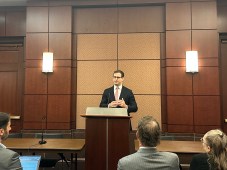
Tech Force Director Kevin Hennecken told an audience at a Alliance for Digital Innovation event on Capitol Hill on May 27, 2026, that the tech hiring program is currently onboarding. (Madison Alder/FedScoop)
The tech talent hiring program began onboarding over the past couple of weeks and anticipates its first management-level hire from industry to start soon.
Eliminating regulations were presented as “the default case” for HUD legal and policy employees based on the AI tool’s recommendations, documents show.
President Donald Trump speaks during the “Winning the AI Race” summit hosted by All‑In Podcast and Hill Valley Forum at the Andrew W. Mellon Auditorium on July 23, 2025 in Washington, D.C. (Photo by Chip Somodevilla/Getty Images)
The Robert C. Weaver Federal Building, the current headquarters of the Department of Housing and Urban Development, is seen on July 8, 2025 in Washington, D.C. (Photo by Kent Nishimura/Getty Images)
A view of the Robert C. Weaver Federal Building, headquarters of the U.S. Department of Housing and Urban Development, is pictured in Washington, D.C. (Photo by Carol M. Highsmith/Buyenlarge/Getty Images)