Lawmakers signal skepticism of VA’s planned spring EHR rollout
With less than 120 days until the Department of Veterans Affairs resumes the rollout of its Electronic Health Record, lawmakers are raising doubts about whether the agency can resolve its long-standing challenges with the system.
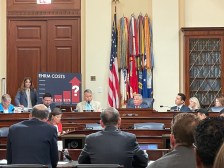
Members of the House VA Subcommittee on Technology Modernization grilled officials from the VA and Oracle Health on Monday about their preparations for the deployment of the EHR at four Michigan facilities, scheduled for April. It will mark the first deployments since 2023, when the VA paused the system’s implementation to renegotiate its contract with Oracle Cerner and resolve safety concerns.
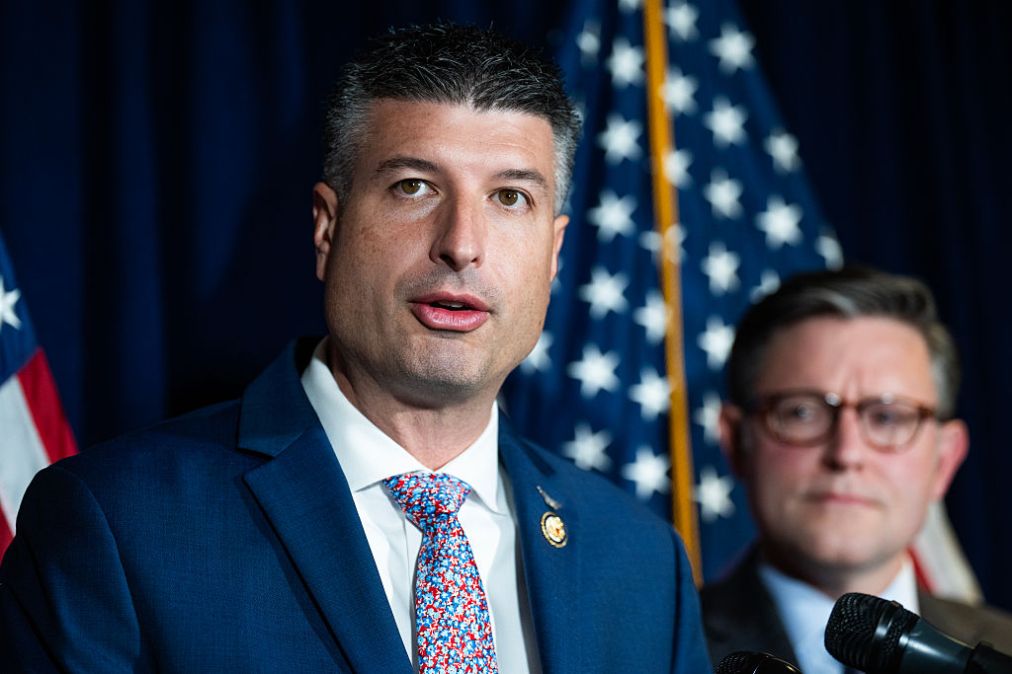
“This timeline is locked in, and the countdown is on, but the question remains: When the switch is flipped in April, will the system deliver, and will it do what we need it to do?” Subcommittee Chair Tom Barrett, R-Mich., said in opening remarks. “Are we going to run into snags like we have in the past?”
Barrett said the subcommittee has received “meaningful good signs” about the anticipated rollout, but “cannot ignore other red flags that are warnings behind the scenes.”
Lawmakers’ concerns primarily centered on the project’s total cost and workforce readiness, as well as the VA’s decision to launch the deployments nearly simultaneously rather than sequentially.
Neil Evans, the acting program executive director for the VA’s EHR Modernization Integration Office, told lawmakers the VA is using a “market-based approach” for deployments.
Multiple medical centers will be “working together and going live simultaneously in each deployment wave,” Evans said, adding the move will help the VA scale up deployments and improve efficiency.
However, Carol Harris, the director of information technology and cybersecurity for the Government Accountability Office, warned of the potential challenges with this method.
“I think that the simultaneous testing at the four sites will take a tremendous amount of resources, and to deal with the issues that come up inevitably with a go-live, to be able to handle it at all four sites simultaneously, could be significantly risky for the department,” Harris said.
The EHR system, hosted by the cloud technology company Oracle, is slated to be deployed across 13 new medical facilities by 2026.
Barrett later asked Seema Verma, the executive vice president for Oracle Health and Life Sciences, to “convince” him and the GAO that the simultaneous fashion “is the appropriate way to do it without just hitting a deadline for a date, without thinking through the risks associated with it.”
Verma, the administrator of the Centers for Medicare & Medicaid Services during the first Trump administration, defended the move, stating that Oracle believes in “robust testing” and that the company has teams on the ground and a “war room.”
Barrett did not seem entirely convinced, telling Verma that “each of these is very unique in their application, each of these VA hospitals that are not, you know, cookie-cutter stamped out.”
“These are very, very customized to their unique situation. And doing them all four together, to me, elevates the risk that there’s going to be problems that arise or issues that are overlooked,” Barrett said.
Rep. Nikki Budzinski, D-Ill., the subcommittee’s ranking member, later asked Verma about how the major technology vendor will ensure the necessary workforce and contractors understand the system.
“Oracle does implementations all over the world for systems. This amount and number of sites are not unusual for Oracle as a worldwide company in terms of the deployments,” Verma responded. “That being said, we also continue to add more staff to our teams to make sure that we can scale with the deployments as well. But I think this is not an unusual thing for our company.”
Budzinski pressed further, asking Verma what Oracle is doing to guarantee staff understand the “uniqueness of VA and its challenges.” According to the executive, Oracle has training requirements and federal certifications for the VA’s specific needs.
Lawmakers in both chambers have repeatedly raised concerns over the EHR rollout since its launch during the first Trump administration. The Senate package to reopen the government last month included a caveat on funding for the EHR system, giving the agency secretary until June 1 to submit an updated life-cycle cost estimate for the project, a facility-by-facility deployment schedule, and projected VA staffing level requirements.
Rep. Morgan Luttrell, R-Texas, also pressed Evans and Verma over contingency plans if the April deployments fail, including whether Oracle will move onto other sites in the case of failure.
“We would discuss with the VA and figure out the appropriate course,” Verma said. “We have not had that discussion. Our discussions are focused on successful implementations, and because of the previous experiences, we’ve gone through a number of deployments. There’s been a lot of lessons learned.”
Luttrell said he hopes “ that doesn’t happen. We’ve been waiting 10 years for this thing to work correctly. Just from my experiences in the past, if you’re not contingency planning on the worst-case scenario when it shows up, we’re in a lot of trouble.”