U.S. judge orders rescission of RIFs that likely ran afoul of shutdown deal
A federal judge in California expanded relief from shutdown-related RIFs to more federal workers in a Wednesday ruling, ordering several agencies to reverse terminations and halt additional staff cuts until the end of January.
In a preliminary injunction, Judge Susan Illston of the U.S. District Court for the Northern District of California sided with federal worker unions’ interpretation of language in the shutdown resolution that reversed and halted certain reduction-in-force actions at agencies.
That order builds upon Illston’s temporary block on the imminent separations of State Department foreign service officers earlier this month and finds that actions at three additional agencies likely violated the continuing resolution.
Illston’s order re-ups relief to workers at State, includes a handful of impacted civil servants at the agency, and provides additional relief to impacted workers at the Department of Education, General Services Administration, and Small Business Administration.
That includes prohibiting RIFs from being carried out at Education and State until at least Jan. 30 — in line with the language in the resolution. It also requires that agencies rescind RIFs implemented or executed at State, Education, GSA and SBA during the shutdown and return those workers to their pre-shutdown status.
Absent a higher court’s ruling, agencies have until Tuesday to comply with the order.
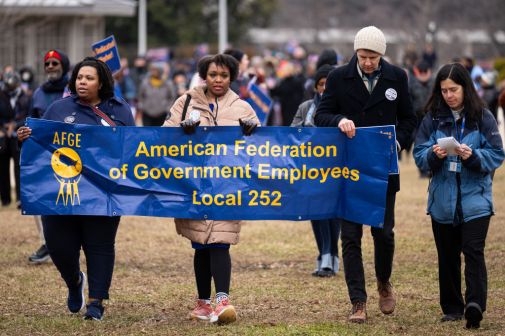
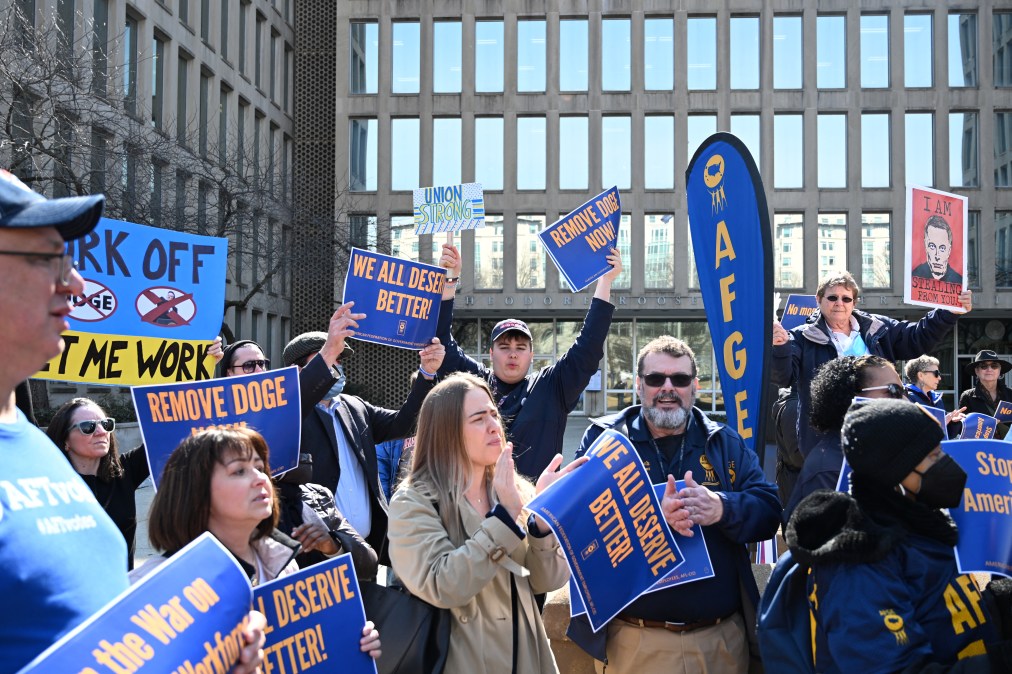
Illston’s Wednesday order is the latest in a challenge by the American Federation of Government Employees and others to reductions in force carried out amid the federal government shutdown.
The lawsuit began after agencies across the government announced RIFs in retaliation of the lapse in appropriations. Illston sided with the unions and issued an injunction halting those actions, and later, the shutdown terminations were reversed in the shutdown-ending agreement reached by Congress.
But litigation has continued after a supplemental challenge from the AFGE and American Foreign Service Association argued several agencies had proceeded with RIF actions in violation of the resolution. The argument turned on the interpretation of Section 120 of the continuing resolution, which rescinded RIF actions during the shutdown and prevented them until Jan. 30.
Specifically, the section preventing further RIFs states that “no federal funds may be used to initiate, carry out, implement, or otherwise notice a reduction in force to reduce the number of employees within any department, agency, or office of the Federal Government.”
While the unions argued that terminations announced before the shutdown but not yet carried out were clearly covered by the prohibitions, the government has argued that the CR applies only to the reductions notice during the shutdown.
During a Wednesday hearing on the unions’ request for an injunction, Danielle Leonard, a lawyer with Altshuler Berzon representing the unions, said that the mandate from Congress was “crystal clear: nullify those RIFs.”
Further, she said, because the administration has been “squirrely” with compliance, “Congress then set out the specific steps that agencies would have to take to do that very thing, including rescinding any RIF notices for any of the RIFs for which they had taken action.”
Brad Rosenberg, a lawyer for the Justice Department representing the agencies, made the argument that the text of the statute supports the government’s position. Specifically, that the word “otherwise” in the statute implies that all of the other actions listed are versions of noticing a reduction in force.
“The question becomes, what does the word ‘otherwise’ do in that sentence? Because without the word ‘otherwise,’ each of those verbs has its own meaning,” Rosenberg said. The purpose of “otherwise,” he continued, is to “say these are all forms of noticing.”
Illston was clear in her order on where she came down on the matter.
“Defendants must do what the continuing resolution says,” she wrote in the preliminary injunction. “They may not take any further steps to implement or carry out a RIF through January 30, 2026, regardless of when the RIF notice first issued. They must also rescind RIF notices for the employees who were terminated between October 1, 2025 (when the shutdown started), and November 12, 2025 (the date of the continuing resolution), and return those employees to their September 30, 2025 job status, with full back pay.”
Notably, that interpretation also falls in line with that of Sen. Tim Kaine, D-Va., who championed the provision undoing RIF actions.
In a previous written statement to FedScoop, Kaine explained that the provision “means workers whose RIFs were still being processed when the government shut down cannot be terminated, will continue to be paid, and must be returned to the status they had on September 30.”