Treasury’s Bessent backs Trump’s AI order, voluntary cyber callout
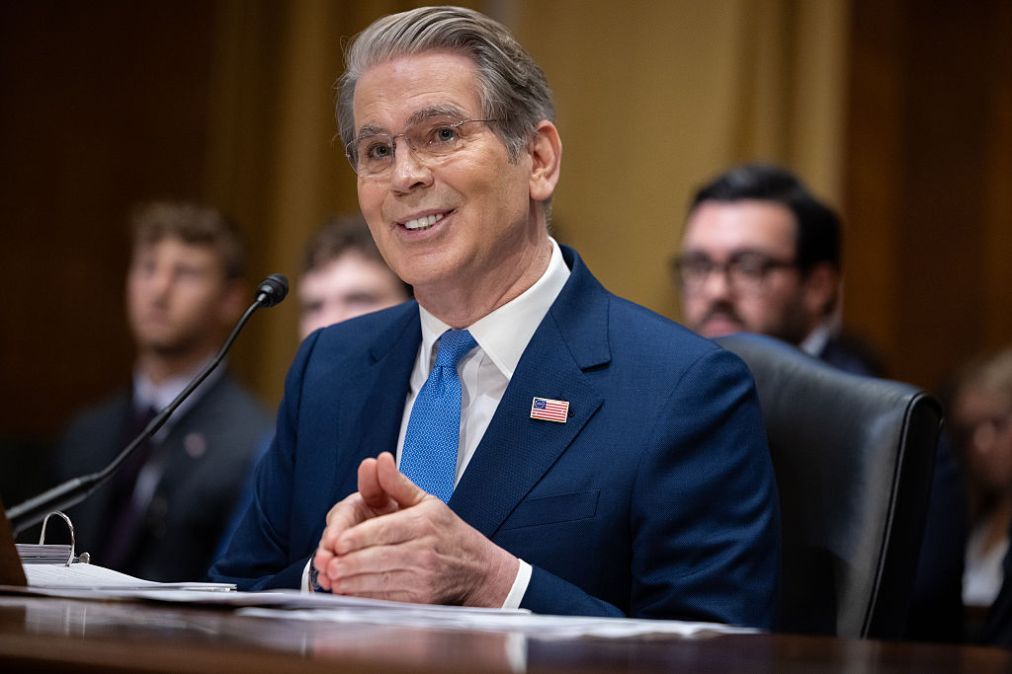
Treasury Secretary Scott Bessent on Wednesday defended a new artificial intelligence executive order from the White House that recommends — but does not mandate — cooperation between the federal government and industry on a key cybersecurity measure.
The order, released Tuesday, directs the Treasury secretary to form an AI cybersecurity clearinghouse within 30 days, following consultation with the national cyber director, the Homeland Security and Defense secretaries, and the NSA and CISA directors.
The function of the clearinghouse, per the order, would be to coordinate and deconflict scanning for software vulnerabilities, discover and validate those vulnerabilities, and coordinate and prioritize remediation and distribution of patches.
However, the EO only calls for “voluntary collaboration with the AI industry and operators of critical infrastructure” on the clearinghouse. During a Senate Finance Committee hearing Wednesday, Sen. Mark Warner, D-Va., pressed Bessent on the issue.
“The idea that we’re going to have only a voluntary regime, I believe, will put our banking system at risk, [and] clearly our national security at risk,” said Warner, who called the delayed order a “watered-down” version of a draft he’d seen.
Bessent maintained that the only difference between Tuesday’s order and a previous draft from President Donald Trump was a tighter deadline for the creation of the clearinghouse, going from 90 days initially down to 30. Warner reiterated that the draft he’d seen was “stronger than strictly voluntary” on cyber participation from industry, before moving on to another line of questioning.
The cyber concerns raised by Warner were the tip of a tech-focused iceberg for the Virginia Democrat, who sent a letter to Bessent ahead of Wednesday’s hearing about the Treasury Department’s policies around agentic AI.
In the letter, Warner asked Bessent to work with stakeholders to “develop clarity around the use and deployment” of agentic AI in the financial services sector.
“Agentic AI is a rapidly evolving area of technology, and a lack of regulatory clarity stifles innovation, puts financial institutions and their customers at risk, and increases the potential of American financial institutions and technology companies from being at a global market disadvantage,” Warner wrote.
“Treasury should take the necessary steps to develop an understanding of the state of AI agent development, the complete range of use cases and associated benefits and risks, and to develop rules that allow for innovation among financial institutions of all sizes while robustly protecting consumers,” he added.
During the Senate Finance Committee hearing, Warner expanded on those thoughts, noting the “great promise” and “also downsides” of agentic AI and the need for “a strong fiduciary regime around those agents.” He asked Bessent if he agreed with that take.
The Treasury secretary said the White House’s order “strikes a very good balance between innovation and safety.” He’s connected with “all the large language model labs” and convened those executives and leaders from the country’s largest banks in an effort to try “to optimize” that aforementioned balance.
“They are working diligently on their standards, because by their nature they have the strongest cybersecurity departments,” Bessent said of the banks. “I think that the rest of industry can learn from them.”
Bessent and former Federal Reserve Chair Jerome Powell met with major U.S. banks in April to discuss Anthropic’s new Mythos model, which has been touted for its ability to autonomously uncover cyber vulnerabilities and drawn concern for its hacking capabilities.
Treasury’s role as leader of the AI cybersecurity clearinghouse, meanwhile, has raised eyebrows among some cyber experts. During a House Homeland Security Committee hearing Wednesday, Rep. Michael McCaul, R-Texas, asked DHS Secretary Markwayne Mullin why CISA wasn’t tasked with running point on the clearinghouse.
“CISA interacts with just about every other agency out there, and when we started looking at the biggest threats that AI is used for, it is through financial gain,” Mullin replied.
“Scott Bessent and I talk all the time; he is very capable,” he continued. “We are very comfortable with what’s happening there with him leading in this area, because we’re partnering with CISA and our tools with the unique authority we have, and then he has separate authority. So we’re, because of the coordination, I think we’re better prepared than just leaving it within DHS.”
Ilona Cohen, chief legal and policy officer at HackerOne, wrote in a blog post Tuesday that the vulnerability clearinghouse in Trump’s order “mirrors” a recommendation in the White House’s AI Action Plan to create an AI Information Sharing and Analysis Center.
“Together, they suggest the Administration is trying to build a durable coordination architecture for AI-related cyber risk,” she wrote, “not just a one-time disclosure program.”
This story was updated June 3, 2026, with comments from DHS Secretary Mullin.