Drones in Dallas: How one World Cup host city enforced FAA flight restrictions
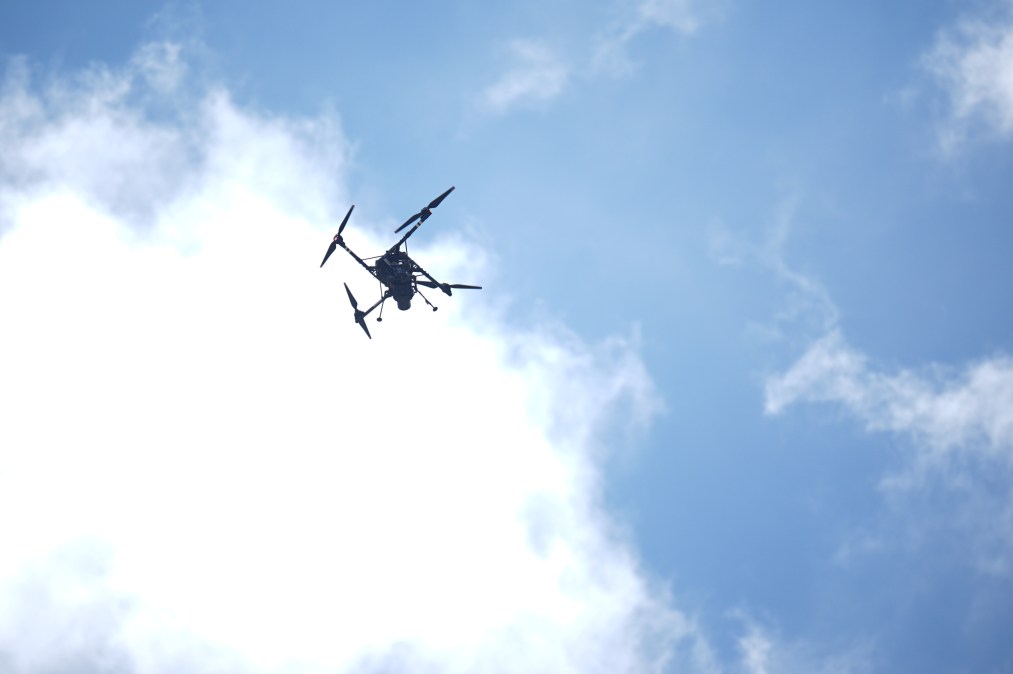
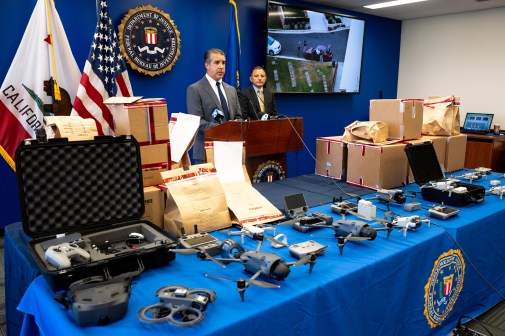
The FBI, Department of Homeland Security and local police departments across the country worked together to enforce the Federal Aviation Administration’s temporary flight restrictions during the World Cup events that wrapped up Sunday, leading to the seizure of 700-plus unauthorized drones.
In each host city, law enforcement needed seamless transitions and open communication as they dealt with varying authorities and restrictions. Dallas, which hosted nine World Cup games, more than any other host city, worked to strengthen existing partnerships to keep fans and athletes safe.
“All our efforts to secure the World Cup are very similar to our normal everyday efforts,” Joe Rothrock, FBI special agent in charge at the Dallas Field Office, told FedScoop. “It’s really built on the relationships and partnerships that we have with our local, state and federal partners.”
While the different law enforcement groups were operating in a “similar” way to day-to-day operations, there were, of course, differences. The FAA instituted temporary flight restrictions for a lengthy list of locations, including stadiums, fan-fest sites, team hotels, base camps and training facilities.
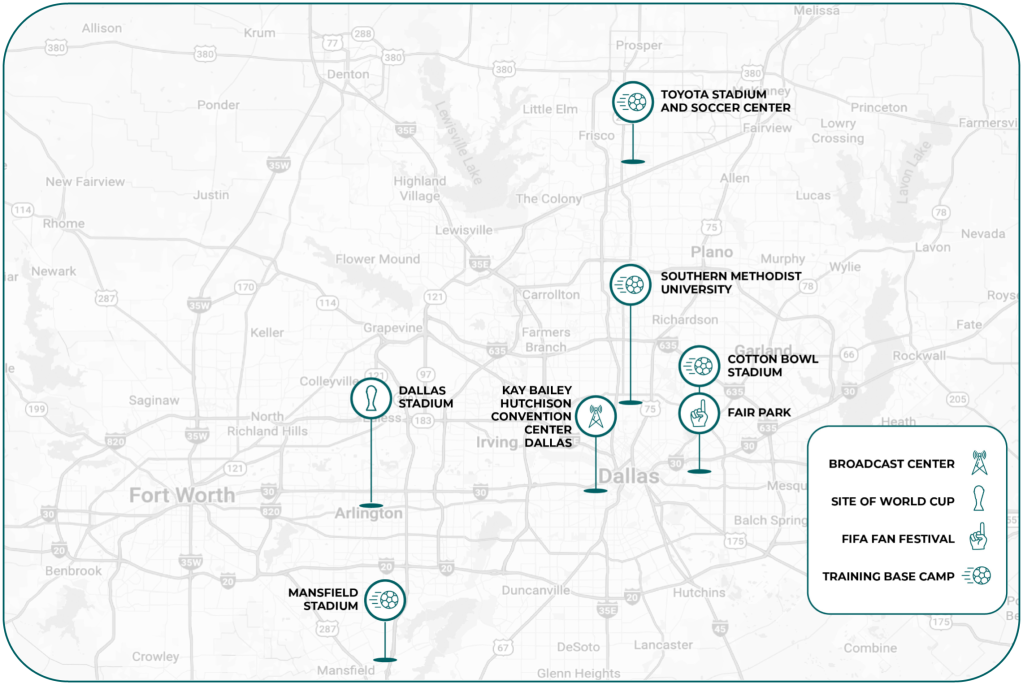
“We talk about it as the Dallas World Cup, but it’s really a regional North Texas event,” Rothrock said. “We have matches played in Arlington, Texas. FIFA-related events across the region include as far west as Fort Worth, and then we have base camps for visiting teams as far north as Frisco and as far south as Mansfield.”
With such a massive area to secure, both in Dallas and around the country, unmanned aerial systems were a top concern of lawmakers, law enforcement and top officials ahead of kickoff more than a month ago.
“Counter-UAS is a unique space for us,” Rothrock said. “The World Cup has been a watershed moment where you’ve seen local, state and federal law enforcement pull together resources to counter this evolving threat in a way we haven’t done historically.”
Earlier this year, the Federal Emergency Management Agency was tasked with sending out nearly $900 million in funding and grant programs to host cities to beef up security, information sharing and counter-drone capabilities.
The FBI’s recently launched counter-drone training facility has also played a role in getting state and local law enforcement up to speed. The Department of Justice unit hosted a joint operations center in Dallas that ran for the entirety of the tournament.
“It’s a physical space where we, the FBI, are leading it,” Rothrock said. “We’re literally sitting side-by-side every day with our local, state and federal partners.”
Drone as a first responder
Local law enforcement are typically the initial drone detectors.
The Dallas PD used its nine Skydio drones to keep an eye on the sky. Eight were docked at fire stations around the city, and one was placed at the Fan Festival accompanied by an onsite pilot.
The department’s five pilots went through a 40-hour training course that covered a variety of topics, including AI and automation.
Skydio drones are typically equipped with AI for obstacle avoidance and autonomous flight paths, which decides the best course for a drone to take to reach a predetermined location, per a spokesperson for the vendor. AI also powered a capability called “Shadow.” A pilot would click on a suspect in the camera feed and the drone stays with them.
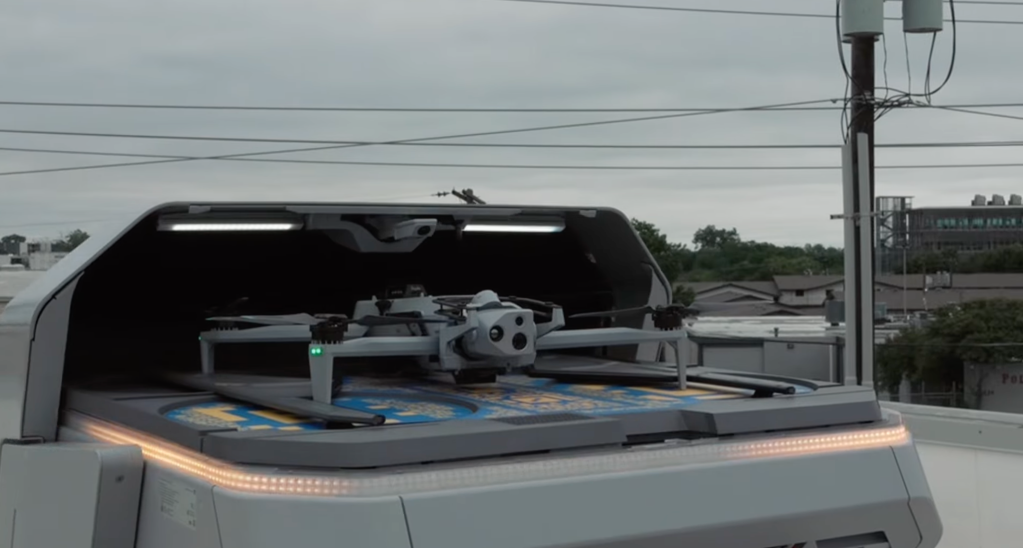
The police department launched its Drone as First Responder initiative in early May alongside its procurement of the drones and training of pilots. The program aims to use drones as a way to gain quicker situational awareness for better informed decision-making.
“The drone first responder program, we kind of co-opted it for FIFA,” Nathan Swyers, commander of the intelligence division at the Dallas PD, told FedScoop. “It hasn’t really changed our operations. It just added to it.”
Dallas PD is rarely keeping or storing footage that comes from the drones, according to Swyers.
“We are bound by state law that we can only record under four specific instances,” Swyers said. The officers record if the department has a search warrant, when an individual gives consent, if there is a felony occurring or if it is a life-or-death situation.
“We are really not recording anything until we can assess that we have one of those situations,” Swyers said.
Even without recording footage, the bird’s-eye view can help with information gathering. The drones capture a live feed that can be shared with federal partners, the fire department or other law enforcement.
Once Dallas PD’s drones identify an unauthorized UAS, the department can use the drone to help the FBI find the drone operator. From there, the FBI, alongside other federal and local partners, can contact drone pilots and make “a good assessment” as to their motivations for flying.
“Trying to make a good, informed assessment on how much of a threat these individual drones represent requires a significant number of law enforcement resources,” Rothrock said.
After figuring out the motive, the FBI team decides how to ameliorate the situation and remove drones from the area — sometimes tapping DHS units for assistance. The Federal Air Marshal Service, in particular, helped the FBI seize drones, which was an authority not given to local police.
“Federal, state, and local partners have implemented the most comprehensive airspace security and drone mitigation effort in U.S. history for the FIFA World Cup 2026,” a spokesperson for the Federal Air Marshal Service told FedScoop via email earlier this month. “Protecting the airspace is a coordinated, all-of-government effort.”
The results
In Dallas, law enforcement seized more than 90 drones from the beginning of the World Cup through the semifinal game it hosted.
Most of the seizures occurred on match days and drone pilots were often unaware of the temporary flight restrictions, according to the FBI’s Dallas office. There were fewer instances, but still some, seizures occurring near Fan Festival sites.
The FBI charged a criminal complaint against at least one person who flew a drone into restricted airspace. If convicted, the defendant faces up to three years in federal prison and remains in custody until further court proceedings.
No major security event happened in Dallas, or elsewhere, during the games.
Now that the World Cup is over, Dallas PD plans to dock the Fan Festival drone near Lake Ray Hubbard, which spans 22,000 acres.
“There is a system where we can attach a life preserver to that drone,” Swyers said. “If there happens to be a boat wreck or something, we have to get somebody out of the water quickly … we can fly that drone and drop the life preserver for them until we can get there.”