Amid AI boom, Senate Democrats eye agency-led push to protect workers
As business booms for artificial intelligence companies in the industry-friendly Trump era, reports of the emerging technology’s potentially devastating impact on labor continue to pop up. New legislation from a trio of Senate Democrats would task agencies with examining that dynamic and ensuring workers aren’t left behind.
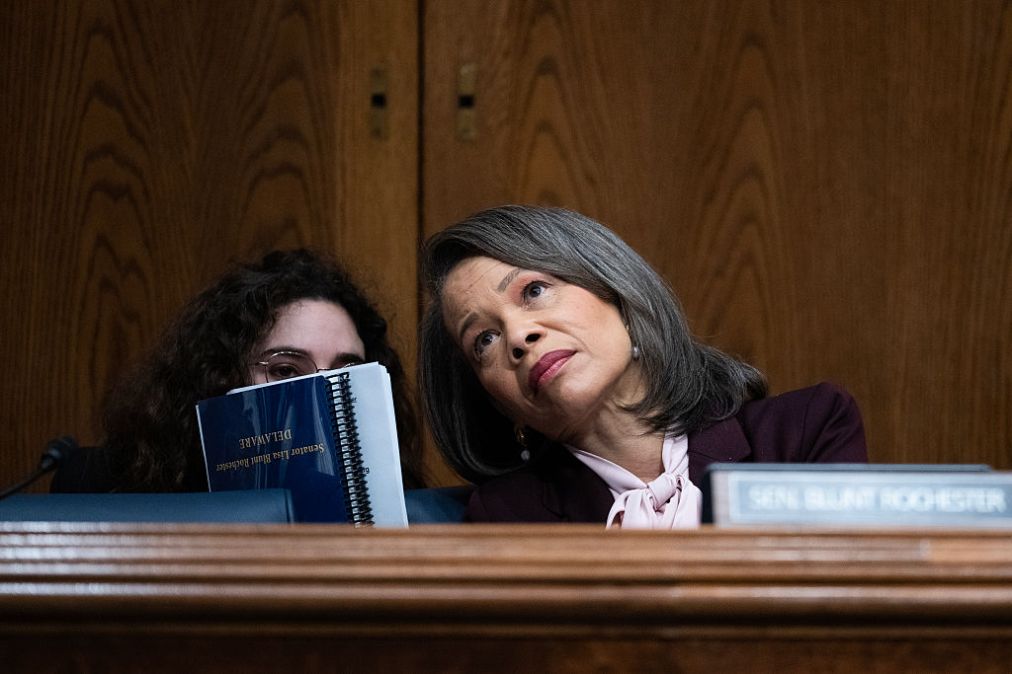
Introduced Wednesday, the Workforce of the Future Act from Sens. Lisa Blunt Rochester of Delaware, Mazie Hirono of Hawaii and Adam Schiff of California, calls for a detailed study from the secretaries of Labor, Commerce and Education into the impact AI will have on the country’s economy. The bill, shared first with FedScoop, also directs those agencies to assess what skills workers must have to stay afloat in the rapidly changing labor market.
Blunt Rochester, who served as Delaware’s labor secretary in the late 1990s, said in a statement that the bill builds on previous legislative efforts on AI and the workforce by former Democratic Sen. Laphonza Butler of California. This push, Blunt Rochester said, is aimed at ensuring Americans “can access and maintain stable, good-paying jobs” while the U.S. races “to confront the challenges of tomorrow.”
“Artificial intelligence is increasingly disrupting our economy, contributing to layoffs and occupational changes,” Blunt Rochester said. “This bill allows us to remain proactive, protect workers who are most impacted by the technology, and supercharge the future of work by ensuring our future workforce has the skills they need to succeed.”
A press release from the three Democratic senators cited a recent MIT study that found AI could replace nearly 12% of the country’s workforce. Recent college graduates, meanwhile, are reportedly struggling to find work. With those staggering realities in mind, the report from Labor, Commerce and Education would offer a comprehensive evaluation of which industries and jobs will be most affected by AI, as well as how job quality will be impacted and what prospective employees can do to prepare.
“As advanced and emerging technologies — including AI — become rapidly integrated within society, it is imperative that we prepare our workforce for these changes,” Hirono said in a statement. “Specifically, we must ensure advances enabled by AI are used to strengthen, not weaken, the workforce.”
The final report, which would be delivered to several congressional committees within a year of the bill’s enactment, would also analyze which demographic groups are most vulnerable to AI-linked downsizing and what educational institutions would be best suited to provide the right training resources.
Under the bill, the Department of Education would be authorized to dole out $160 million in grants to expand access to emerging and advanced technology schooling. Those grants should take into account recommendations from the agencies’ report, and could be used “for teacher training and recruiting, high-quality learning materials, reducing gaps in access for underrepresented groups, engaging industry, and providing necessary support for student success,” per the press release.
Another $90 million in grants would be made available through the Department of Labor. Those awards would be given to support workforce training and development for those professions most impacted by AI.
“AI is already transforming every corner of our economy in California and across the country. That’s why it’s critical the federal government do more to evaluate how AI will impact workers, while also investing in job training programs to prevent AI-related job displacement,” Schiff said in a statement. “We must act now to gain a full understanding of the impact of AI on the workplace, so we can ensure access to good paying jobs for the American people even as technology changes how we work.”
The lawmakers touted a range of endorsements for the bill, including AI companies (Anthropic and OpenAI), labor unions (the American Federation of Teachers and the International Federation of Professional and Technical Engineers) and others.
The introduction of the Democrats’ bill comes less than five months after the White House released its AI Action Plan, a 28-page strategy document that seeks to deregulate the technology and better position the country against China in the global AI race.
The plan assigned DOL with leading cross-agency efforts on looking out for “the workforce that will build, operate, and maintain” the AI industry, focusing largely on apprenticeships and “roles such as electricians, advanced HVAC technicians, and a host of other high-paying occupations” to build the infrastructure that will “power America’s AI future.”
In an interview with FedScoop after the release of the AI Action Plan, J.B. Brown, Public Citizen’s Big Tech accountability advocate, said the plan was “written as worker-first; that’s the language that they use.”
“But there’s nothing that talks about preventing people from losing jobs,” he added.