The Agriculture Department is trying to “get smarter” about AI with fewer resources. Other agencies are trying other ways to keep up with changes while dealing with…
From left to right, Google Public Sector CEO Karen Dahut speaks with GSA Administrator Ed Forst, DOD Undersecretary for Acquisition and Sustainment Michael Duffey and Google Cloud CEO Thomas Kurian at the Google Public Sector Summit on Oct. 20, 2026 in the Ronald Reagan Building and International Trade Center in Washington, D.C.
In its 2027-2032 strategic plan, the congressional watchdog laid out several goals revolving around emerging technology, artificial intelligence and cybersecurity.
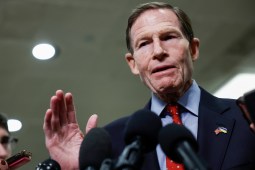
Sen. Richard Blumenthal, D-Conn., speaks with reporters after attending a closed-door, classified briefing for Senators at U.S. Capitol Building on Feb. 14, 2023 in Washington, D.C. (Photo by Anna Moneymaker/Getty Images)
Ahead of Oracle’s subpoenaed testimony, Democratic lawmakers want to know why the ceiling nearly tripled to $27 billion. But the VA says it told Congress the estimated…
In this photo illustration, the CLEAR Secure company logo is seen displayed on a smartphone screen. (Photo Illustration by Piotr Swat/SOPA Images/LightRocket via Getty Images)
While using CLEAR is free and not mandatory, the pilot is “one of the first steps of a larger VA modernization effort” and combats identity fraud when…
The long-awaited clause was issued as a regulation deviation last week, and while some previous commenters are relieved, they still have worries about it in practice.
Four new investments at the departments of State, Agriculture and Transportation aim to speed up permitting and integrate artificial intelligence into the agency’s tech portfolio.
Large lettering hangs on the side of the General Services Administration building on July 23, 2026, in Washington, D.C. (Photo by J. David Ake/Getty Images)
Ahead of formal rulemaking, the General Services Administration issued an artificial intelligence acquisition regulation deviation that can be used immediately, incorporating some public comments.
In this photo illustration, a Google Gemini logo is seen displayed on a smartphone on the top of a laptop. (Photo Illustration by Omar Marques/SOPA Images/LightRocket via Getty Images)
Transportation Secretary Sean Duffy, left, accompanied by Federal Aviation Administration Administrator Bryan Bedford, right, speaks during a news conference at Ronald Reagan Washington National Airport on Sept. 28, 2026 in Arlington, Va. (Photo by Andrew Harnik/Getty Images)