CBP advancing use of scanning tech as ICE pulls some staffers away
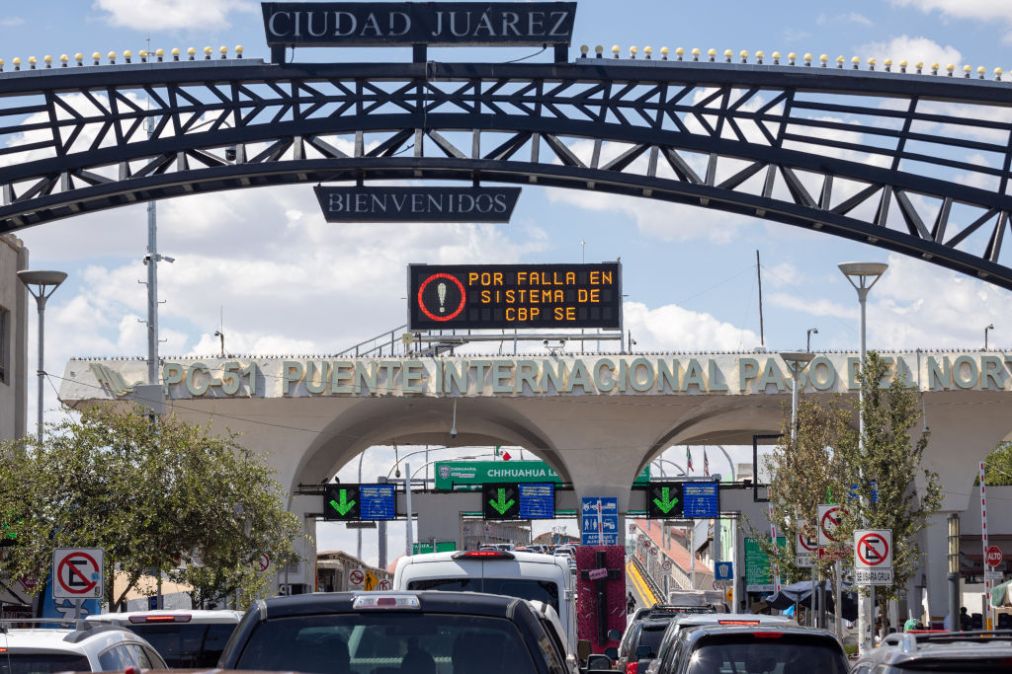
A top U.S. Customs and Border Protection official told lawmakers Thursday that the agency is making progress in its deployment of non-intrusive inspection technology at ports of entry, though some Democrats questioned whether the reassignment of CBP personnel to Immigration and Customs Enforcement operations may be pulling it off track.
Republicans and Democrats on the House Homeland Security Subcommittee on Border Security and Enforcement were largely in agreement on the importance of ramping up use of non-intrusive inspection technology at border crossings. A September 2025 Government Accountability Office report found that CBP was falling behind on a key implementation goal for NII tech, which can locate concealed items — drugs, weapons, people, etc. — in vehicles or cargo.
Rep. Lou Correa, ranking member of the subcommittee, said during the hearing that these “marvels of technology” need to be “put into place as quickly as possible.” But the California Democrat asked CBP’s Diane Sabatino if some agency staffers have been moved “from the border for ICE deportation enforcement in the interior of the United States,” and whether diverting that manpower could be linked to NII tech delays.
Sabatino, the acting executive assistant commissioner for CBP’s Office of Field Operations, acknowledged that the agency has “assigned personnel to surge operations” — though moves of that kind are “not new or unique” and plans are made for such absences. She didn’t directly address Correa’s theory on lagging tech adoption.
Rep. Bennie Thompson, D-Miss., was on the same page as Correa, delivering a blistering opening statement on ICE and CBP tactics in Minneapolis, Chicago, Los Angeles, New Orleans and other areas. Thompson, ranking member of the full House Homeland Security Committee, said it’s hard to talk about tech when “the Trump administration is occupying and terrorizing American communities in the name of immigration enforcement.”
“I want to be clear: I have long pushed for the full deployment of these scanners at our ports of entry to prevent dangerous drugs and other illicit goods from entering the country,” he said. “There are real concerns with the acquisition and rollout of that equipment, and I’ll continue to engage with CBP on that. We need to make sure taxpayers’ dollars are invested effectively. However, right now, the American people are demanding answers about what is happening in our cities. They want to know what immigration agents are being instructed to do.”
Sabatino didn’t speak directly to those issues, but she did offer updates on NII technology deployment. The agency has so far unleashed 405 units across the country at air, sea and land ports of entry, she said, and scan rates have climbed to 13% for passenger vehicles and 37% for commercial vehicles.
“We’re also enhancing our NII operations through the integration of artificial intelligence, which helps automate the analysis of the scanned images, reduces the time needed for manual image review and allows us to focus our resources on the greatest risks,” Sabatino said. “With funding provided by Congress, we plan to deploy 38 additional systems by the end of this fiscal year. These drive-through systems will allow us to scan 40% of privately owned vehicles and up to 70% of commercial vehicles.”
Hilary Benedict, a director with the Government Accountability Office’s Science, Technology Assessments, and Analytics team, told lawmakers that three issues have prevented CBP from hitting a requirement in the 2021 Open America’s Ports Act to scan 100% of commercial and passenger vehicles and rail containers by 2027 with NII systems: planning, costs and scheduling.
“Deployment of non-intrusive inspection systems has taken longer than expected,” Benedict said. “At the time of our review, CBP planned to complete deployment of the systems it had procured for passenger and commercial vehicles by the end of 2026, and for rail containers by the end of 2029. However, it will take longer to achieve the 100% scanning requirement because the schedule does not include the system CBP has not yet procured, or the systems needed [for] the nine biggest crossings that are not included in CBP’s plan.”
Benedict said CBP agreed with GAO’s recommendations and plans to implement the missing technology by the end of fiscal 2028. Those nine southwest border crossings are Nogales-DeConcini, Lukeville and Naco in Arizona; Gateway to the Americas Bridge, Brownsville and Matamoros International Bridge and Gateway International Bridge in Texas; and Andrade, Otay Mesa and San Ysidro — by far the most active crossing by vehicle volume — in California.
Sabatino said CBP is counting on the subcommittee to hold it accountable on those deployments, as well as supporting the agency’s work with vendors on identifying new technologies. They’re feeling “optimistic” about some tests involving technology that could “significantly increase the scan rates” at the southwest border.
There are a “number” of other emerging technologies CBP is exploring, Sabatino noted in response to a question from Rep. Sheri Biggs, R-S.C., pointing to AI and machine-learning systems that help “identify anomalies” in vehicles, as well as “a number of algorithms deployed along the southwest border today that are in training that we hope will be able to actually peel back resources.”
“We’re going to continue to use all of the technology that’s available to us, as well as additional technology that we’ll be procuring with funding from the One Big, Beautiful Bill Act,” Sabatino said. “And that’s in complement to also our canine assets, our targeting models and the intelligence available to us.”