District court temporarily blocks Anthropic ban, supply-chain risk designation

A federal judge in California granted Anthropic’s request for a preliminary injunction Thursday, preventing implementation of President Donald Trump’s governmentwide ban on its technology and the Pentagon’s designation of the company as a supply-chain risk.
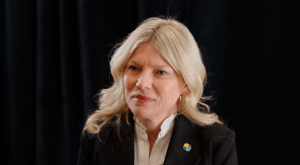
In her decision, San Francisco-based U.S. District Judge Rita Lin said the government’s actions appeared to be “designed to punish Anthropic” rather than protect national security. Her order blocks the defendant agencies from carrying out the ban on Anthropic’s technology and halts any Department of Defense’s actions to implement, apply, or enforce the company’s supply chain risk designation pending the final result of the case or further notice from the court.
The ruling, for now, is a win for Anthropic and its supporters. Given the potentially wide-ranging impacts of the litigation, the company has attracted a broad coalition of backers in its legal fight — including industry competitors, federal workers, as well as legal and policy analysts.
Microsoft, employees at Google and OpenAI, and the American Federation of Government Employees were among those that filed amicus briefs in support of the company’s district court challenge. Anthropic also disclosed that Amazon Web Services and Google would have a substantial or financial interest in the outcome of the district litigation.
The administration’s actions have already had wide impact in government, with multiple federal agencies canceling their Claude services and others with uses likely on the chopping block.
A legal declaration from Anthropic’s head of public sector, Thiyagu Ramasamy, stated that the company is aware of six agencies that have terminated contracts or use of its technology since the actions. Ten more agencies have contracts for Anthropic tools or use them through third parties, Ramasamy said.
A public battle
The order is the latest in a legal fight that began earlier this month at the district and circuit court level following a break-up between the company and the U.S. government.
After Anthropic went public with the details of its disagreement with the Pentagon over the use of its technology Feb. 26, Trump and Defense Secretary Pete Hegseth issued directives via social media banning federal agency use of the technology and announcing the designation of the company as a supply-chain risk.
Trump argued the company was attempting to “strong-arm” the DOD in negotiations, but Anthropic says a Pentagon policy would have nixed its safeguards to ensure that its technology would not be used for things it hasn’t been trained to do — namely mass surveillance of Americans or fully autonomous lethal weapons. Anthropic also said it offered to help the administration transition to another vendor.
Anthropic’s district court challenge alleged the swift and public actions against the company were retaliatory and flouted federal administrative procedure law, violated the company’s right to free speech, and were beyond existing legal authorities.
In her ruling, Lin found there were “serious procedural problems” with the government’s actions and said the Claude developer had successfully shown the “broad punitive measures were likely unlawful and that it is suffering irreparable harm from them.”
“The record supports an inference that Anthropic is being punished for criticizing the government’s contracting position in the press,” Lin wrote.
She pointed to the announcements from Trump and Hegseth that called the company “out of control” and “arrogant” and said DOD records “show that it designated Anthropic as a supply chain risk because of its ‘hostile manner through the press.’”
“Punishing Anthropic for bringing public scrutiny to the government’s contracting position is classic illegal First Amendment retaliation,” Lin said.
Supply-chain issues
Lin further found that the administration’s supply chain risk designation is likely arbitrary and capricious and contrary to law, as DOD doesn’t provide “legitimate basis to infer from Anthropic’s forthright insistence on usage restrictions that it might become a saboteur.”
During the oral argument for the motion, Justice Department attorney Eric Hamilton argued officials had “come to worry” that the company would take future actions that would subvert IT systems.
In a declaration submitted after that argument, Emil Michael, DOD’s undersecretary of defense for research and engineering, said that the company was trying to insert itself in decision-making and had demanded an “operational veto” of the department activities that aren’t prohibited by law.
During oral argument, Michael Mongan, a lawyer with WilmerHale who represents Anthropic, pushed back on the government’s claims about future risks, arguing that if the company had agreed to the Pentagon’s terms, none of the resulting measures would have happened.
“This is a supply chain designation in search of a justification or a rationale,” Mongan said.
Lin ultimately took Anthropic’s side.
“Nothing in the governing statute supports the Orwellian notion that an American company may be branded a potential adversary and saboteur of the U.S. for expressing disagreement with the government,” she said.
The White House did not immediately respond to a request for comment on the order.