Energy secretary sees ‘growing’ opposition to AI as ‘very real’ risk
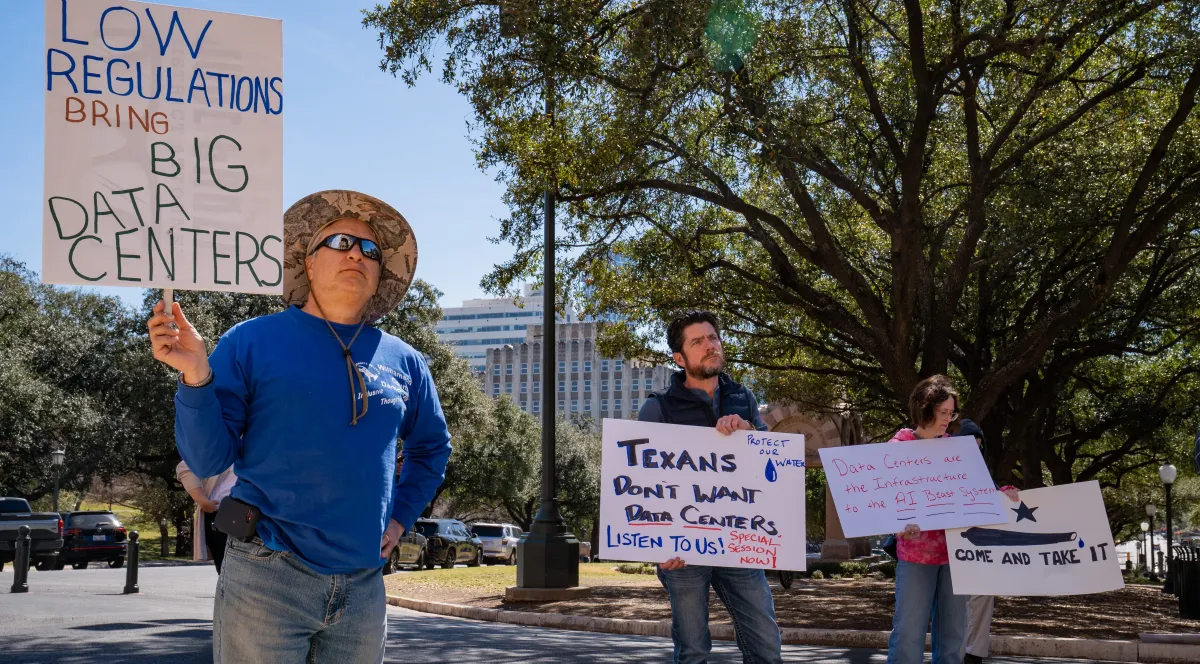
The Energy Department might be all in on AI, but the increasing apprehension among the American public poses a challenge, according to Secretary Chris Wright.
“The country as a whole is going very negative on AI, and this is a risk,” Wright told lawmakers during a budget hearing Thursday. “It will be a loss to America if we stop this development and this investment and this improvement.”
The DOE head characterized opposition to AI as a risk that’s “very real” and “growing, particularly across rural America.”
During the hearing, members of Congress offered a few explanations. Large plots of land are going to massive data-center buildouts. The spike in data centers is then leading to increasing energy costs as resources are diverted to powering and cooling the facilities.
“There’s more political signs against AI in our region than for candidates in the upcoming races,” Rep. Marcy Kaptur, D-Ohio, told Wright. “I don’t know what backlash there’s going to be, but I’m telling you it’s coming.”
Lawmakers and other coalitions have pushed back on the rapid expansion of AI-ready infrastructure.
Senate Democrats sent a letter in November to Commerce Secretary Howard Lutnick and Office of Science and Technology Policy Director Michael Kratsios, calling attention to “soaring electricity bills” and “increasing burdens on water supplies” due to the fast-tracking of data-center buildouts. In December, more than 230 environmental groups urged Congress to put a moratorium on data-center construction.
Rising resistance is having an impact. Around $18 billion in data-center projects were blocked over the past two years, according to Data Center Watch, a nonpartisan boutique research firm. The organization found another $46 billion in projects were delayed due to opposition from residents and activist groups.
Across the country, elected leaders have been voted out based on their position on data centers, construction proposals have been withdrawn and data-center development moratoriums have gained traction.
The Energy Department has a distinct interest in artificial intelligence, given its role as the agency leading the Genesis Mission. The initiative is a national, all-hands-on-deck effort that plans to bring national laboratories, private-sector companies and academic institutions together to integrate AI, quantum and high-performance computing advancements into a range of workflows tied to scientific discovery.
The agency is also a primary steward of the energy grid, which is threatened by the AI boom.
“We need to change the public perception of AI,” Wright said. “If we don’t market it better and we don’t communicate it better, we’re at risk.”
Last month, the Trump administration rolled out its Ratepayer Protection Pledge as a way to lessen the burden on citizens. Seven technology companies accepted the terms, according to the March announcement, which included a voluntary commitment to negotiate separate rate structures, invest in local communities and contribute to a more reliable grid. Amazon, Google, Meta, Microsoft, OpenAI, Oracle and xAI were among the initial wave of signees.
While some groups welcomed the effort, others argued that it didn’t go far enough.
“A voluntary pledge from corporate actors to stay on their best behavior is simply a vague and largely meaningless effort that fails to offer ratepayers any guaranteed protection from soaring utility rates,” Trevor Higgins, SVP of the energy and environment department at the Center for American Progress, said in a statement following the March announcement.