USDA would get more AI grants, research, farmer education under new Senate bill
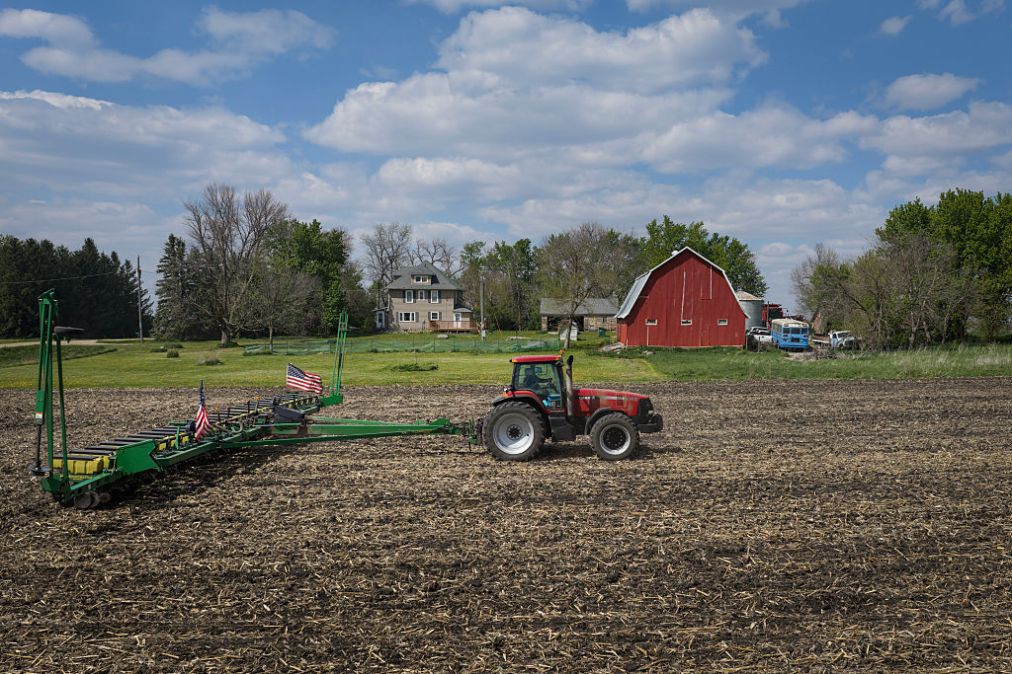
The Department of Agriculture would receive more grant opportunities for artificial intelligence and educating farmers on the technology under a bipartisan Senate bill introduced Thursday.
Sen. Ted Budd, R-N.C., said current barriers to AI access can cause American producers to fall behind and be less competitive in the global market.
“Precision technologies have the potential to enhance innovation and productivity in farming and ranching, but outdated USDA programs are holding this potential back from reaching our rural communities,” Budd, the bill’s lead sponsor, said in a statement.
The bill would make AI research eligible for the USDA’s Agriculture and Food Research Initiative grant and a priority for the Agriculture Advanced Research and Development Authority. It would also include responsible AI use education for farmers through the USDA’s Cooperative Extension System, in addition to an expansion of food and agricultural science fellowships and grants for AI.
An “AI in Ag” advisor would also be nominated to tailor existing programs and grants for AI adoption, and work with the National Institute of Standards and Technology to establish AI standards.
The bill is co-sponsored by Sens. Adam Schiff, D-Calif., Jim Banks, R-Ind., Catherine Cortez Masto, D-Nev., Mike Rounds, R-S.D., and Lisa Blunt Rochester, D-Del.
“Emerging technologies, like Artificial Intelligence, offer an opportunity to advance innovation across all industries, but not without access to proper resources and training,” Blunt Rochester said in the statement. “The FARM AI Act will increase investments in the agricultural industry’s use of AI and ensure rural communities are empowered to successfully harness its promise.”
North Carolina State University and the North Carolina Life Sciences Organization also support the bill.
“The bill addresses two critical gaps facing farmers: a lack of capital to adopt AI tools and a shortage of trained workers in rural communities to implement them,” NCLifeSci President Laura Gunter said. “The act strengthens the U.S. food supply chain and positions American farmers to compete internationally.”
The 2026 farm bill, which passed the House 224-200 and is awaiting Senate action, includes few opportunities for AI use in research. Budd’s bill does not have a House counterpart but has been referred to the Senate Committee on Agriculture, Nutrition and Forestry.