Energy Department taps Tech Force for development skills
The Department of Energy is getting ready to bring on technologists from the governmentwide hiring initiative known as Tech Force, according to an IT official at the agency.
Tech Force launched in December as a program trying to fill gaps across federal agencies with workers serving two-year stints. A few agencies have already made selections, the Energy Department technology leader said during a panel at the EIE Summit on Thursday in Washington D.C.
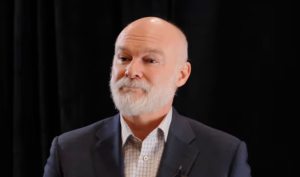
“We haven’t started the actual interviews, but they’ve gone through the first level where a crossagency panel has deemed them qualified,” said Bridget Carper Arnone, deputy CIO for architecture, engineering, technology and innovation with the DOE’s OCIO.
The Energy Department had an initial wishlist of 10 developers, she said, but budget constraints are playing a role.
“Right now, I’m looking for a data scientist and a software engineer,” Arnone said. DOE received more than 100 applicants for the software engineering role and around 175 for the data scientist position.
The other hurdle for the Energy Department is compliance considerations.
Only a certified classification specialist has the authority to approve a position description. Arnone said she used Joulix, the DOE’s generative AI tool suite, to speed up the process of writing the position description and is now waiting on the specialist to classify it.
“A year from now, ideally, we can report back on how Tech Force was able to help and change the landscape of bringing developers into the federal government to work alongside our contractors,” Arnone said.
In total, Tech Force is expected to comprise 1,000 individuals across the experience range, from early-career technologists to managerial-level workers. Private-sector partners include AWS, Microsoft, OpenAI, Oracle and Palantir, among other technology companies. The partners will provide training resources and mentorship, in addition to nominating employees to do stints and committing to consider Tech Force alumni for employment after their two-year stretch is up.
Expanding Joulix’s AI model foundation
As the Energy Department gears up to welcome new team members, the agency has several projects on the horizon.
One priority is iterating on the agency’s generative AI application suite Joulix, which Arnone has helped to scale. Joulix has saved employees around 225,000 hours, she said.
“We may have put in $750,000, but the return on investment we’ve gotten is twofold,” Arnone said.
The tool has evolved since its initial release as technologists incorporate new techniques and capabilities, such as web grounding. The next area of improvement for the application suite is to add access options to a diverse set of model vendors.
“We’re looking to expand that in the next few months,” Arnone said.
The clash between Anthropic and the Department of Defense, which led to President Donald Trump issuing a governmentwide ban on the vendor, spurred the decision, she said.
“Now, you have six months to adapt,” Arnone said, referring to the phase-out timeline outlined by Trump. “Our Joulix is only using Gemini, but using OneGov we’re looking to add OpenAI, Perplexity.”
Agencies across the federal government have had to take stock of their AI applications and assess the resiliency of use cases. Building applications that can connect to a range of models is one strategy that federal IT leaders, such as the Secret Service CIO and State Department officials, are leaning on to ease the transition from one model to the next.
An Energy Department spokesperson told FedScoop earlier this month that the agency was “reviewing all existing contracts and uses of Anthropic technology.”
“We don’t want to be in that case again, where we’re stuck and not have a plan to be able to adapt,” Arnone said.