Brendan Carr says FCC will be ‘open-minded’ on Trump order to ban state AI laws
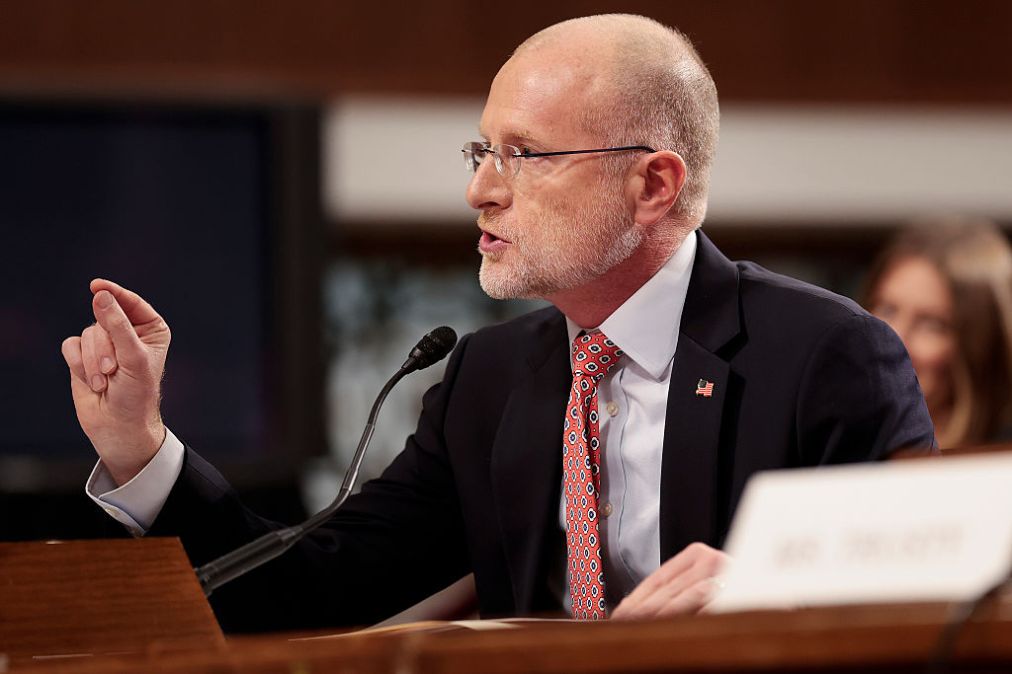
The head of the Federal Communications Commission told lawmakers Wednesday that he will be “open-minded” about the agency’s assignment under President Donald Trump’s executive order to curb states’ ability to regulate artificial intelligence.
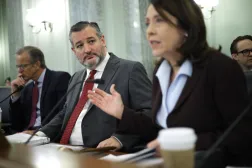
In an often contentious hearing before the Senate Commerce, Science, and Transportation Committee, FCC Chairman Brendan Carr was pressed by Sen. Amy Klobuchar, D-Minn., about the agency’s regulatory role on a variety of tech topics, including the White House order last week that aims to sideline states on AI in favor of a “minimally burdensome” federal framework.
“President Trump came out with this dangerous and likely illegal AI rule that preempts all the states from doing anything to try to save people, whether it is kids that are being exposed to content they shouldn’t see, or fentanyl, or political videos that are lies,” Klobuchar said. “So do you think Congress has the authority to preempt state laws, or do you think President Trump and the agencies like yourself have the authority to preempt state law when it comes to the internet and safety with AI?”
Carr, who began his FCC tenure as a commissioner in 2017 before Trump elevated him to the top position a year ago, responded that “when it comes to AI in particular, there’s an executive order. It asks the FCC to initiate a proceeding. We’re going to initiate a proceeding. We’re open-minded on where that goes.”
The order charges the FCC chair, in consultation with the White House’s special advisor for AI and crypto, with initiating a “proceeding to determine whether to adopt a Federal reporting and disclosure standard for AI models that preempts conflicting State laws.” That assignment — which pairs Carr with the venture capitalist and tech founder David Sacks — is to be carried out within 90 days of the order.
Carr, who faced withering Democratic questioning Wednesday over his comments pressuring ABC affiliates to take late-show host Jimmy Kimmel off the air, attempted to pivot from Trump’s state AI order to supposed government “weaponization” under the Biden administration, but Klobuchar wasn’t having it.
“Joe Biden is no longer president. You are head of the FCC, and Donald Trump is president. And I’m trying to deal with this right now,” the Minnesota Democrat told Carr, who wrote the FCC chapter in the Heritage Foundation’s infamous Project 2025 document.
Klobuchar then turned to FCC Commissioner Anna Gomez for her opinion on the order, asking the agency’s lone Democrat about the risks she sees in preempting state laws on AI and whether the commission or the president can legally do so.
“I believe that the FCC has very dubious authority to actually preempt state laws in this case, because without a comprehensive federal framework, there is nothing for the FCC to preempt,” Gomez said. “The Communications Act did not actually talk about artificial intelligence or provide authority to the FCC to do this preemption, so I’m very dubious of our authority to do so. That said, we have sought comment on this.”
Carr’s willingness to go against the president was called into question by multiple Democratic senators during the hearing. The chairman suggested that the FCC is not an independent agency and wouldn’t say that Trump is not his boss.
The president’s AI order last week, meanwhile, was lauded by major tech trade groups and panned by state leaders, civil rights and consumer advocacy groups. Many states have continued to move forward with AI rules, as experts maintain there’s little legal heft behind the order.
“The executive order relies on a flimsy and overly broad interpretation of the Constitution’s Interstate Commerce Clause cooked up by venture capitalists over the last six months,” Americans for Responsible Innovation President Brad Carson said in a statement last week, noting that he expects the EO to “hit a brick wall in the courts.”