Agency software-buying bill advances in the House

A bill that would overhaul how the federal government purchases software has found itself in a familiar place: moving forward in the House while awaiting Senate consideration with just a few weeks left in the congressional calendar.
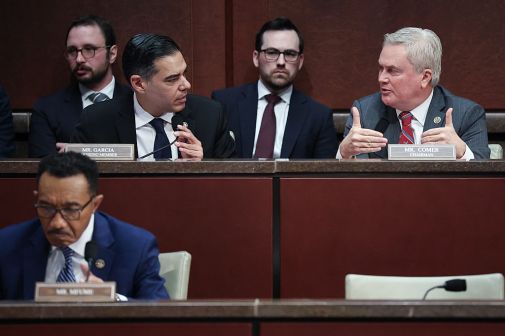
The Strengthening Agency Management and Oversight of Software Assets (SAMOSA) Act advanced out of the House Oversight and Government Reform Committee on Tuesday, teeing it up for a vote in the full chamber.
The SAMOSA Act, which would direct federal agencies to assess their software licensing practices and streamline future IT buying decisions to avoid duplicative purchases, was reintroduced in the House in September following the Senate’s move to do the same in July.
The bill passed the House a year ago but stalled out in the upper chamber, despite backing from a host of software and IT trade groups, including the Computer & Communications Industry Association, the Alliance for Digital Innovation, NetChoice, OpenPolicy and the Software Information Industry Association.
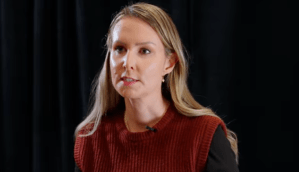
Ryan Triplette, executive director of the Coalition for Fair Software Licensing, said in a statement Tuesday that the bill would bring “much-needed transparency to federal spending and software management.”
Congress has been trying to move forward with the SAMOSA Act since at least 2022. House Oversight Committee Chair James Comer, R-Ky., noted during Tuesday’s markup that the current iteration of the SAMOSA Act is “identical” to what passed the chamber last year.
“This bill improves government software purchasing without unduly limiting the procurement options of federal agencies,” Comer said. “It requires each agency to better manage software and develop a plan for addressing any costly unnecessary licenses. This will reduce wasteful spending and improve government efficiency.”
Rep. Robert Garcia, D-Calif., the committee’s ranking member, said that having agencies send their software reviews to Congress, the General Services Administration, the Government Accountability Office and the Office of Management and Budget will ensure that lawmakers and regulators will be able to “keep a closer eye on software contracts and spending,” resulting in improved planning for software management.
The bill is co-sponsored by Reps. Nancy Mace, R-S.C., Shontel Brown, D-Ohio, Pat Fallon, R-Texas, and April McClain Delaney, D-Md. Mace, who chairs House Oversight’s cybersecurity subcommittee, compared agencies’ current software-buying practices to “someone paying for two Netflix or Spotify accounts.”
“This bill would not prescribe what software agencies should buy, but rather what agencies … procure and keep track of the software they procure. This is intentional,” Mace said. “We understand as technology continues to develop, the software needs of agencies change, and we need to allow them to remain agile, but agencies can remain agile in a way that is fiscally responsible, where taxpayers aren’t on the hook for duplicative, unnecessary software.”
Brown, ranking member of House Oversight’s cyber panel, said the bill offers “a straightforward solution” for agencies that will prevent “overspending” and instill better accountability in software buying.
“In other words, this bill will cut waste, allow agencies to negotiate better contracts and spot vulnerabilities quickly. That means fewer headaches, better security and real savings for taxpayers, nearly $5 billion every year, according to one Senate committee,” Brown said. “This is the kind of commonsense work people sent us here to do. It’s not flashy and it’s not partisan, but it is good government and it is real government efficiency.”