Energy competition aims to ‘maximize’ US chances in quantum race
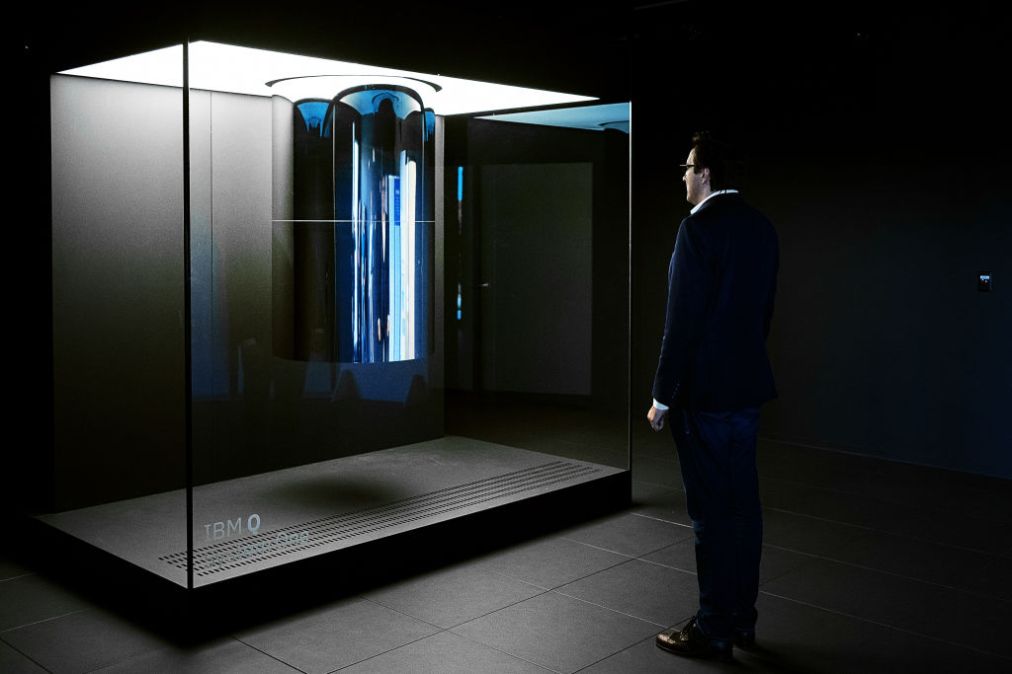
The Department of Energy is launching a $215 million initiative aimed at funding the demonstration of first-generation scientifically relevant quantum computers that can perform hundreds of millions of fault-tolerant operations, the agency announced Thursday.
Darío Gil, DOE’s undersecretary for science and director of its Genesis Mission, said on a press call that based on “very ample feedback” the country has reached “a threshold where something like this is possible,” referring to SRQCs. Gil said “something on the order for quantum computing … of 100 logical qubits” is possible as early as 2028.
With that timeframe in mind, the goal of the agency’s new Quantum Genesis Q Competition, he said, is to “maximize the chances that the United States leads in this new frontier” and is “the first nation to demonstrate this capability.”
“We decided that one of the elements of the program that we could leverage the best of the community is to allow both collaboration and competition to take place,” he added.
The competition will have two phases: The first will award up to $1.5 million per applicant for early milestones, and the second opens up a $100 million general incentive pool split among the competitors that can demonstrate a first-generation SRQC with a minimum of 100 logical qubits. There are two additional bonus pools of up to $50 million for awardees that reach the 150 and 200 logical qubits target.
Tanner Crowder, quantum information science lead at the DOE’s Office of Science, said on the press call that town halls, roundtables and a national laboratory blueprint for quantum supercomputing “all fed into … the culmination of this Q competition.”
Demonstrations as part of the competition will have to show “a real, honest-to-goodness path to scale,” he said, followed by the actual buildout of SRQCs capable of meeting the 100 logical qubits objective.
“Our goal is not to have a bunch of qubits that can’t do much,” added Crowder, who also serves as DOE’s senior technical advisor for advanced scientific computing research. “We want to be able to see meaningful scientific calculations done on these quantum computers that are based in the DOE mission space.”
Along with the unveiling of the Quantum Genesis Q Competition, the Energy Department also on Thursday announced the setup of a verification and validation testbed, which Crowder said will “provide a foundation for being able to characterize these machines, understand their capabilities, understand how they will integrate into the DOE scientific ecosystem, and be able to be instruments for scientific discovery and not be the scientific discovery themselves.”
Per the press release, the DOE national labs will welcome applications to the Quantum High-Performance Computing Validation and Verification Testbed Lab, with total planned funding set for $45 million.
Crowder said during the press call that the verification and validation testbed team will be asked to “innovate” and “provide hardware-agnostic” capabilities that can be used by DOE, other federal agencies and industry.
“It is a real opportunity to be able to provide hardware-neutral benchmarking, and be able to take that benchmarking and understand what it means for scientific discovery,” he said.
The announcement of the Q competition and creation of the testbed lab came as the DOE made public a report from its Office of Science Advisory quantum subcommittee that assessed the current quantum landscape and laid out a “near term roadmap” for the technology.
The report offers recommendations for quantum use and details how various quantum capabilities can be made available to the scientific community more broadly, Gil told reporters. Crowder pointed to three roadmaps included in the report that detail “how we can move from the machines that we have today to the performant machines that we need for production-scale quantum computing.”
With the DOE putting its full weight behind quantum technologies, Gil equated the moment to the launch of a satellite or the building of the first particle accelerator. Getting to that 100 logical qubits threshold will be “a very important moment.”
“It’s a moment 50 years in the making,” he said.