Bipartisan Senate coalition calls for data about AI impact on labor market
A bipartisan group of senators is asking Department of Labor leaders to collect, analyze and disseminate data about the impact of artificial intelligence on the labor market.
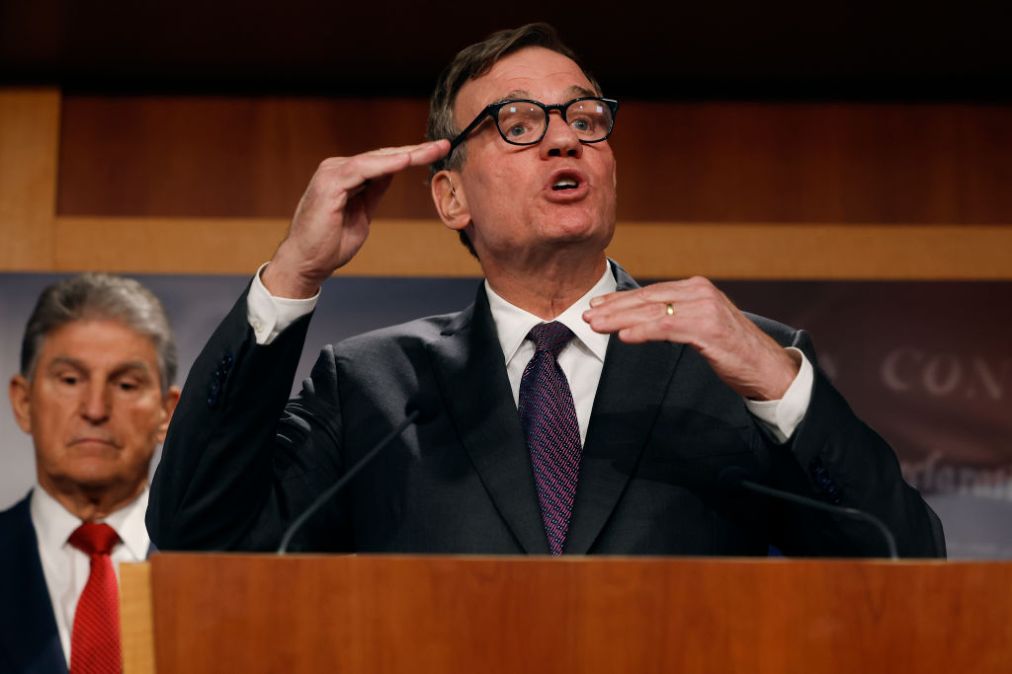
In a letter dated Thursday, a coalition led by Sens. Mark Warner, D-Va., and Josh Hawley, R-Mo., asked Labor Secretary Lori Chavez-DeRemer, as well as acting Bureau of Labor Statistics Commissioner William J. Wiatrowski, and an official performing the duties of the director of the U.S. Census Bureau to look at making changes to three surveys to encompass AI trends.
“At a time when the U.S. workforce is approaching an inflection point due to the acceleration of artificial intelligence, adaptable and responsive federal statistical agencies are necessary in guiding labor market participants, researchers, and policymakers on how to properly respond to this moment,” the senators wrote.
Despite the technology’s boom in popularity in recent years, there is insufficient federal data about how its adoption is impacting the workforce, according to the letter. Though there have been some moves at the Labor Department agencies to capture the impact of AI on employment, the senators called on them “to build upon these actions swiftly and considerably.”
The senators pointed to a provision within the fiscal 2026 spending package signed into law last month that encouraged BLS “to evaluate the impact of artificial intelligence on the economy, including job loss, creation, and displacement.”
In response, they wrote, BLS and Census should look for opportunities within existing data collection efforts to add various AI-related questions. Specifically, the senators said such opportunities exist within the Current Population Survey (CPS), Job Openings and Labor Turnover Survey (JOLTS), and National Longitudinal Survey, which follows a sample of American youth.
A DOL spokesperson told FedScoop that the department received the letter and it is being reviewed.
The correspondence is the latest push from Warner and Hawley to get more information about the impact the budding technology is having on the U.S. job market.
In November, the pair of senators introduced legislation that would require both federal agencies and companies to submit quarterly reports to the Labor Department about the impact of AI on their workforces, including job cuts and displacements. That bill, the AI-Related Job Impacts Clarity Act (S.3108), is currently being considered by the Senate Health, Education, Labor, and Pensions Committee.
A study by The Budget Lab at Yale last year found that measures of automation and augmentation weren’t yet showing impacts on employment status. The researchers noted, however, that data provided by the AI companies themselves was imperfect and better information was needed.
Anthropic on Thursday announced a new approach it’s taking to capture forward-looking information on job market impact and shared what may be some early impacts of AI on employment.
The Claude maker — which, notably, is in a battle with the Trump administration — said it used a new metric called “observed exposure” to capture AI displacement. That measure is an attempt to capture the use of AI to automate tasks in professional settings, the company said. According to its findings, workers in the most exposed positions “are more likely to be older, female, more educated, and higher-paid.”
While Anthropic said it didn’t find a “systematic increase in unemployment for highly exposed workers since late 2022,” it did find evidence that suggests hiring younger workers has slowed down in “exposed occupations.”