IBM, ORNL, and AMD’s new co-design platform
for quantum error correction co-locates IBM
quantum computers with ORNL’s Umbra High-
Performance Computing system (right, nearest
black rack). Umbra is composed of AMD
Instinct MI355X GPUs and 5th Gen AMD EPYC
CPUs. (Credit: IBM)
The entities aim to increase the speed and efficiency of running applications, which is part of what’s needed to reach the Energy Department’s Quantum Genesis Mission goal.
Nvidia, AMD, OpenAI, Anthropic and Google, among others, are investing resources into the collaborative hub that will work toward identified challenges.
The agency announced a $215 million initiative to demonstrate first-generation scientifically relevant quantum computers, plus a verification and validation testbed.
Samuel Howerton, chief scientist within DHS’s Science and Technology Directorate, and Andrew McClure, director of DOE’s Office of Cybersecurity, Energy Security and Emergency Response, during a fireside conversation at the 17th Annual Billington CyberSecurity Summit in Washington, D.C. on Thursday, Sept. 10, 2026. (Courtesy of Billington CyberSecurity Summit)
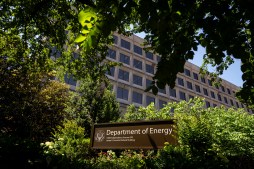
The headquarters for the US Department of Energy at Federal Office Building 5, now known as the James V. Forrestal Building on May 28, 2026 in Washington, DC. (Photo by Al Drago/Getty Images)
The agency is collecting information from interested organizations that could provide foundational open-weight systems, scientific datasets for pretraining or fine-tuning expertise.