Treasury pushing for ‘robust’ use of AI in banking, but in a ‘gradual’ way
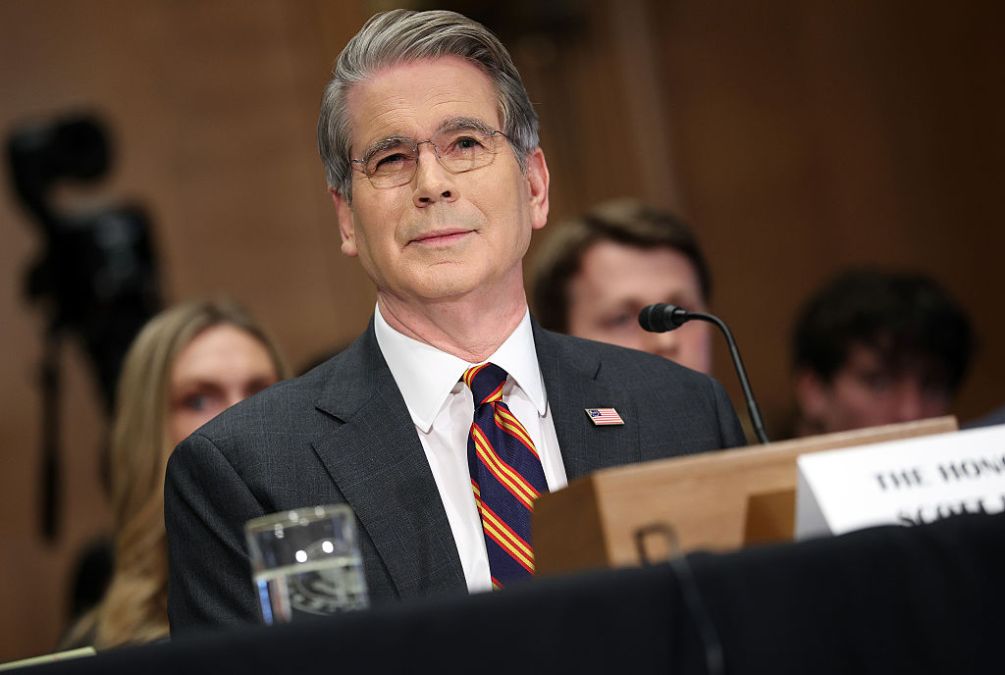
The Treasury Department is looking to push artificial intelligence adoption across the financial services sector in a “gradual” but ultimately “robust” way, leaning into public-private partnerships and potentially AI sandboxes, Secretary Scott Bessent told Congress this week.
Appearing before the House Financial Services Committee on Wednesday and the Senate Banking Committee on Thursday, Bessent was teed up by several lawmakers to address AI priorities spelled out in the Financial Stability Oversight Council’s Annual Report to Congress.
The report, published by the Treasury Department last December, listed “Harnessing Artificial Intelligence to Promote Financial Stability” as one of FSOC’s four key areas of focus. It recommended that agencies use FSOC’s AI working group to identify “regulatory impediments” to financial institutions adopting AI.
Sen. Mike Rounds, R-S.D., co-chair of the Senate AI Caucus, asked Bessent what he views as the “biggest impediments” preventing banks from “adopting AI responsibly, especially for compliance, fraud detection and risk management.”
Bessent said there’s still “a great amount of learning to do” when it comes to AI, so it’s been the approach so far to have the regulatory agencies work “with our private partners to implement in a gradual way” that leads to “robust usage of AI.”
“AI can be a great tool,” the secretary added, but “we have to also think that AI can be a risk through state and non-state actors. So it is a public-private partnership, and we are pushing very hard across the agencies and at Treasury.”
Last July, Rounds introduced a bill that would direct the Securities and Exchange Commission, the Federal Reserve, the Consumer Financial Protection Bureau and other federal financial agencies to create in-house AI innovation labs. Those labs would essentially serve as sandboxes for agencies to test AI projects “without unnecessary or unduly burdensome regulation or expectation of enforcement actions,” per the bill text.
Rounds asked Bessent if a “time-limited AI sandbox” for financial institutions would help those firms safely test AI tools while giving regulators an opportunity to evaluate risks.
“That is clearly the one very interesting option, and we are considering that moving forward,” Bessent replied. “We’d be happy to work with your staff on that.”
The Treasury secretary similarly told House Financial Services Committee Chair French Hill, R-Ark., that he’d be open to working with lawmakers “to make sure that the technology does not move too far ahead of the legislation.” Hill asked specifically about FSOC’s point of view on how AI can provide customer service in financial services along with “a more robust compliance process” across the banking and securities industries.
“There are two pieces to this,” Bessent told Hill. “There is service improvement, which we are, for instance, working on at the IRS. We hope to be able to use artificial intelligence there to get customer weight down and service down. On the other side, [there is] financial security, alerting everyone to the risk of what is going on. But this is a transformative change.”
Part of that change is connected to how Treasury views AI as a means to bolster its cybersecurity posture. In exchanges with Reps. Josh Gottheimer, D-N.J., and Andrew Garbarino, R-N.Y., Bessent said Treasury is working closely with its financial sector partners, bringing them in for tabletop exercises and other “convening” opportunities so everyone is operating under the same playbook.
“I think it’s important to work together,” Bessent told Gottheimer, “because what we see many times in these very quick technology cycles is the technology gets ahead of the regulation, so working together to keep the regulation in sync with the technology, whether it’s for the financial system or for anywhere else. … So again, increasing resilience, being aware and working with our private-sector partners for best practices.”