Two-year Tech Force stints are aimed at young people’s approach to work, OPM director says
As the Trump administration makes a bid to hire more young people in the federal government via the Tech Force, the leader of the Office of Personnel Management told lawmakers he doesn’t believe stability is the biggest draw for the next generation.
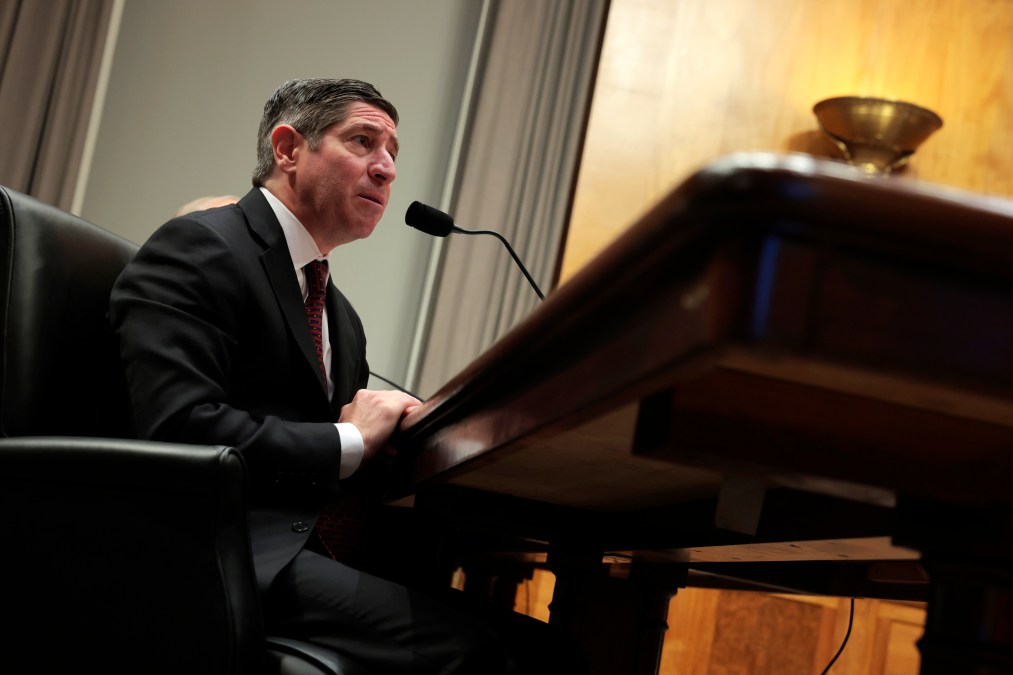
“I don’t think young people actually think about 40-year careers. I think they think about small increments,” Director Scott Kupor told lawmakers on the House Appropriations Subcommittee on Financial Services and General Government at a Wednesday oversight hearing.
Kupor said that’s why the Tech Force — the administration’s program to fill federal tech vacancies with early career workers — was designed to be two years. He later stated that he doesn’t “think stability for young people is the most compelling message.”
The comments arose in an exchange between Kupor and Rep. Steny Hoyer, D-Md., the ranking member of the subcommittee, about the message that OPM is sending to attract younger people to the federal government.
The federal workforce has long had overrepresentation of older workers, which is an issue multiple administrations have aimed to address. The Tech Force is the latest attempt to remedy those proportions. That effort, however, follows the Trump administration’s large-scale efforts to reduce the number of federal employees, leading to some skepticism about how it will effectively attract talent.
Hoyer probed Kupor about the stability question, specifically referencing comments from Office of Management and Budget Director Russell Vought brought to light by ProPublica that he wanted “bureaucrats to be traumatically affected” by the administration’s policies.
“What we’ve done is we’ve undermined — very, very substantially — stability,” Hoyer said.
In response, Kupor said that while there might have been a time where young people wanted that, he believes currently that young people have different focuses.
“I think what young people want is they want to build their careers. They want to learn. They want to be surrounded by smart people. They want to be in an environment where they can actually progress and be recognized for that,” Kupor said.
While it’s hard to tell what young workers might want out of a career in the federal government specifically, some studies have discovered a tendency of younger workers to “job hop.”
But at least one 2025 report from Deloitte explained that this phenomenon isn’t due to a lack of loyalty, but rather “a strategy to seek stability, better work/life balance, a greater sense of purpose, and an opportunity to learn and acquire new skills.”
That survey, which reflected the responses of more than 23,000 Gen Zers and millennials from around the world, found that achieving stability was a top-three career goal, with 14% of both generations placing it as their primary goal. Meanwhile, job market conditions, work/life balance, and compensation were the main drivers for young workers leaving their current posts.
Kupor’s comments came as Tech Force’s heavy emphasis on younger workers has raised some questions from former federal technologists about overall qualifications of those applicants. And its two-year terms have similarly prompted some onlookers to question how that might affect the longevity of the program’s impact.
At the hearing, Kupor said what he wants to tell young people about government service is that they can solve complex problems in “an environment where tenure, quite frankly, does not determine your performance, but your actual merit determines your performance” and when they’re done with their service, they can elect to stay.
“When you’ve done your two years, three years, four years, if you want to stay here, God bless you. We’d love to have you. If you want to go to the private sector, that’s great, too,” Kupor said. “I think that’s the message that we got to tell people. I think we have failed in telling that message quite frankly.”
In addition to the comments about Tech Force, Kupor also provided updates on OPM’s other ongoing efforts to modernize the federal retirement system and establish a single HR system for the entire federal government.
On the retirement modernization, Kupor told lawmakers that roughly 130,000 federal retirees have had their applications go through the agency’s new digital process so far.
In response to a question from Subcommittee Chairman Dave Joyce, R-Ohio, about the agency’s current projects, Kupor said that the system, which is replacing OPM’s antiquated paper-based process, is taking 30 to 40 days rather than the previous 90 days. The goal, he said, is to get down to 15 days.
That modernization push is set to the backdrop of an increasing volume of people in the administration’s incentivized retirement programs. A recent Federal News Network report found that retiring federal workers were facing delays in getting their benefits.
Kupor later acknowledged the delays are a “serious problem” in an exchange with Rep. Sanford Bishop, D-Ga. Kupor noted that OPM is addressing that, in part, by providing people with “interim pay,” a portion of their expected monthly check, while they wait for their full benefit to be processed. Kupor admitted that’s not a “full solution.”
On the HR system front, Kupor addressed questions from Rep. Marie Gluesenkamp Perez, D-Wash., about the expected cost of that program, particularly in light of a Department of Defense attempt at an HR system that it said was delayed and 780% over budget.
In response, Kupor said he shared her concerns about cost. The target is to have “everyone” transitioned onto the new system by September of next year, and while there will be a period of time where agencies are simultaneously decommissioning old systems and paying for the new system, there are cost savings expected.
He said he couldn’t provide “too much detail” on the figures given the complexity of the contracting process, but said “the cost savings are going to be tremendous,” Kupor said. “Like we are not talking about 5, 10% type cost savings here; we’re talking about a real opportunity to dramatically change the cost.”
Kupor also acknowledged in further questioning that the current delay in announcing an award is the result of an ongoing contract challenge known as a bid protest. Despite that, however, Kupor said they’re using the time for “prep work” like data normalization and data migration.
“We have a team of 60 people within OPM who are working with all of what we call the ‘phase one agencies,” or the ones who are slated for the first deployments of the technology, Kupor said.