US courts would study AI speech-to-text under bipartisan, bicameral bill
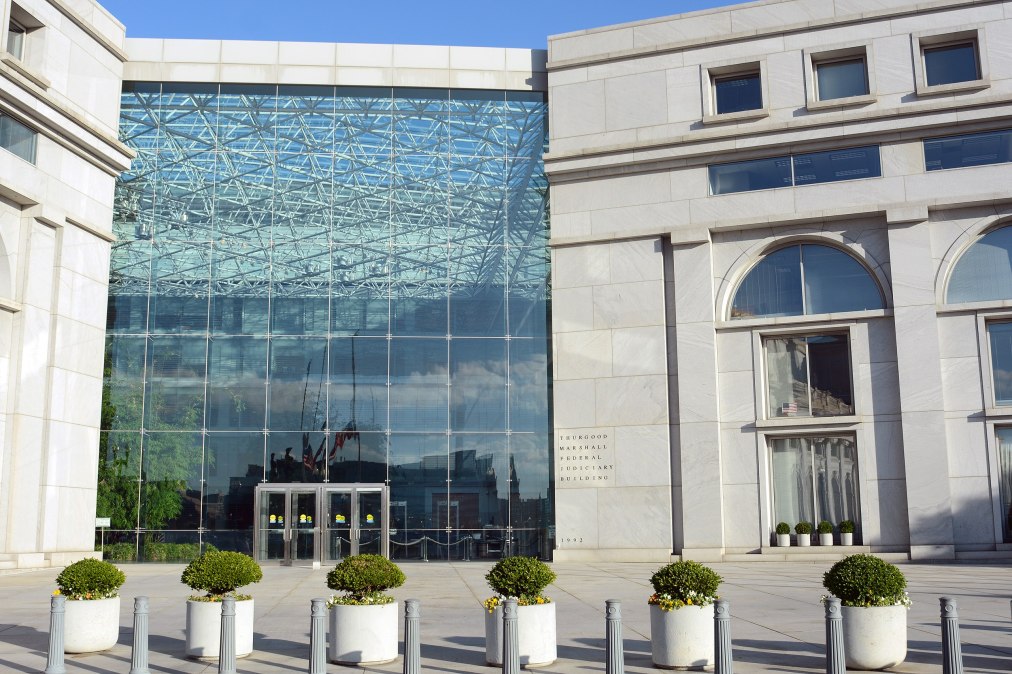
A bipartisan bill recently introduced in the House and Senate would require the federal judiciary to study the legal and ethical issues surrounding the use of AI speech-to-text technologies in the U.S. court system.
Under the legislation, titled the “Research and Oversight of Artificial Intelligence (AI) in Courts Act of 2026,” the judiciary would be required to create a 15-member task force to assess both AI speech-to-text and speech recognition tools and make recommendations about their use within 18 months.
The legislation was introduced by Reps. Harriet Hageman, R-Wyo., and Pete Stauber, R-Minn., in the House (H.R. 7997) and Sens. Roger Wicker, R-Miss., Peter Welch, D-Vt., in the Senate (S. 4154). Notably, it has the backing of the National Court Reporters Association.
“Artificial intelligence is being integrated into every aspect of our society in the 21st century, including our court systems,” Hageman said in the release. “As an attorney for over three decades, I know our justice system demands precision and security. Congress must protect the integrity of our courts with vigorous oversight that remains up to date with emerging technologies.”
While the recent boom in AI’s popularity has resulted in hundreds of known use cases in the executive branch, the federal judiciary is generally more methodical in its approach to new technologies, given its stewardship of the justice system.
Still, the judiciary hasn’t been immune to misuse and took action last summer to issue interim guidance that allows for experimentation with guardrails. Simultaneously, the judiciary has indicated it’s looking to explore uses that improve things like access to justice and cost savings.
But speech-to-text systems have given some in the legal community pause. The NCRA, which advocated for the legislation, has previously expressed concern that the fallibility of those systems pose risks to the accuracy of the record and, by extension, the justice system. An assessment, they believe, will provide much-needed information about the technology’s limitations.
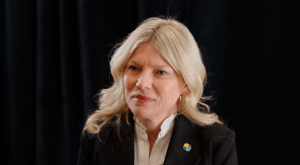
“I think it’s just our way of saying, let’s just pump the brakes on this,” Cindy L. Isaacsen, the president of NCRA, told FedScoop in an interview.
If AI is better than court reporters, Isaacsen said they’re open to looking at it, but the study would provide an opportunity for stakeholders to actually assess that technology. “Let’s look at this next greatest thing before we just shove it in every courtroom in America,” Isaacsen said.
The task force would include judges, prosecutors, clerks, and other representatives of the legal community who aren’t federal employees. The non-federal members include civil liberties specialists, record-keeping professionals, and state court judges, per the bill text.
In emailed comments to FedScoop, a Welch spokesperson said the aim of legislation is to discover “if courts can utilize AI safely.”
“Future use of AI technology in courts could include a hybrid model, which would make court reporting more efficient while still maintaining human review and oversight,” the spokesperson said. “For example, Los Angeles County has employed AI to address workload crises and summarize motions and draft rulings in civil court.”
From a personal perspective, Isaacsen said that her own local courthouse in Kansas is currently testing out an automated system, but that the technology has already had outage issues.
Disruptions like that raise concerns about harm to litigants and witnesses. Isaacsen gave the example of someone possibly being asked to re-testify about a distressing situation because the technology didn’t capture it.
Isaacsen also noted that the issue isn’t court reporters embracing technology.
“We absolutely embrace technology, or we wouldn’t be able to write as fast as we do,” she said. But, she added, the “time and place” for AI isn’t in making the record.
In comments included in the release, Welch, who is the Senate’s only former public defender, called court reporters and captioners “irreplaceable.”
“When it comes to the use of AI in the courtroom, there are still substantial privacy and civil liberty concerns that need to be addressed. Accuracy, privacy, and security are paramount,” Welch said. “It is critical we allow experts who are actively working in the courts to weigh in on use of emerging AI speech-to-text services and technologies.”
The legislation is currently under consideration by the House and Senate judiciary committees.