Senate Democrats blast White House over ‘sweetheart’ AI data center deals
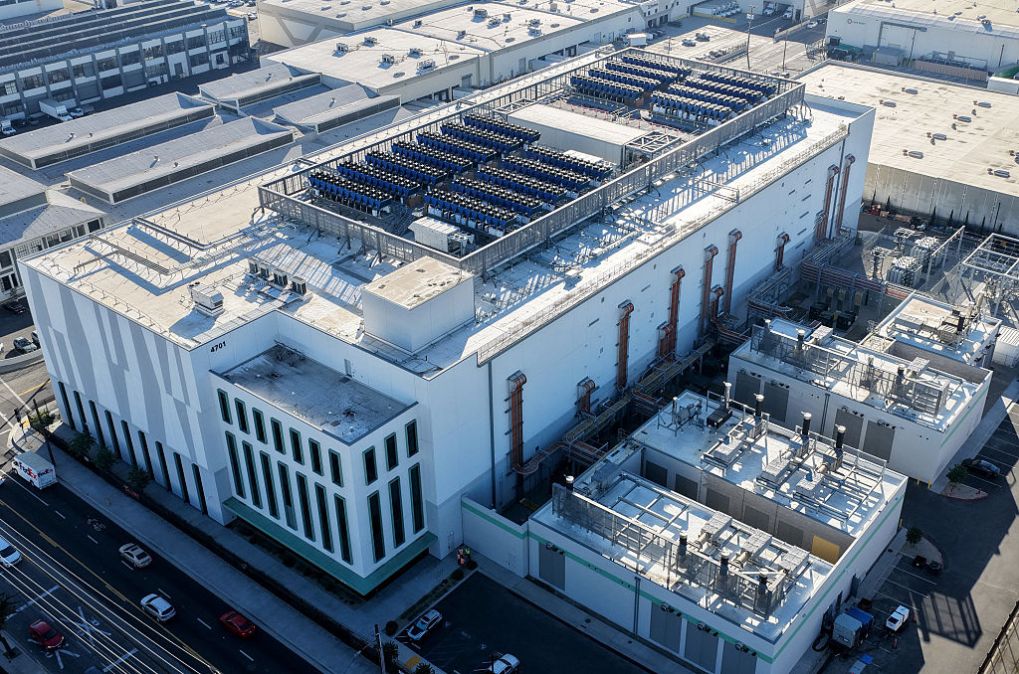
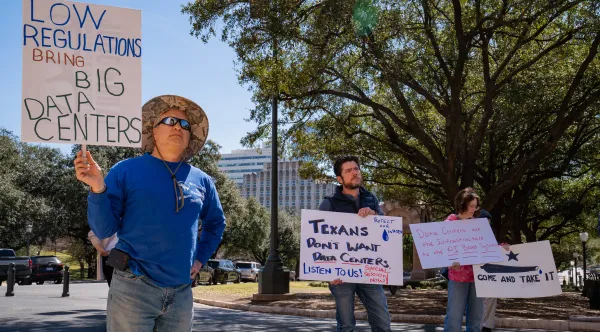
Senate Democrats are ratcheting up pressure on the White House over artificial intelligence data centers and the surging utility costs that have accompanied their nationwide buildout.
In a letter sent Monday to Office of Science and Technology Policy Director Michael Kratsios and Commerce Secretary Howard Lutnick, five senators blasted the Trump administration for the “sweetheart deals” it has made with Big Tech companies on data centers, and its “reckless abandonment” of consumers as their electricity bills soar.
“Since his second inauguration, President Trump has cozied up to Meta, Google, Oracle, OpenAI, and other Big Tech companies, fast-tracking and pushing for the buildout of power-hungry data centers across the country,” the letter stated, which was led by Sen. Richard Blumenthal, D-Conn.
“While the Administration has gestured at eventually adding some more power sources and improving grid infrastructure,” the letter continued, “it has failed to keep up with increasing demand. As a result, everyday Americans are already being forced into bidding wars with trillion-dollar companies to keep the lights on at home.”
According to the letter — which was also signed by Democratic Sens. Chris Van Hollen of Maryland, Ron Wyden of Oregon, Ed Markey of Massachusetts and independent Bernie Sanders of Vermont — national power consumption from data centers could jump from 5% to 12% within three years, and even the White House noted in its AI Action Plan that “technological advancements of AI are increasing pressures on the grid.”
At the same time, the second Trump administration has seemingly traded in the all-of-the-above approach to energy sources pursued during the president’s first term for a decidedly anti-renewables bent that the senators said has “supercharged this cost-of-living crisis by making it harder to increase and diversify sources of household electricity sources.”
“President Trump has hiked tariffs on critical energy infrastructure, expanded liquified natural gas exports that could push natural gas prices up by 30% by 2050, and undermined energy assistance programs that millions of families rely on,” the lawmakers wrote. “In addition, President Trump’s attacks on wind and solar — the cheapest and fastest-to-deploy energy sources — through imposing burdensome regulatory requirements and revoking tax credits are driving up costs and prolonging timelines for deployment.”
Taylor Rogers, a White House spokeswoman, said in an emailed statement that energy prices were driven up by former President “Joe Biden’s radical climate agenda and destructive energy policies.”
“On day one, [Trump] declared an energy emergency to reverse four years of Biden’s disastrous policies, accelerate large-scale grid infrastructure projects, and expedite the expansion of coal, natural gas, and nuclear power generation,” Rogers added.
In an email to FedScoop, a White House official credited Trump with expediting the expansion of those energy sources — “all industries the Biden administration sought to dismantle” — in addition to ending “massive government handouts for wind and solar.”
“The only viable way to meet the energy demand of data centers and to lower energy prices is to unlock the potential of US natural gas, coal, and establish robust nuclear power to grow our grid,” they said.
The Democrats were also highly critical of Big Tech firms whose executives “cozied up to” Trump. The administration, they wrote, has “already failed to prevent those new data centers from driving up electricity prices from a surge of new commercial demand.”
“Despite President Trump’s promises to lower Americans’ bills, since January, families have seen the average price of household energy climb by ten percent,” the letter stated. “Americans should not be expected to bankroll Big Tech’s infrastructure through excessive electricity bills and threats to their water supplies.”
The lawmakers asked Kratsios and Lutnick to respond to a series of questions by Nov. 21, including what steps OSTP and Commerce have taken to measure the cost of AI data centers on consumers via higher electricity bills and depleted water supplies, as well as details on legal arrangements made with tech companies to ensure rates don’t increase and water supplies aren’t environmentally compromised.
They also want information from OSTP and Commerce on which companies the Trump administration has coordinated with on the buildout of data centers, as well as where those facilities are located, plus what has been done to inform states of changes to electricity demand and water supplies. A final question asks if the administration and its AI and crypto partners will take any steps to “compensate American households for drastic increases in their utility bills.”
Commerce did not respond to a request for comment by the time of publication.
Democrats’ letter follows previous congressional efforts targeting rising rural utility costs connected to AI data centers and warnings to the Department of Energy over how canceled projects will worsen data center demands. Meanwhile, the DOE’s national laboratories are full steam ahead on AI data centers, including at Oak Ridge, which is currently seeking proposals for long-term leases on its Tennessee campus.
This story was updated Nov. 11 with comments from a White House spokeswoman and a White House official.