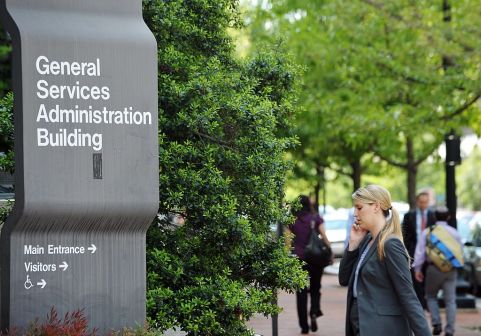
Lawmakers call for civil rights offices at agencies to combat discrimination in AI
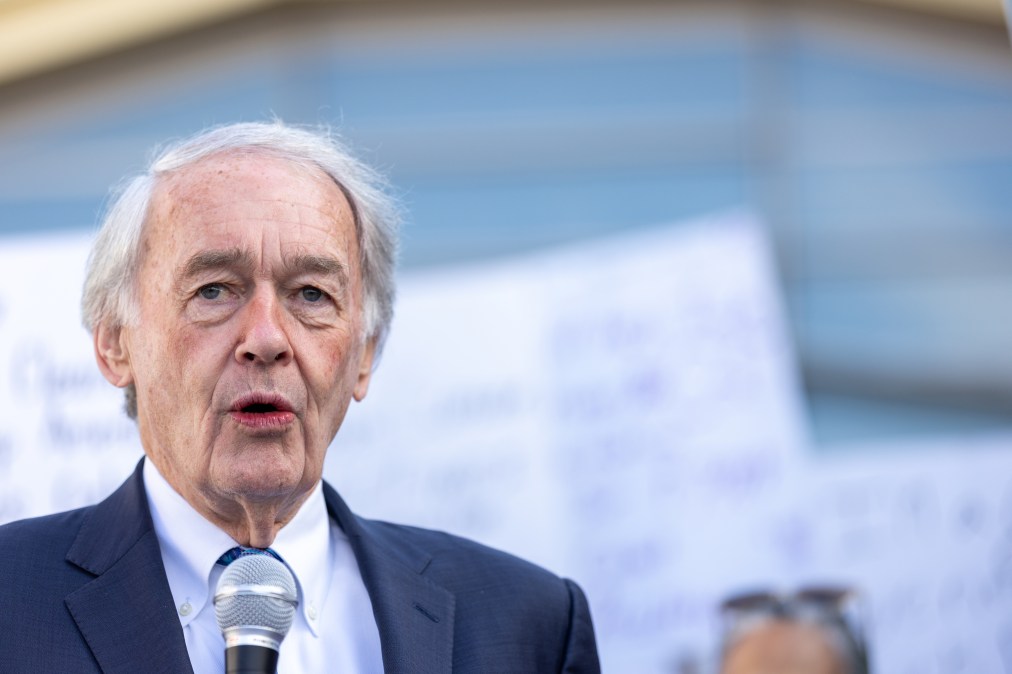
A pair of Democratic lawmakers are reviving a push to guarantee federal agencies that use artificial intelligence systems have a civil rights office dedicated to curbing “bias and discrimination” in AI.
Sen. Ed Markey, D-Mass., and Rep. Summer Lee, D-Pa., reintroduced the Eliminating Bias in Algorithmic Systems (BIAS) Act on Thursday. If enacted, federal agencies that use, fund, or oversee the development of AI algorithms would be required to establish civil rights offices staffed by experts and technologists.
According to the bill text, these experts would focus primarily on bias, discrimination or other harms, including the impact on certain communities, groups or individuals, or bias against certain characteristics related to race, color, ethnicity, religion, sex, disability and more.
These offices would also be mandated to report their efforts to Congress.
The bill comes as federal agencies race to adopt and integrate AI into their workflows. Government watchdogs found the use of generative AI in federal agencies “rapidly” jumped from 2023 and 2024, with that number expected to have increased over the past year.
Markey’s office noted federal agencies often lack civil rights offices “whose principal mission is to protect vulnerable communities,” and the ones that exist often are not required to have staff familiar with algorithmic bias.
“From housing to health care to public services, AI is increasingly being used to make consequential decisions, diagnoses, recommendations and predictions that can significantly alter our lives,” Markey wrote in a press release.
Lee, who represents Pittsburgh and Western Pennsylvania, said the federal government has a “responsibility” to ensure AI does not amplify the inequities of low-income, Black, brown and other vulnerable communities.
The lawmakers pointed to a series of news reports about how algorithms have allegedly discriminated against certain characteristics, from disabilities to general identity.
The BIAS Act was first introduced in 2023, but did not make it past committee.
Discrimination in AI has remained a central policy debate in Washington, with lawmakers often at odds over how to regulate the emerging technology and its potential harms. The Trump administration has pushed for the rapid adoption of AI with few guardrails, raising concerns among tech safety advocates.
Republicans under the administration have also voiced concern over bias and discrimination in AI, though this is usually over the technology’s potential for censorship or promotion of certain political views.
The White House AI Action Plan, released last July, emphasized its fight against “ideological bias in AI models,” and outlined various action items related to the federal procurement process for AI models, including new limitations on government-approved technology.
The policy recommendations at the time called for updated federal procurement guidelines mandating that the government contract only with frontier large language model developers “who ensure that their systems are objective and free from top-down ideological bias.”
The vague language initially caused confusion until last month, when the Office of Management and Budget released updated guidance on how agencies should ensure unbiased models.
Co-sponsors on the Senate bill include Democrats Jeff Merkley and Ron Wyden of Oregon, Peter Welch of Vermont, Elizabeth Warren of Massachusetts, Adam Schiff of California, and Cory Booker of New Jersey. The House version has 11 Democratic co-sponsors, including Rashida Tlaib and Shri Thanedar of Michigan, Delia Ramirez of Illinois, Henry Johnson of Georgia, Bennie Thompson of Mississippi, Dwight Evans of Pennsylvania, Suzanne Bonamici of Oregon, Bonnie Watson Coleman of New Jersey, Valerie Foushee of North Carolina, and Al Green of Texas.
This story was updated Jan. 16, 2026, with the names of Democratic co-sponsors.