Bipartisan House bill seeks to boost NSF program to expand AI access
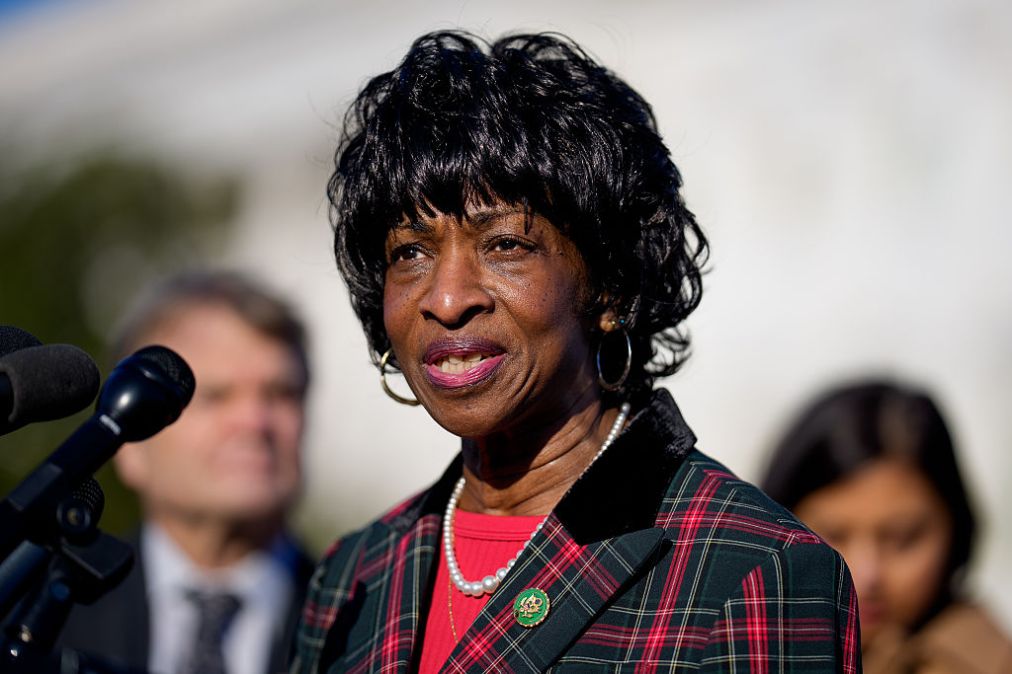
A National Science Foundation-run program to boost access to artificial intelligence education and resources would be expanded under legislation introduced last week by a bipartisan pair of House lawmakers.
The Expanding AI Voices Act from Reps. Valerie Foushee, D-N.C., and Zach Nunn, R-Iowa, would codify and grow NSF’s ExpandAI program, which seeks to increase AI research, education and workforce development across institutions and communities.
Foushee said in a press release the bill is aimed at bolstering a “skilled workforce ready to take on the risks and benefits to society spurred by AI,” especially in places with untapped science and tech talent.
“As Artificial Intelligence rapidly transforms our economy and society, Congress must ensure that working Americans and communities across the country can participate in, and benefit from the jobs and opportunity that AI creates,” Foushee said. “This legislation will help unlock the tremendous STEM talent found at [Minority-Serving Institutions], HBCUs, Tribal Colleges and Universities, and rural-serving institutions.”
Nunn also emphasized the bill’s intent to foster AI opportunities in areas that may be overlooked, noting that workers, students and communities across the country should be able to access AI training, research and high-paying jobs.
“To make sure this technology strengthens our workforce, AI policy must focus on opening doors — not replacing workers or concentrating opportunities at elite universities,” Nunn said in the press release.
The bill would require the NSF director to work with other agency heads on making awards to higher education institutions and nonprofits to “broaden participation” in AI research, education and workforce development. The focus should be on colleges and universities outside top 100 rankings for federal R&D expenditures, as well as minority-serving institutions, per the bill text.
Funding would be used primarily for strengthening research programs in AI or related fields, recruiting faculty and staff with expertise in those areas, creating bridge programs for prospective graduate students, leading workshops, providing access to research resources, engaging in community-building practices, and seeding ethical and responsible AI use practices into education.
The bill is backed by a host of tech companies (Google, IBM, SeedAI), trade associations (Information Technology Industry Council), think tanks (Bipartisan Policy Center), nonprofits (Federation of American Scientists, The American Mathematical Society) and universities (Carnegie Mellon, Duke, Morris College).
“For America to lead on AI, we need to expand the pipeline of talent that’s fueling innovation,” said Americans for Responsible Innovation President Brad Carson. “By investing in education, research, and workforce development across a broader range of institutions and communities, the Expanding AI Voices Act helps ensure the future of AI is shaped by the full scope of American talent. It’s exactly the kind of bipartisan, forward-looking policy the U.S. needs to maintain its edge in AI.”