Federal CIO sees website redesign as key to digital services’ ‘one government’ approach
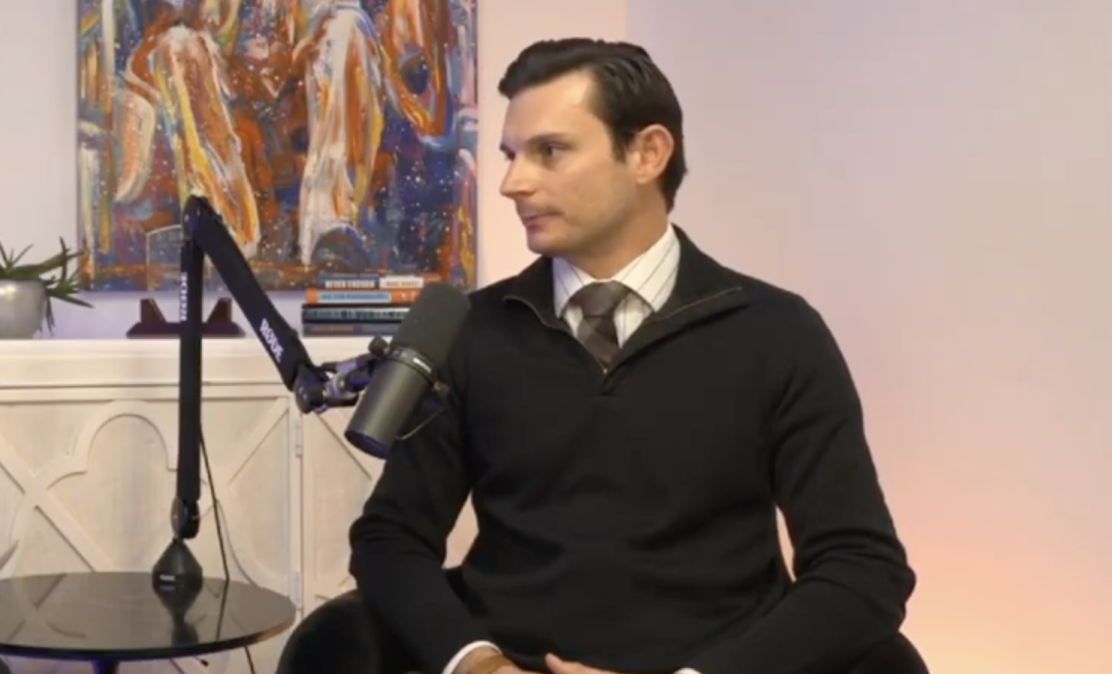
Federal Chief Information Officer Greg Barbaccia hopes to rewrite the script for the government’s service delivery, suggesting Friday that agencies have not prioritized the public’s user experience enough when rolling out digital products and websites.
Speaking at the ACT-IAC/DCI CX Summit in Reston, Va., on Friday, Barbaccia said his teams are taking a “one government” approach to improving service delivery by focusing on consistency across the entire government.
“It is nice to have the same experience when you’re interacting with the same government, right? Everybody loves certain hotel brands because you go all over the world, the lobby smells the same … you kind of feel at home, you can relax a little,” Barbaccia said during a panel titled “Advancing Service Delivery” alongside other Office of Management and Budget and Department of Veterans Affairs officials.
“It’s jarring to the public when one agency’s experience — digital — is completely different than another agency and there’s true UX design minutia. Why is the login button over here and over there somewhere else?” he continued.
Barbaccia, who also serves as the federal government’s service-delivery lead, touted the National Design Studio as an initiative to further these goals. The NDS is tasked with overhauling the government’s digital footprint under an initiative called “America By Design.” Since launching last August, NDS has redesigned websites for both the White House and new administration initiatives, as well as projects such as automating the paper-based retirement system.
NDS, Barbaccia said, is “coalescing that voice that we’re giving to the public.”
“Not only from the visual design aspect — the websites look the same, you feel like you’re visiting the same entity when you look at different websites — but also the copy that is coming on the sites they’re designing,” he continued. “It’s the same voice being spoken to you.”
The top government IT leader later said the public should understand it is “interacting with the same government” and that his teams are working with all agencies to ensure that. Barbaccia later told reporters in a sideline interview that there are teams running pilots on internal sandboxes for these redesigns, and hinted the CIO.gov website will be an “early example” of these efforts.
These efforts are not the same as the U.S. Web Design System (USWDS), a community founded by the now-eliminated 18F and U.S. Digital Service groups that helps agencies with design and maintenance of their digital presence. The executive order establishing NDS last August directed the head of the General Services Administration to work with the new design official to update USWDS to align with the overhaul.
When asked by FedScoop whether all agencies could see website redesigns, Barbaccia said, “I have to be realistic because there’s personalities involved. And this is an administrator or secretary’s way to interact with the world.” Still, he added that the “feel should be synthesizing.”
Jonathan Finch, OMB’s digital experience director, said the White House is actively working with Chief Design Officer Joe Gebbia and the NDS team on how their respective entities can contribute to design improvements.
Finch said the NDS is “uniquely positioned to frankly just flip the script and change expectations on what folks see when they interact with government.”
Artificial intelligence is also poised to play a role in the redesigns, Barbaccia suggested, stating some AI models are experimenting with the process. These models are deploying NDS guidelines across internal websites with “very, very low code and very, very low human interaction,” Barbaccia said.
These efforts come amid the Trump administration’s new initiatives to bulk up the federal tech workforce, despite the past year seeing a massive reduction overall in government personnel. During a sit-down with FedScoop last month, Barbaccia acknowledged the workforce has faced “disruption” over the past year, but said “disruption is not intrinsically a negative thing.”
The Trump administration recently launched the Tech Force initiative, which is designed to fill technology hiring gaps with workers who will serve in two-year stints. Barbaccia said Friday there was interest from 35,000 people, and teams are reviewing about 6,000 applicants, which will go through code reviews as well.