DOT considers taking humans out of the AI loop
The Department of Transportation is considering whether workers always need to be in the loop for AI workflows, according to one of the agency’s top technology leaders.
Having a human in the loop — which means having a team member control whether an AI tool starts or stops an action — is a risk management strategy present across the federal government. But as AI agents creep closer to agencies’ tech stacks, the prevalence of the practice may lessen.
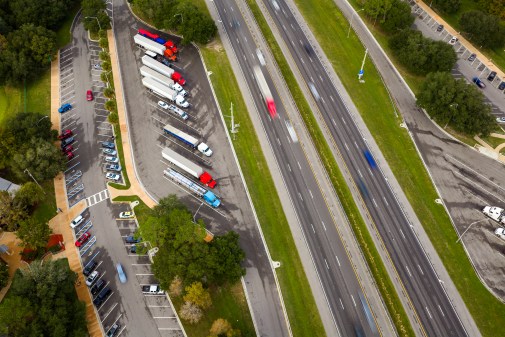
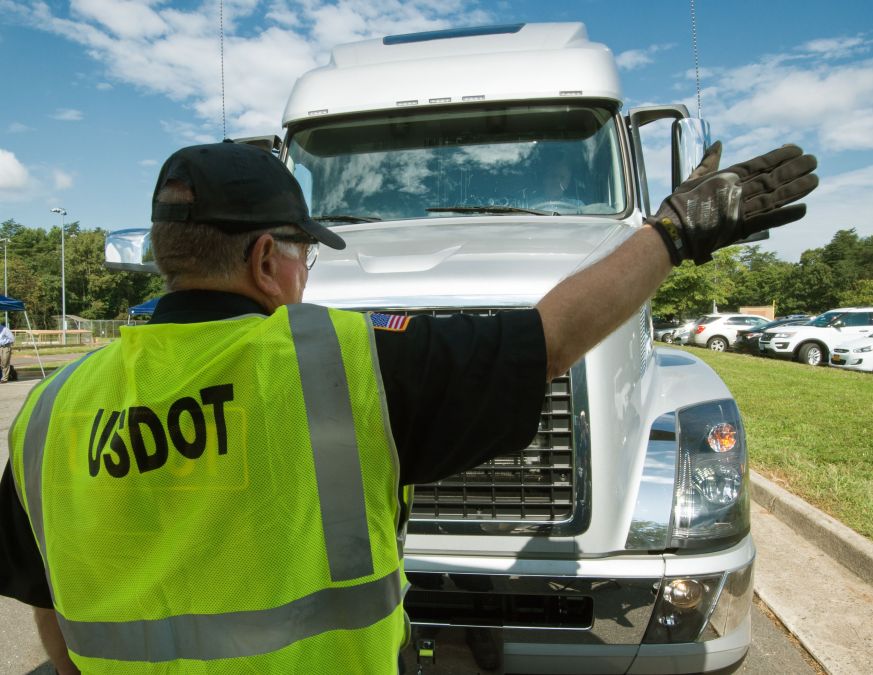
The Federal Motor Carrier Safety Administration, for example, handles about 500,000 inspections a year, according to Ankur Saini, chief product and technology officer for several DOT units, including FMCSA. With around 7 million drivers, the agency predicts many fraudulent carriers are escaping the check-in. AI agents offer a path to speed up the inspection process and reduce oversight gaps by initiating documentation requests from a motor carrier and taking over other low-risk tasks.
“For these transformative use cases, I don’t think there is an option but for the human to get out of the loop,” Saini said last week during ACT-IAC’s Emerging Technology & Innovation Conference in Arlington, Va. “Otherwise your human will always be your limiting factor.”
AI agents are designed to perform tasks for users by relying on algorithms, models or rules to evaluate the data collected. The technology is still in its early days, carrying a high risk of unintended consequences. But that hasn’t stopped hype and enthusiasm.
As the tech industry’s latest buzzword, vendors have boasted in recent quarters about the adoption inroads of private-sector businesses, and in turn the financial benefit to their bottom lines. In Microsoft’s April earning call, the tech giant said nearly 90% of the Fortune 500 have deployed agents built with its low-code/no-code tools. Software titan Salesforce estimated in February that its Agentforce platform, which achieved a FedRAMP High accreditation last year, had become an $800 million business.
“Things are being offloaded already in the private sector,” Saini said. “Evolution is going to happen whether we like it or not.”
In its current iteration, AI is already changing agencies’ workflows.
The Department of Energy is using AI in place of a large coding and development team to speed up emergency operations reporting, according to its latest use case inventory. The tool uses natural language processing to provide incident information occurring around the sites of the National Nuclear Security Administration and other DOE locations. Earlier this year, the NNSA CIO said he anticipates AI gains will lead to workforce cuts.
Other areas of DOE aren’t as quick to let AI take the lead.
“We’ll never take the human being out of the equation,” Melody Bell, acting director at the Department of Energy’s Environmental Management Consolidated Business Center, said during the event.
Most early agentic AI adopters and those in pilot phases agree that the technology has potential to take over some tasks, but push back on the idea that the tools will take over roles entirely.
“We are never going to replace humans,” said Tiffany Swygert, acting deputy director in the Office of Information Technology at the Centers for Medicare & Medicaid Services. “The work that we do is too complex.”
Some agency IT leaders are emphasizing caution, particularly with AI agents, often pointing to a need for greater transparency and explainability. Officials from Immigration and Customs Enforcement, as well as the FBI, have voiced hesitation about jumping on the agentic AI bandwagon just yet.
Even with its aspirations, the Transportation Department is also weighing the risks of adoption and deciding where low-hanging fruit lies.
“As the federal government, we have a certain standard of burden of proof, explainability, transparency of why we made a decision,” Saini said. “You don’t have to offload your entire work to an AI agent, but you can include layering in your decision-making where benign decisions can be offloaded.”