With AI assist, CMS has ‘longer leash’ to fight fraud now, official says
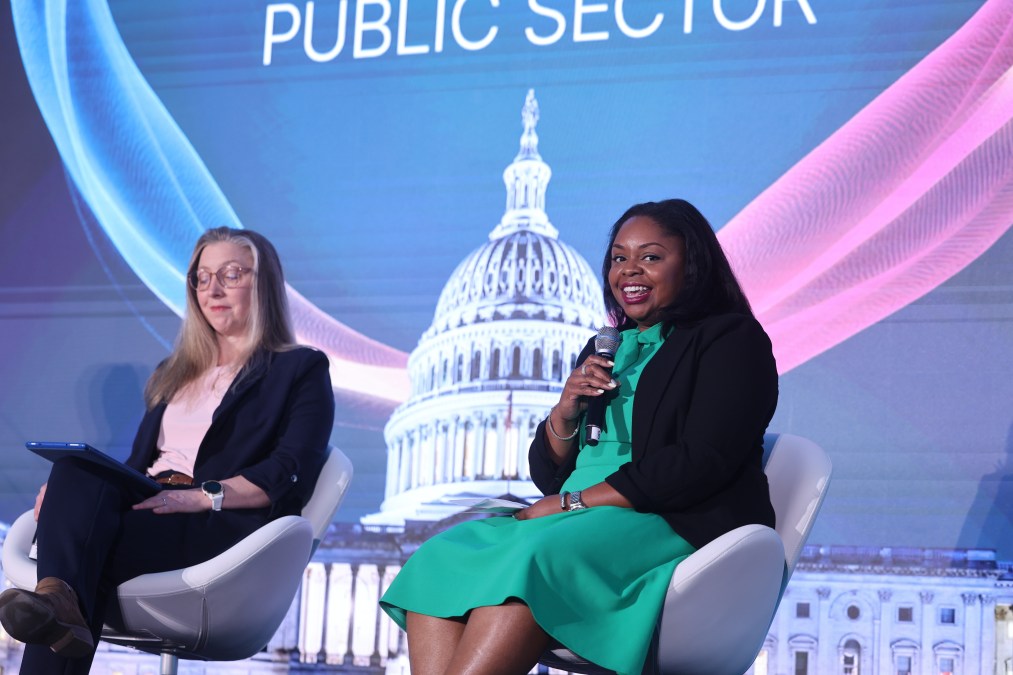
The Centers for Medicare & Medicaid Services is using artificial intelligence “every day” to flag suspicious claims, and has generally enjoyed a “much longer leash” to pursue fraud under the Trump administration, a top agency official said Tuesday.
Medicare and Medicaid have long been prime targets for fraudsters, and it’s Jeneen Iwugo’s job to fight back against them. As acting director of CMS’s Center for Program Integrity, Iwugo’s team is responsible for reviewing 4 to 5 million claims each day.
Though her team is deep — roughly 500 or so staffers — she still doesn’t “have the time or manpower” to review each of those claims. But AI has helped make up the difference by “combing through” those claims and identifying “where the risk is the greatest,” Iwugo said during a Scoop News Group-produced UiPath event in Washington, D.C.
“That’s where I’m going to invest additional time,” she added. “That’s where I’m going to take a second look. That’s where I’m going to tell my team, ‘stop these payments. Let’s consider whether or not this is somebody who should be a participating Medicare provider.’”
In fiscal 2024 alone, the Government Accountability Office found $162 billion in improper payments across 68 federal government programs. The watchdog considers Medicare a “high-risk program” because of its fraud potential.
A fraud prevention system deployed by CMS’s Center for Program Integrity runs about 250 models per day, Iwugo said, and the results that it returns are used to determine where to focus the team’s energies.
“Under this administration, we’ve gotten a much longer leash, because fraud is one of their top priorities,” she said. “And we’ve been able to double the ROI for CMS, returning in 2024 about $14 for every dollar that we spend to fight fraud.”
Iwugo, who has spent nearly 22 years at CMS, told FedScoop in a sideline interview after the panel discussion that the agency has historically taken a “very conservative” approach to how it pursues fraud. If there was “any legal risk,” the default response prior to 2025 was “we’re not going to do it.”
“And so then that limited the potential for value capture, because yes, there was a legal risk, but there’s also potentially a great reward,” she continued. “And so what I’m currently seeing is that we’re evaluating that legal risk and then making a decision about [whether] this is worth it. And we’re getting a good payoff.”
There’s still $100 billion in fraud that CMS’s CPI office needs to capture, Iwugo said on stage, but the more she’s able to “push the needle with using AI,” the more likely it is she and her team will be able to get there.
For other agencies looking to follow CMS’s fraud-detection blueprint, Sarah Harvey, director of GAO’s Science & Technology Assessment unit, touted the watchdog’s frameworks for managing improper payments and managing fraud risks. She also noted a critical component of Iwugo’s fraud-fighting strategy: having a “human in the loop” to “review the risk flags” and serve as a check on the AI.
“Keeping that human in the loop” is crucial to making sure CMS staffers are considering “the full context of what’s available” before stopping payments, Harvey added.
At the beginning of 2025, Iwugo took that human-centered approach to heart with the launch of CMS’s fraud war room, which brought together legal counsel, the agency’s Office of Inspector General and other staffers to spend three hours, twice a week, to look at “our highest-risk cases and to make immediate decisions” about which payments should or should not “go out the door.”
“We were able to save almost $2 billion in less than a year by just going after the highest cases and making a decision,” she said.
Iwugo told FedScoop after that panel that the fraud war room has coordinated with the Department of Justice on some cases and the group’s work is “ongoing,” with the focus this year shifting from Medicare to Medicaid.