FAA, DOD data silos were partly to blame for last year’s DCA crash
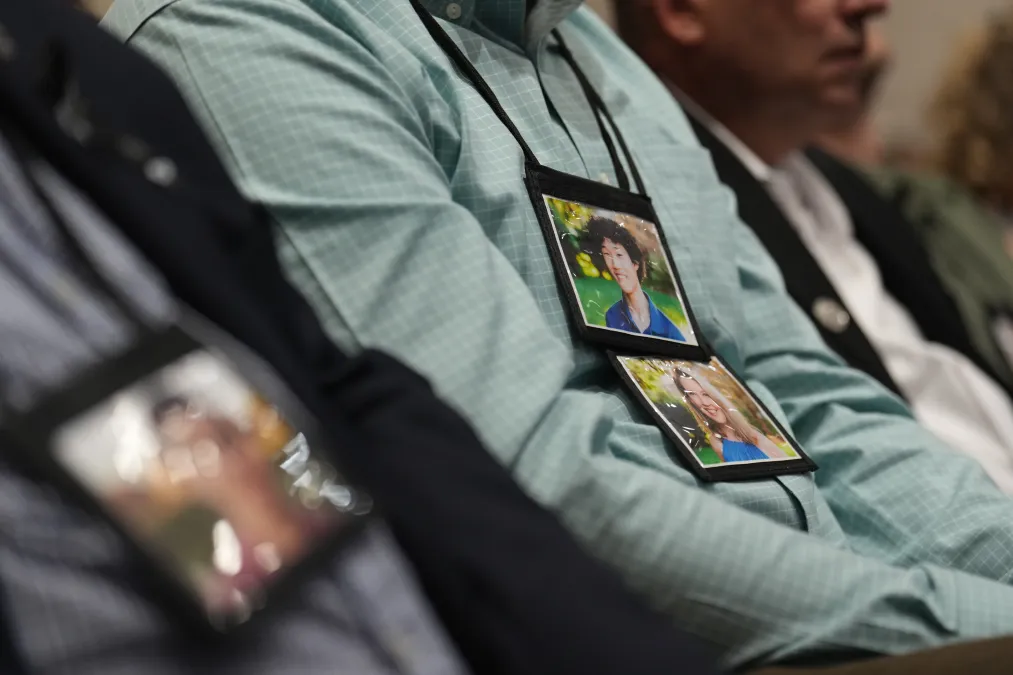
Inadequate information-sharing and deficient data practices across the Federal Aviation Administration and Department of Defense were to blame, in part, for the midair collision near Ronald Reagan Washington National Airport last year, according to the National Transportation Safety Board’s final report.
NTSB found that the FAA’s Air Traffic Organization was “made aware of and had multiple opportunities to identify the risk of a midair collision between airplanes and helicopters,” yet insufficient data analysis, safety assurance systems and risk assessment processes “failed to recognize and mitigate.”
While the Army was “unaware” of certain risks tied to DCA due to a nonexistent flight safety data-monitoring program for its helicopters, NTSB also found the Army had a weak safety management system that failed to consistently detect hazards.
“The limited access to and use of available objective and subjective proximity data hindered industry and government stakeholders’ ability to identify hazards and mitigate risk,” NTSB said in its report.
As part of NTSB’s analysis, the watchdog had 50 to 60 staff members on the investigation, who gathered 19,000 pages of evidence, Jennifer Homendy, chairwoman of the NTSB, testified during a Senate hearing Thursday. The collision, ultimately, was preventable, she said.
“Now that our investigation has concluded, I can say without a shadow of a doubt that we’ve seen this before,” Homendy said. “We’ve investigated similar midair collisions going back decades, and we’ve issued safety recommendations, like [Automatic Dependent Surveillance–Broadcast], over and over and over again aimed at preventing these kinds of collisions, recommendations that have been rejected, sidelined or just plain ignored.”
NTSB ran into its own hurdles while trying to gather data from the FAA, Homendy added, pointing to denied access to reports and a poor safety culture within the organization.
“Throughout our investigation, we found numerous people who were afraid to talk to us,” Homendy said. “At our own hearing, I had to get everyone to commit not to retaliate — still, that occured.”
The NTSB recommended the FAA improve its data analysis and share that data with external stakeholders, such as other federal agencies or private-sector airline companies.
“They are not doing what we have recommended, and what we have been urging them to do the entire time, which is not only evaluate their data — which they’re starting to do now — but to develop a simple definition of what a close call is,” Homendy said.
The FAA is facing criticism amid a major overhaul of its air traffic control system, which could end up costing upwards of $30 billion.
“Applying the hard lessons we’ve learned from the DCA accident, the FAA safety team identified controller workload and system demand as emerging risk factors, and as a response to this increased risk, we temporarily reduced operations,” FAA Administrator Bryan Bedford told lawmakers in December. At the time, the senior official said an agentwide safety management system enabling quicker reactions and analysis of incidents was on the priority list.
The DCA collision report also comes mere days after U.S. Customs and Border Protection personnel shot down an object near El Paso, Texas, in what has become the latest signal of interagency friction between the DOD and FAA. In a confusing twist of events, the FAA posted a flight restriction notice for “special security reasons” that ended within hours despite being expected to last until Feb. 21.
“There has been miscommunication, or no communication, between at least the Army and FAA for years,” Homendy said.
In an emailed statement, Army spokesperson Maj. Montrell Russell thanked Homendy and NTSB investigators, and said the “Army remains committed to collaborating closely with the NTSB, FAA, and other federal partners to support lasting improvements in aviation safety that honor those who were lost.”
A Department of Transportation spokesperson said in an emailed statement that the FAA “values and appreciates the NTSB’s expertise and input” and it has “acted immediately to implement urgent safety recommendations it issued in March 2025. ” The agency added that it will “diligently” consider additional recommendations.
In a post to X, Transportation Secretary Sean Duffy positioned the incident as a collaborative effort. “The FAA and DOW acted swiftly to address a cartel drone incursion,” he said.
Despite Duffy’s assertions, skeptics remain.
“The FAA is saying that we’re going to shut down airspace for 10 days, and then another agency is saying something different,” Sen. Maria Cantwell, D-Wash., said during the hearing. “It just seems to me that we have a real problem of coordination between DOD and FAA.”
Codifying NTSB recommendations
In addition to requesting an interagency briefing, lawmakers reaffirmed their desire to pass the Rotorcraft Operations Transparency and Oversight Reform Act during the hearing Thursday.
The Senate unanimously passed the bill in December and it has been in the hands of the House since. Leaders of the Senate Committee on Commerce, Science and Transportation pushed for the ROTOR Act to be included in this year’s appropriations package, but the request was ignored.
“While the ROTOR Act addresses critical safety shortfalls and loopholes that contributed to the DCA mid-air collision, the safety enhancements will apply nationwide,” the senators said in a letter to Majority Leader John Thune of South Dakota, Minority Leader Chuck Schumer of New York and others.
The legislation has garnered support from the Department of Transportation, the FAA, NTSB, and the DOD. The ROTOR Act codifies many of the NTSB recommendations, according to the chairs of the committee.
“I’ve heard some faint grumbling from stakeholders and others who want to put the same kind of loopholes into the ROTOR Act that caused the DCA crash,” Senate Commerce Committee Chairman Ted Cruz, R-Texas, said during the hearing. “Some want exemptions for private jets, while a few airlines quietly carp about the cost of safety enhancing technology. These criticisms aren’t valid, and they are frankly disturbing.”
Homendy said American Airlines spent around $50,000 per plane to retrofit it with the automated, satellite-based broadcasts. Boeing offers the tech on new planes, as well as Airbus and Gulf Stream, she added.
“It is possible; the technology is available,” Homendy said. “We should not have to be here, and we wouldn’t be if the NTSB warnings had been heeded.”
This story was updated Feb. 18 with comments from a DOD spokesperson and Feb. 19 with comments from DOT.