GSA procurement leader says ‘community readiness’ poses challenge to acquisition overhaul
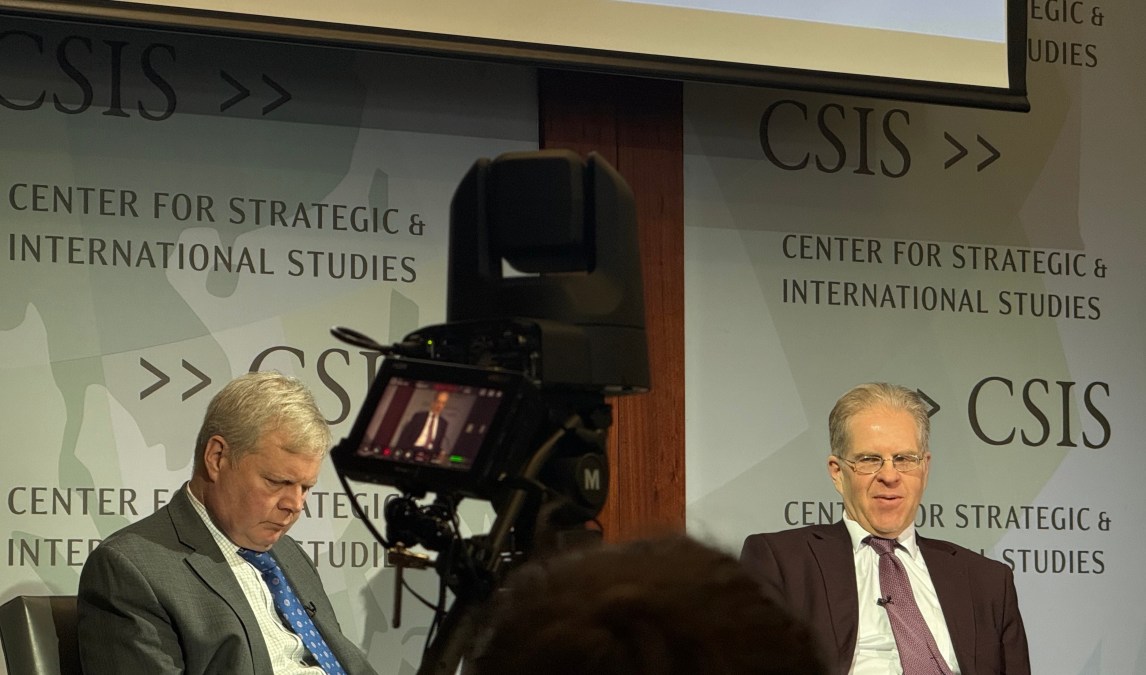
The General Services Administration met the six-month deadline to rewrite the Federal Acquisition Regulation, but getting the procurement workforce acclimated to the overhaul may present new challenges, an agency leader said Wednesday.
Jeffrey Koses, a senior procurement executive at GSA, said during a fireside chat at the Center for Strategic and International Studies that the agency is “not there” yet in retraining the existing workforce, but has made it a priority after cutting the FAR by a quarter — or nearly 484 pages, late last year.
The drastic cuts to the framework, dubbed the “Revolutionary FAR Overhaul,” fulfill an executive order last April that gave FAR council members at GSA 180 days to amend the FAR, which the White House said evolved into an “excessive and overcomplicated regulatory framework” that resulted in “onerous bureaucracy.”
Unlike the initial drafting of the FAR in the late 1970s, GSA did not have five years to rewrite and train the workforce, as it had then, Koses said.
“We didn’t have six months for the community to learn it. We wrote it in five-and-a-half months. We then had one month to socialize it, to have everyone start understanding it,” Koses said, adding the first phase of the rewrite was complete around the time of the government shutdown last fall, which halted several nonessential government activities for 43 days.
“Not much was happening in government in November, October,” Koses remarked. “So that was kind of the backdrop to me. The real challenge that we’re seeing now is one of community readiness.”
“How do we bring our workforce, how do we bring our partners, how do we bring new entrants along on this journey?” he continued. “If we’re trying to do acquisition very differently, if we’re trying to be a much more welcoming community, if we’re trying to radically reduce barriers, reduce regulations, strip back to a number of things, how do we make the person comfortable in that they’ll have the support, the training, the resources?”
The GSA also saw a 30% reduction in its acquisition workforce last year, according to Koses, who said the agency lost both longtime leaders at the top and entry-level staff amid the Trump administration’s Department of Government Efficiency cuts. He revealed the entry-level cuts may be a larger concern as it leaves the GSA “with the challenge of rebuilding and building a bench to propel us forward.”
“The challenges of even training are untraining. How do you unlearn something you may have done one way for 10, 20, 30 years?” Koses continued. “It’s a big … culture change, it’s empowerment, it’s a move away from templates.”
There are both civilian and defense education entities for workers learning the new process, with the Pentagon offering the Defense Acquisition University and GSA hosting the Federal Acquisition Institute.
How artificial intelligence could further change the contracting officer experience remains an open question for Koses. It comes amid the GSA’s push for OneGov deals, which encourage agencies to quickly adopt AI into workflows at lower upfront costs.
“Meanwhile, we’re trying to really learn, how do we operate? How do we leverage the potential? Koses said, adding: “What are the key terms and conditions we really need if we’re going to use AI — but then another side of that is, how is it going to change the way that we gather requirements, the way we solicit, and the way that you all respond?”
He later addressed concerns about AI hallucinations and the rise in contracting protests that include fake cases or citations, telling the audience: “We don’t want the acquisition to become [about] who can write the best prompt.”
Meanwhile, Josh Gruenbaum, commissioner of the GSA’s Federal Acquisition Service, suggested last August that AI and other agentic tools could be game changers for the efforts to overhaul the FAR.
The second phase of the FAR overhaul began in October, transitioning to rulemaking.