Republicans want data scientists at the IRS. Trump axed those roles last year, Dems say
A bill to recruit data scientists to the IRS through a new fellowship program is moving forward in the House, but not without heavy pushback from Democrats who say the Trump administration gutted staff that had already been doing that work.
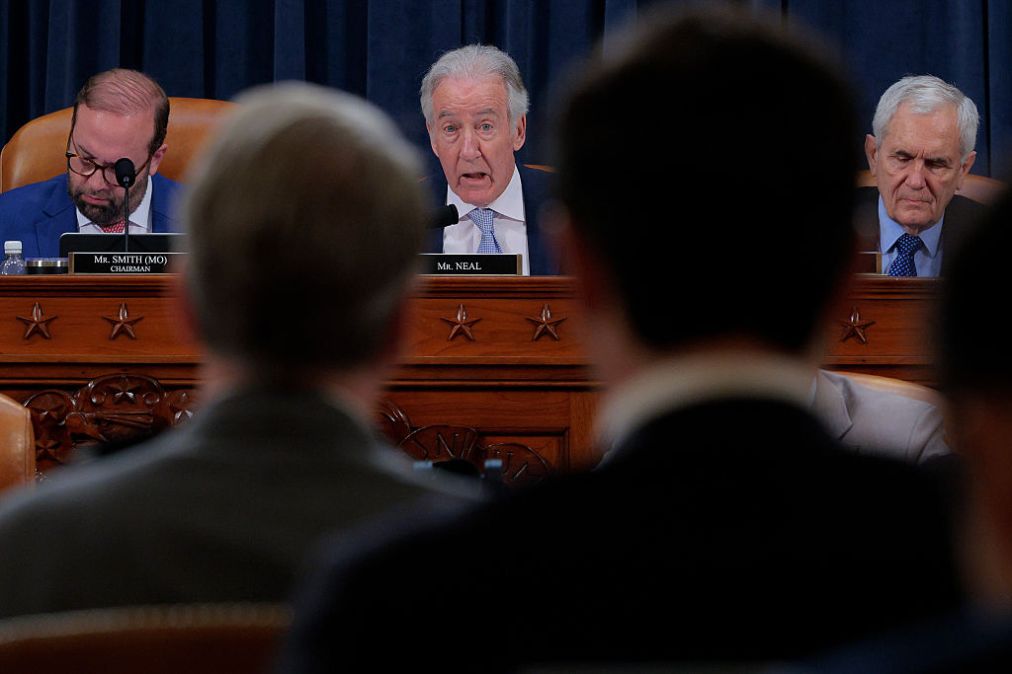
The House Ways & Means Committee advanced the Taxpayer Workforce Modernization Act by a 24-16 vote during a Wednesday markup of seven tax-related bills.
H.R. 7972, sponsored by Rep. David Schweikert, R-Ariz., calls on the IRS to enlist data scientists as in-house fellows to work with tax law specialists.
Per the bill text, those data scientists would be expected to “provide insights and identify emerging and complex issues in tax administration, ranging from data acquisition and quality through developing advanced analytics, statistics, and models to improve core tax administration activities in services and enforcement.”
Schweikert, who chairs the Ways & Means Oversight Subcommittee, said a key part of the legislation is having the data fellows perform audits and track fraud.
“It’s not that complicated,” he said, but “we’ve talked about this in previous years, of increasing the quality and access to data science, data analytics for decision-making, and then training IRS staff on the use of those tools.”
Rep. Lloyd Doggett, D-Texas, praised Schweikert for his years of work with House Ways & Means trying to “drag the IRS into the modern age.” But while he didn’t disagree with the premise of Schweikert’s bill, Doggett said he couldn’t support it “because it asked the committee to applaud the hiring of the very people that the Trump regime just spent a year firing.”
The Texas Democrat pointed specifically to the administration’s targeting of the IRS’s Research, Applied Analytics, and Statistics division, which provides technical consulting services to all of the agency’s operating divisions. RAAS has lost 63 staffers who worked either full- or part-time on artificial intelligence since the start of President Donald Trump’s second term, according to a March Government Accountability Office report.
Treasury Secretary Scott Bessent told the House Appropriations Committee a little more than a year ago that an “AI boom” would make up for IRS workforce reductions, but Doggett wasn’t buying it.
“You cannot run artificial intelligence without intelligent people running it and feeding it,” he said. “After a decade of Republican budget cuts, I voted for the funding that finally let the IRS build this capacity.
“They took a wrecking ball to that funding, and now they bring us a fellowship and call it modernization,” he continued. “I’m not against hiring data scientists; I’m against the pretense that a handful of fellows can backfill the thousands of skilled and dedicated employees who the Trump regime fired.”
Democratic Reps. Danny Davis of Illinois, and Mike Thompson and Judy Chu, both of California, also spoke out against the Taxpayer Workforce Modernization Act, saying the Trump administration has undermined the IRS through staff cuts and opened the door for more tax cheats.
Chu also drew attention to the downsizing of RAAS, noting that the data scientists and technical experts that populated the unit had developed tools to detect tax evasion, estimate tax gaps and strengthen compliance.
“The irony is impossible to ignore,” she said. “While Republicans propose creating a new fellowship to recruit experts, President Trump has already fired more than 25% of the very division that performs this work today. This bill does not solve the problem — it duplicates existing responsibilities while ignoring the real issue.”
An amendment from Rep. Terri Sewell, D-Ala., to bar data scientists hired through the fellowship from auditing or conducting analyses on Americans making less than $100,000 annually until the Trump audit immunity deal is rescinded was voted down. So, too, was an amendment from Doggett that he said would repeal “for this narrow investment the tax immunity that the president has granted himself.”
“My colleagues say they want to invest in the agency,” Doggett said. “I’m offering them the chance to make the investment mean something, because there’s no sense in building the capability and then handcuffing it to spare Trump, the one taxpayer with the most to hide. If we believe in this workforce, let it do its work. Let it do its job without a special exemption for the powerful.”
Smooth sailing for AI bill
The fireworks during consideration of the Taxpayer Workforce Modernization Act were preceded by a drama-free vote in favor of the AI Tax Integrity Act, which unanimously advanced out of committee.
H.R. 9501 from Reps. Vern Buchanan, R-Fla., Steven Horsford, D-Nev., Aaron Bean, R-Fla., and Schweikert would create a pilot program at the IRS to examine AI’s potential effectiveness at detecting tax fraud. The GAO’s comptroller general would then be tasked with delivering a report to Congress.
“Most importantly, the bill does not … expand the IRS enforcement activity and is focused on the evaluation of AI to the IRS,” Buchanan said.
Rep. Richard Neal, D-Mass., ranking member of the House Ways & Means Committee, referenced Bessent’s “aspirational” comments about the use of AI at the IRS, and said this bill “takes a different approach.”
“Like with any emerging technology, this legislation seeks to thoughtfully deploy AI with clear guardrails to establish a limited pilot program at the IRS, focused on narrow areas to help improve tax administration,” he said. “This includes identifying identity theft, the use of ghost preparers, and even fraudulent claims.”