FBI counter-drone training isn’t keeping pace with demand
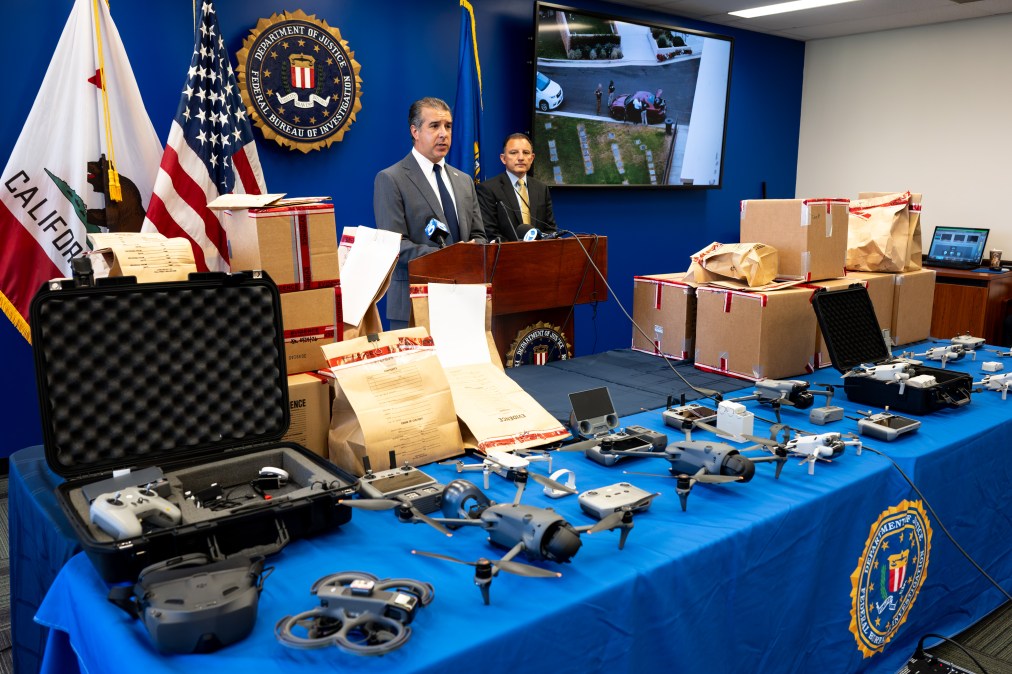
Federal agencies, like the FBI, are considering how to best beef up counter-drone capabilities in the months and years ahead, top officials said during a panel at a Commercial Drone Alliance event in Washington, D.C., last week.
The FBI is leading upskilling efforts with its National Counter-UAS Training Center in Huntsville, Ala. The Department of Justice unit expects to train 250 more unmanned aircraft system mitigation officers by the end of next fiscal year, according to Mike Torphy, an FBI agent leading the bureau’s program.
Counting the forthcoming graduates, the FBI will have trained around 1,000 people over the past three years, a total that doesn’t come close to satiating the growing appetite.
A set of panelists, featuring leaders from counter-drone vendors, sports organizations and nonprofit safety advocacy groups, said the pace was inadequate during a discussion later Friday.
Threats from drones are becoming ubiquitous across the country, but metropolitan areas are especially targeted due to high population density and other factors.
“There’s about 340 ‘metropolitan’ cities in the country,” Charles Werner, director of nonprofit DroneResponders, told FedScoop, citing the forthcoming mitigation officers. “You wouldn’t even cover the metropolitan cities in the first year, even if you did one per city — and even if you could, one person does not provide a really firm mitigation capability.”
In preparation for the 2026 FIFA World Cup, some departments had more training than others. A handful of officers in Miami graduated from the FBI’s program, for example, while just one officer from Tampa was certified.
“We learned from several of the departments that had sent a person to train that they needed to have 16 hours covered, and they were only able to cover six because each of these people have multiple duties,” Werner said. “Police departments across the country are short-staffed as it is, so thinking that they’re going to dedicate somebody for counter-UAS is maybe wishful thinking.”
The consensus around building out greater counter-drone training capabilities extends to cabinet-level officials.
“Earlier this week, Secretary [of State Marco] Rubio led a very high-level meeting about this topic and what was crystal clear was: do more and do it faster,” Matt Whitehead, director for emerging and catastrophic threats and counterterrorism for the White House National Security Council, said during a panel discussion with Torphy.
Potential change ahead
The training center played a critical role in the World Cup that just wrapped up, providing upskilling to state and local law enforcement ahead of the expected surge in unauthorized drones. Nearly 1,700 unauthorized drones were detected, with 700 of those being seized and 400-plus mitigation actions occurring during the games and fan festivities, per Torphy.
Expanding upskilling capacity through the local and state levels is a top priority, but exactly how that will be accomplished moving forward is up in the air.
“There’s some unknowns out there because this is all new,” Whitehead added. “We’ve got to figure it out.”
The official compared counter-UAS capabilities to that of a bomb squad.
“Bomb squads are expensive and to be good, you need to do it a lot,” Whitehead said. “This is definitely true of counter-UAS.”
As for the cost of expanding the facility’s capabilities, the Department of Homeland Security is determining how it could help bolster the training center with its own investments.
“We have more people asking to get into the school than [the FBI] has space to do it,” DHS Secretary Markwayne Mullin told lawmakers during a June hearing. “We are looking for ways to partner … to put DHS funding directly to that.”
The way that officials think about counter-drone training could change, too.
“We’ve got to figure out what ultimately does the demand signal look like, [and] was the bomb squad model the correct way to think about it,” Whitehead said. “We frankly don’t know.”
Along with day-to-day threats, federal agencies are under another strict countdown to the 2028 Olympics in Los Angeles, which is expected to bring an influx of unauthorized drones.
“There’s no rest for us, unfortunately,” Torphy said. “Today, I was in a planning session for the Olympics, so we’re already getting ready for that.”