OPM wants to leverage talent exchanges that would place feds in industry
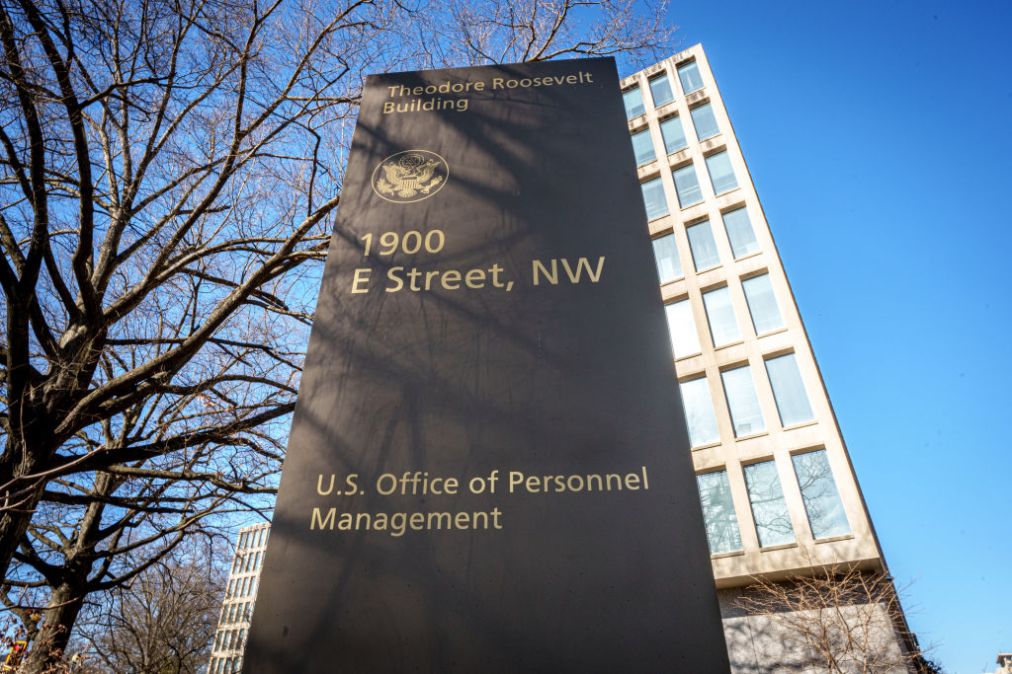
The Trump administration is already trying to bring talent from industry into the government via its U.S. Tech Force program, but the next step could be putting federal workers on exchanges to companies, according to remarks from an Office of Personnel Management official Thursday.
During a panel at a federal technology-focused conference, Kevin Hennecken, senior advisor to the director at OPM and leader of the Trump administration’s Tech Force hiring effort, mentioned the agency’s interest in such a program as a way of helping train federal workers.
Something OPM has been focused on is “creating more pathways for people to sort of experiment going to the private sector for periods of time and coming back,” Hennecken said. “I think that can also be quite helpful, just to expose them to some different ways of getting things done.”
Such efforts would add another layer to the Trump administration’s current Tech Force program, which is focused on filling the government’s hiring needs with early career workers. Those workers, who have just started onboarding, will serve two-year stints before it’s up to them whether to stay in government or go to industry.
A small number of management-level professionals will also temporarily join the federal workforce from the private sector as part of the program. The first of those professionals recently started at OPM.
In a conversation with FedScoop after the panel, Hennecken said that where Tech Force builds the pathway to come into the government, “I think we want to build out, in a bigger way, the ability to go out.”
Such programs have a history in various agencies and are actively being used in places such as the Department of Defense’s Cyber and Information Technology Exchange Program (CITEP). A specific public-private talent program for NASA is currently a bipartisan proposal in both House and Senate legislation.
Hennecken pointed to NASA specifically as an example of where the swaps could take place. The space agency, for its part, has its own specific recruitment plan as part of the Tech Force program called NASA Force, which it announced in March.
“NASA Force, for example, all the companies we spoke to about that — they’re super gung-ho about having it be bilateral,” Hennecken told FedScoop.
During the panel, Hennecken said that while NASA has had the ability for workers to go to companies like Boeing or Blue Origin and spend some time there, to his knowledge, it’s lasted only a week or two at a time.
“If you’re really going to understand something in a deep way and get oriented somewhere … I think you’re better off spending longer,” he said.
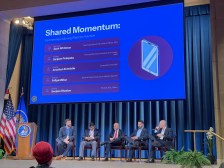
His remarks came as part of Government Service Delivery, a conference in Washington on Thursday hosted by the U.K.-based Global Government Forum. The event featured numerous U.S. federal government technology leaders as well U.K. counterparts.
Hennecken also provided an update on Tech Force onboarding efforts, saying that about 60 people have been onboarded. “I think that number will keep going up pretty quickly,” he said.
As the Tech Force hires finally begin to embed in agencies, officials have pointed to HR difficulties that slowed the process down.
During the panel discussion with Hennecken, Dawn Zimmer, Department of Energy chief information officer, listed the time it takes to onboard people as a major challenge to getting talent in the agency, particularly when it has immediate hiring needs.
Zimmer said Hennecken could bring her 300 resources, but when she goes to HR they may take a month to complete onboarding. “How do we improve those processes on the hiring side to make it that much more rapid?”
She also said that the need for shorter-term work in the agency has become increasingly more important over the years. “Right now, my needs are shifting, so I might need somebody for a year or two years in one capability, but that’s going to transition to a different capability down the road,” Zimmer said.
Earlier in the conversation, Zimmer noted that DOE specifically has some gaps in its organization as a result of AI. “We have gaps that we didn’t even see coming as we were planning this because we didn’t … plan for this explosive growth,” she said.