Trump anti-fraud order eyes stronger data-sharing on federal programs
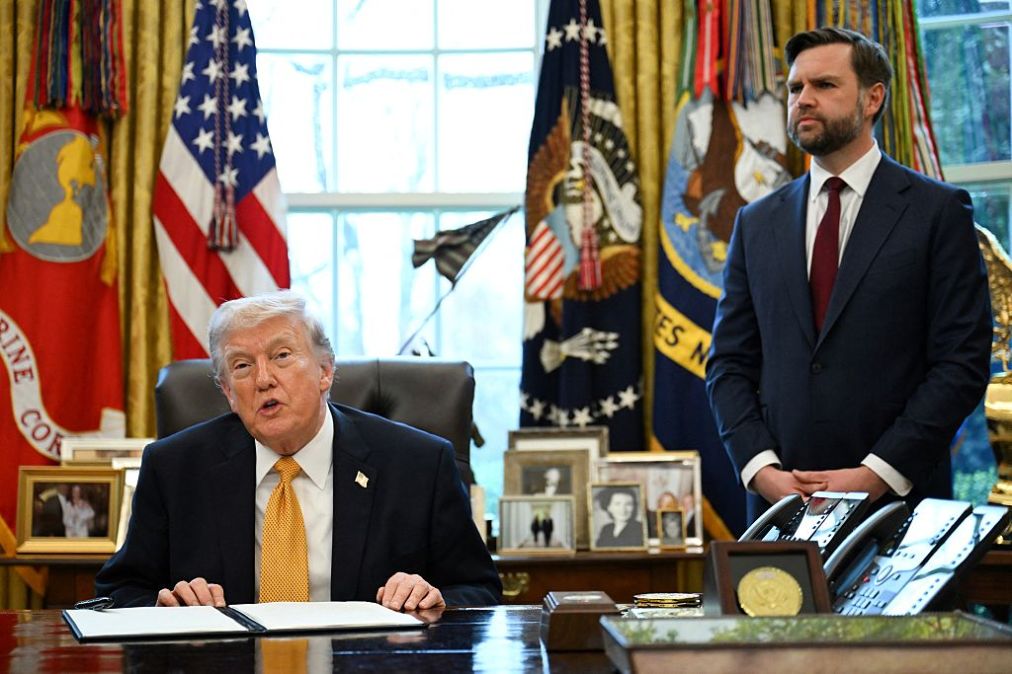
The White House is launching a task force aimed at eliminating fraud in federally run programs — a goal that will be pursued largely through beefed-up data-sharing processes.
The executive order signed Monday by President Donald Trump is framed through the lens of various fraud cases in Minnesota involving Medicaid, a Department of Agriculture child nutrition program and Small Business Administration loan programs during the COVID-19 pandemic.
Investigations into the alleged fraud began under the Biden administration’s Department of Justice, but the scandal has since been wielded by the Trump White House to freeze funds and strip away benefits from residents of the Gopher State.
Under Trump’s new order, the task force will be charged with developing a national strategy to combat fraud in federal benefit programs. The EO calls specifically for new measures to improve eligibility verification processes and create controls to prevent the disbursal of improper payments.
The task force will also be required to “promote the facilitation of information and data sharing and coordination between State, local, tribal, and territorial governments and the Federal Government, and benefit-providing agencies and law enforcement agencies,” per the order.
Interagency data-sharing would additionally be prioritized as part of an overarching enforcement push aimed at disrupting and dismantling “fraud networks and facilitators,” the EO states.
The task force, which will be led by the vice president and tap the chair of the Federal Trade Commission to serve as the No. 2, will also include representatives from the departments of Treasury, Labor, Justice, Homeland Security, Agriculture, Health and Human Services, and Education, and several other agencies charged with administering federal benefits programs.
Per the order, those representatives will be required to identify their agencies’ “benefit transactions and processes that are most susceptible to fraud schemes, which may include new enrollments, redeterminations, provider enrollments, eligibility self-attestation procedures, changes to payment destinations or payees, or transactions involving third party intermediaries.”
There are no specific callouts to artificial intelligence, Identity, Credential, and Access Management or related technologies, but given the ID- and verification-focused mentions in the EO, it’s likely that tech of those kinds will have a role to play.