Trump signs executive order curbing state regulation of AI
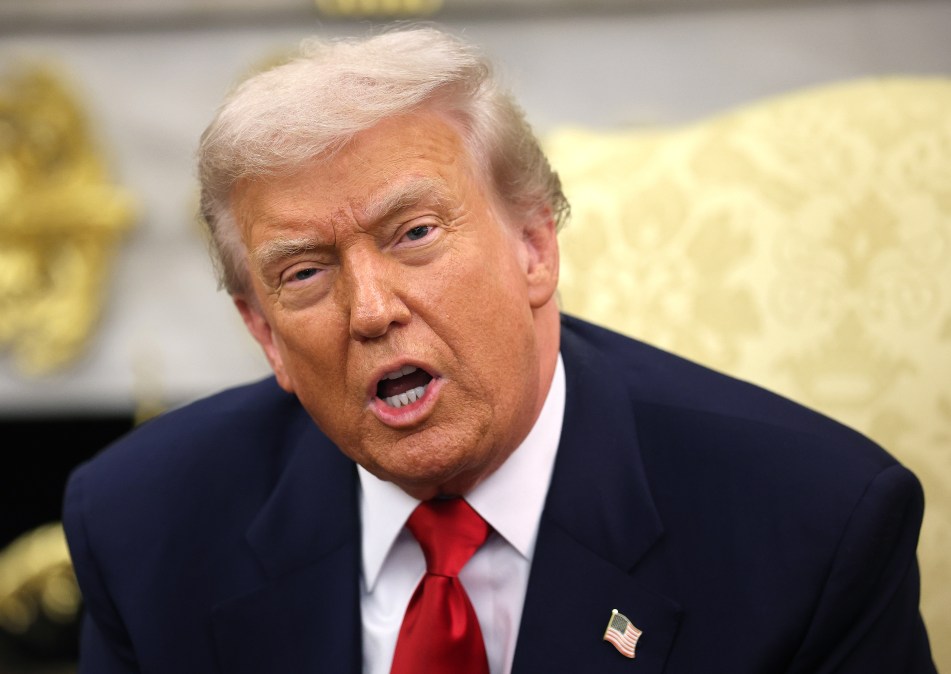
President Donald Trump signed an executive order Thursday to limit states’ ability to regulate artificial intelligence and pave the way for a “minimally burdensome” national policy framework for the emerging technology.
The move caps a monthslong saga among policymakers in Washington over how to regulate the rapidly evolving technology at the federal level, as states take matters into their own hands in the absence of any nationwide standards.
The order is a significant win for several major AI developers that argue that a patchwork of state AI regulations hampers innovation and competitiveness on the global stage. Its provisions have the potential to impact the hundreds of state laws.
The directive calls for the attorney general to establish an AI litigation task force who will be responsible for challenging state AI laws that are “inconsistent” with the order. This includes laws that “unconstitutionally regulate interstate commerce, are preempted by existing federal regulations, or are otherwise unlawful in the attorney general’s judgment.”
It also gives the heads of the Federal Trade Commission and Federal Communications Commission some power over specific state laws and reporting or disclosure standards.
Signing the order in the Oval Office, Trump emphasized the United States’ need to lead the world in AI, telling reporters, “We’re leading China, we’re leading everybody by a tremendous amount.”
“There’s only going to be one winner here, and it’s probably going to be the U.S. or China and right now, we’re winning by a lot,” Trump said, suggesting China either has a “central source of approval” or builds AI infrastructure without approval.
“People want to be in the United States, and they want to do it here, and we have the big investment coming, but if they had to get 50 different approvals from 50 different states, you could forget it, because it’s not possible to do,” the president said.
David Sacks, the White House’s AI and cryptocurrency special advisor, emphasized that over 1,000 bills are moving through state legislatures right now to regulate AI.
“You’ve got 50 states running in 50 different directions. It just doesn’t make sense,” Sacks said alongside the president Thursday. “What we need is a single federal standard.”
The order notably does not issue a federal framework, but directs the White House’s special advisor for AI and cryptocurrency and the head of White House Office of Science and Technology Policy to prepare a legislative recommendation for Congress to establish a federal policy framework for AI that preempts state AI laws.
In an apparent attempt to appease child safety advocates, these do not include laws related to child safety protections, AI computing and data center infrastructure, and state government procurement and use of AI.
“In the meantime, this EO gives your administration the tools to push back on the most onerous and excessive state regulations,” Sacks said. “We’re not going to push back on all of them. For example, kids safety we’re going to protect. We’re not pushing back on that, but we’re going to push back on the most onerous examples of state regulations.”
The Commerce secretary, working with White House technology policy leaders, is also directed to publish an evaluation of existing state AI laws that the administration considers “onerous” within 90 days of the order.
“That evaluation of State AI laws shall, at a minimum, identify laws that require AI models to alter their truthful outputs, or that may compel AI developers or deployers to disclose or report information in a manner that would violate the First Amendment or any other provision of the Constitution,” the order stated.
Under the directive, the head of the Commerce Department must issue a policy notice listing the conditions states must meet to be eligible for Broadband Equity Access and Deployment (BEAD) program funding. These conditions include not enforcing any administration-deemed “onerous” state laws.
The presidential order was largely expected after the president wrote on Truth Social earlier this week that he planned to sign an EO to preempt state and local laws governing AI, creating “one rulebook” for technology across the country. And last month, a draft order circulated showing plans to target individual state efforts to place guardrails on the emerging technologies.
Congress has failed to get an AI preemption bill across the finish line amid disagreement among Republicans. Earlier this month, lawmakers failed in their efforts to include the provision for state AI law preemption as a last-minute addition to the annual defense spending package.
Major tech and consumer advocacy groups railed against the order Thursday. Robert Weissman, co-president of Public Citizen, said in a statement that the EO is a “reward to Big Tech” and a “disgraceful invitation to reckless behavior by the world’s largest corporations and a complete override of the federalist principles that Trump and MAGA claim to venerate.”
Brad Carson, president of Americans for Responsible Innovation, said in a statement that he expects the order will “hit a brick wall in the courts.”
“The executive order relies on a flimsy and overly broad interpretation of the Constitution’s Interstate Commerce Clause cooked up by venture capitalists over the last six months,” Carson said. “What’s more, this EO directly attacks the state-passed safeguards that we’ve seen vocal public support for over the past year, all without any replacement at the federal level. There’s a reason preemption couldn’t make it through Congress: it threatens safeguards for kids, workers, consumers, and the American public. Politically and legally, it’s a dud.”
NetChoice, a conservative-leaning tech trade association, praised the order, with Patrick Hedger, the group’s director of policy, saying in a statement that startups and small businesses would struggle to compete under a patchwork of state laws.
“The federal government is the appropriate regulator to govern interstate commerce like AI tools,” he added, “and we look forward to working with the White House and Congress to set nationwide standards and a clear rulebook for innovators.”
Matt Bracken contributed reporting.