White House looks to pilot AI, ‘empower CISOs’ in push to improve cyber resilience
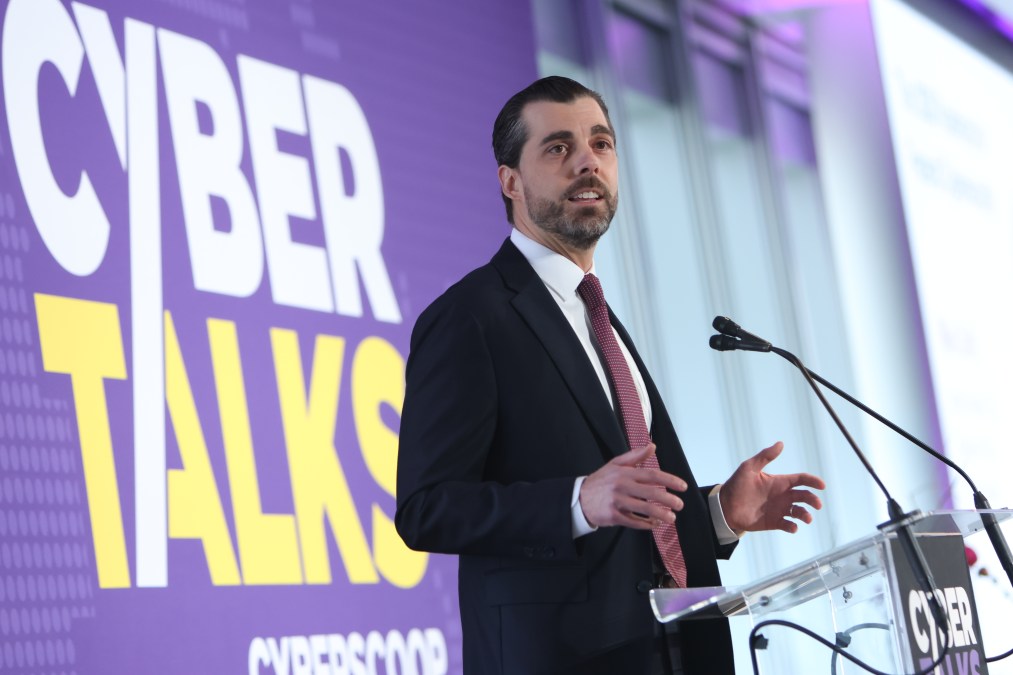
As the era of artificial intelligence stands to both increase cyber threats and aid efforts to counter them, federal government leaders are looking to bolster resilience with improved coordination, support for leaders, and new AI tools, a White House cyber official said Thursday.
During remarks at CyberTalks, Michael Duffy, the acting federal chief information security officer within the Office of Management and Budget, shared several actions federal leaders have taken recently to boost the government’s cybersecurity, calling the present technology moment “pivotal.”
“As we enter this new era defined by AI, interconnections, [and] the expanded dependencies that all of us have, we can’t wait for the next crisis to inspire our action,” Duffy said.
Existing policies were largely shaped by responses to major cybersecurity events over the last decade and don’t account for risks of the new AI era, he said. So as leaders look to adapt those practices, they must ensure that what they put in place can endure.
As a step to achieving the Trump administration’s cybersecurity goals, Duffy said he convened civilian agency cyber leaders last month in a meeting he called a “first” for the government.
That so-called “tabletop” discussion convened over 60 cyber professionals and leaders, including CISOs and security operations center directors (SOCs). Topics included protocols, procedures, overlaps, gaps, and potential weaknesses when it comes to faster and scalable attacks, among other things, he said. Already, some of the opportunities highlighted are being put into place.
“The bottom line is, cross-agency teams can no longer respond to massive cyber incidents to the federal government with sharing emails and phone calls and PDF files on threat intelligence,” Duffy said. “This is a different time. We have to make sure that we’re postured correctly to address that call.”
Additionally, leadership is looking to “empower the CISO role to make strategic decisions in a moment’s notice,” Duffy said. That includes decisions the information security professionals make for both administrative things — like budget, resources, and strategic plans — as well as “when disaster strikes.”
“In doing so, we’ll consider things like redundant, insufficient capabilities, the use of modern technologies and modernized enterprise-wide capabilities and shared services such as Continuous Diagnostics and Mitigation,” Duffy said. CDM is a program run by the Cybersecurity and Infrastructure Security Agency and provides security tools and dashboards to participating agencies.
Finally, Duffy said leaders are also working with agencies to improve cyber defense with new tech through pilots of several AI tools. A “small set” of cyber-relevant uses are currently being identified.
“We have to be proactive, highlighting what might work. Test it out. See if we can scale it from one agency to the next so that we can build the roadmap moving forward,” Duffy said.
That effort follows work by Federal CIO Greg Barbaccia to conduct a “federal AI sprint” on general uses of the technology in government, which Duffy said they’ve seen “positive progress” on. “We’re now turning our attention to cyber-specific use cases to ensure that we are ready for the threat,” he said.