Bills to fund TMF, overhaul IT procurement move forward in House
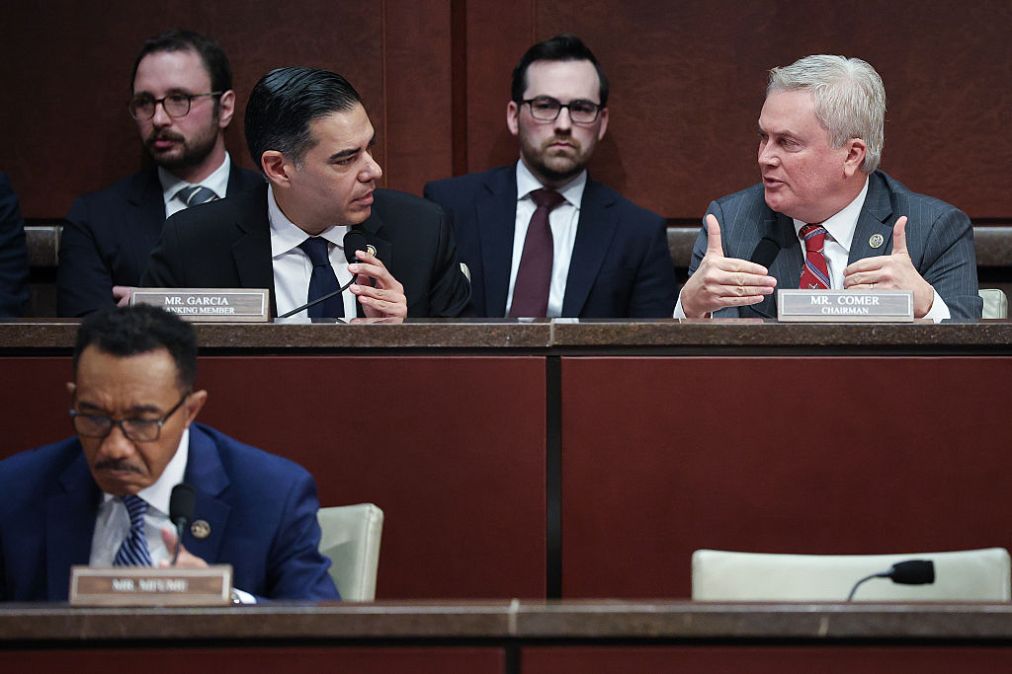
The House Oversight and Government Reform Committee advanced several tech-related bills Wednesday, including legislation to strengthen the Technology Modernization Fund, reform federal IT procurement and pare down educational requirements for agency cybersecurity roles.
The TMF, which was created by law in 2017 to fund tech modernization projects across agencies, has been the subject of much hand-wringing in govtech circles after Congress let the funding vehicle expire late last year. The Modernizing Government Technology Reform Act (H.R. 2985), however, would get the TMF back on track, reauthorizing the TMF and its governing board through 2032.
Rep. Nancy Mace, R-S.C., who chairs House Oversight’s Cybersecurity, Information Technology, and Government Innovation Subcommittee, said it was her “privilege” to work with former Rep. Gerry Connolly on the bill before he died of cancer last May, calling the late Virginia Democrat one of TMF’s “strongest supporters” and a “good-faith partner” on the bill.
“This is commonsense legislation addressing a real area of concern in our government,” Mace said of the bill, which advanced out of committee by a 42-0 vote. “These legacy platforms drive up costs, create inefficiencies, they are national security risks, expose our government to major cyber risks and are in desperate need of modernization.”
Rep. Shontel Brown, D-Ohio, ranking member of the cybersecurity subcommittee and co-sponsor of the TMF bill, said extending the TMF “is critical to ensuring federal agencies, many of which still rely on outdated IT systems, can modernize their infrastructure and defend against growing cyber threats.”
“Continuing to pour resources into aging systems is costly and inefficient and leaves our government unnecessarily vulnerable to hacks and security breaches,” Brown added. “This is what good government looks like.”
In addition to reauthorizing the TMF, the bill would require agencies to “fully reimburse the fund” at levels that ensure it remains operational through 2032, per the bill text. The legislation also requires agencies to pay back administrative fees and create inventories of their legacy IT.
The bill also included an amendment from Rep. James Walkinshaw, D-Va., Connolly’s longtime chief of staff, that would require the Government Accountability Office to issue biannual reports on how TMF funds have been used to address legacy IT projects the watchdog deems high-priority.
“It would allow us to better understand whether the TMF is achieving its stated goals, and give us additional tools to understand how well the federal government is or is not modernizing its critical federal IT systems,” Walkinshaw said.
Improving government IT systems is also top of mind in the Federal Improvement in Technology (FIT) Procurement Act (H.R. 4123), which advanced out the committee by a 42-0 margin.
The legislation would streamline the federal procurement process for small businesses and push federal contracting officers to examine larger acquisitions “where the potential for waste, fraud and abuse is high,” said House Oversight Committee Chairman James Comer. The Kentucky Republican noted that the bill would increase the micro-purchase threshold from $10,000 to $25,000 and raise the simplified-acquisition threshold from $250,000 to $500,000.
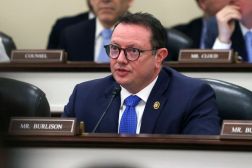
Those price jumps, Comer said, would “unlock tens of millions of dollars in savings for taxpayers.” Rep. Eric Burlison, R-Mo., a co-sponsor of the bill, said the threshold changes would also serve to “further reduce the administrative costs” and improve “economic efficiency for small businesses competing for federal contracts.”
“This is just very commonsense, allowing federal agencies to access the exact same upfront discounts that are commonly available to other businesses in the private sector, saving taxpayer dollars,” Burlison continued. “Taken together, these reforms streamline procurement, reduce wasteful spending and improve accountability, without expanding government or creating a new bureaucracy, ultimately leading to disciplined acquisition practices and real savings for the American taxpayer.”
Rep. Suhas Subramanyam, D-Va., who co-sponsored the bill, echoed Burlison’s “commonsense” comments regarding the threshold jumps.
“Things cost more money now, and it’s been a while since we raised these thresholds,” he said. “So this is one win for everyone. It’s also going to lead to more opportunities for small businesses to compete for federal contracts, and most importantly, it’s gonna cut waste and save millions of dollars for taxpayers.”
Another bill aimed at changing certain aspects of procurement thresholds also sailed through the committee via a 44-0 vote. The Ensuring Federal Purchasing Efficiency Act (H.R. 7283) would amend the time period for some acquisition-related dollar thresholds, allowing the Federal Acquisition Regulation to make inflation-related adjustments for purchasing thresholds every three years instead of the current five-year timeline.
“More frequent inflation adjustments to the FAR’s micro-purchase threshold, for example, would better align federal purchasing authority with actual buying power,” said Walkinshaw, a co-sponsor of the bill. “It would improve small business participation and ensure that they’re not excluded from using those simplified acquisition pathways, because dollar thresholds haven’t kept pace with inflation.”
Finally, the Cybersecurity Hiring Modernization Act (H.R. 5000) passed out of committee by a 44-0 tally. The bill, co-sponsored by Reps. Mace and Brown, would limit the use of educational requirements or qualifications in evaluating candidates for certain cybersecurity positions in the competitive service, giving an edge instead to skills-based hiring at agencies.
“The bill is also something that actually makes the federal government more attractive, competitive,” said Rep. Robert Garcia, D-Calif., ranking member of the House Oversight Committee. “It’s great, of course, for cybersecurity professionals, and improves our nation’s cybersecurity defenses.”