Fed needs to be proactive on cyber risks from AI models, nominee says
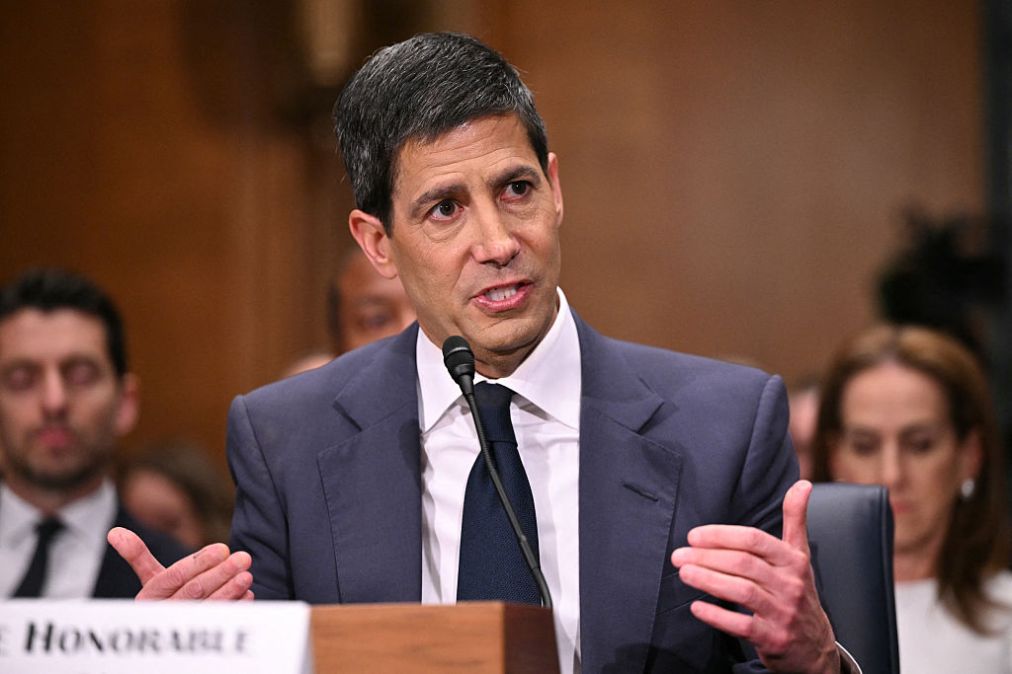
As Wall Street grapples with the possibility that a new AI model could bring unfathomable cybersecurity chaos to the financial sector, President Donald Trump’s nominee to lead the Federal Reserve said the independent regulator needs to get ahead of the doomsday scenarios.
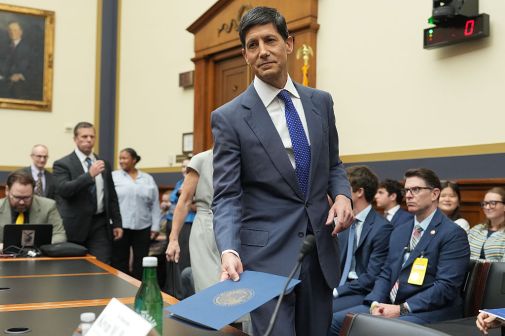
Appearing before the Senate Banking Committee on Tuesday, Kevin Warsh was asked by Sen. Pete Ricketts, R-Neb., about a meeting in Washington, D.C., earlier this month between current Fed Chair Jerome Powell, Treasury Secretary Scott Bessent and Wall Street leaders regarding Mythos, a new Anthropic model.
Cybersecurity experts have expressed concern about Mythos’ ability to “execute multi-stage attacks on vulnerable networks and discover and exploit vulnerabilities autonomously.” According to reporting by Bloomberg, the hastily organized meeting was a “sign that regulators consider the possibility of a new breed of cyber attacks as one of the biggest risks facing the financial industry.”
Ricketts asked Warsh, who served on the Federal Reserve Board of Governors from 2006 to 2011, what he would do to modernize the Fed’s internal risk assessments and scenario-planning exercises “to ensure that we can anticipate and defend against the type of emerging risks that potentially models like Mythos could present if used in the wrong hands.”
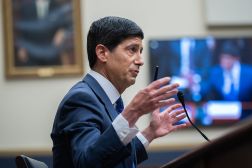
Warsh said the short answer is that “the pace of change in these technologies is accelerating. AI, which I think of really as American ingenuity, gives America a huge head start relative to our competitors around the world. But it’s not without real risks and real challenges, and a forward-looking, reform-oriented central bank needs to be on the front end of it.”
The exchange between Ricketts and Warsh wasn’t the only time AI came up during Tuesday’s hearing, which focused largely on the Fed’s independence and whether Warsh was nominated simply to do the president’s bidding.
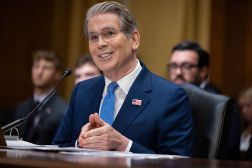
Sen. John Kennedy, R-La., briefly pressed Warsh on the Fed nominee’s views that AI’s productivity increases would stabilize prices and “therefore inflation isn’t a problem, therefore rates can be cut.” Warsh replied that that’s not how he “would characterize the story of AI,” but Kennedy seemingly wasn’t satisfied.
“Here’s my worry: that a lot of this stuff about artificial intelligence making us more productive is a bunch of hype by people who want to sell stock and an IPO. I’d be careful there,” the Louisiana Republican said.
During a hearing before the same committee nearly a year ago, Powell told senators that although the impact AI was having on the U.S. economy at the time was “probably not great,” he expected the technology to bring about “significant changes” to the labor market in the years ahead.
In a back-and-forth with Sen. Bernie Moreno, R-Ohio, Warsh struck what seemed to be a sunnier tone about AI’s potential for productivity gains — mixed with uncertainty about the technology’s long-term workforce effects. He said he is “more confident that there will be improved output” than he is “certain about when the effects of that would be on the labor market.”
“The labor force, the structure of the labor market, changes,” Warsh said. “The jobs that will be created two or three years from now, some of which are unimaginable to us today. But the lag between the improvement and output, and the effect on the labor markets, that’s got to be central to the Fed’s thinking, given the pace of innovation in this cycle.”
Beyond AI, Warsh weighed in on another tech topic critically important to the Fed’s work: overseeing payment systems. The nominee said all of those systems “are in need of substantial reform,” calling out FedNow specifically — “which some describe as FedYesterday.”
“There’s a series of new technologies that the Fed needs to oversee and needs to architect so that the payment system in the U.S. is the safest, most efficient, most capable in the world,” Warsh continued. “Otherwise, we’ll be losing to adversaries around the world in being the linchpin of the global economy.”