Treasury canceled Booz contracts over vetting of IRS leaker, Bessent says
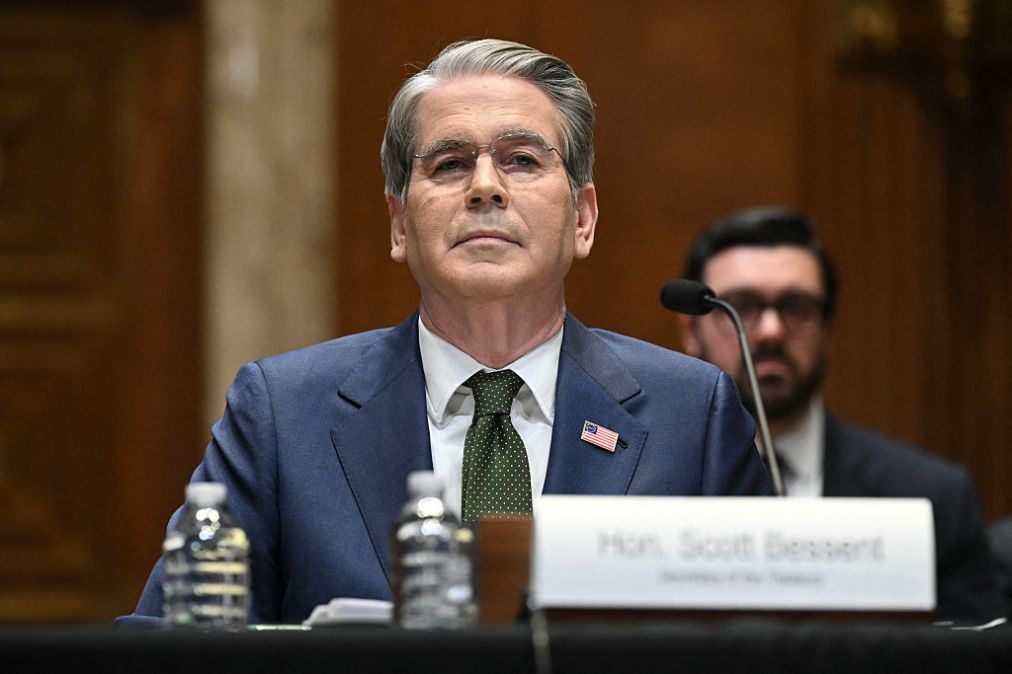
The Treasury Department’s loss of “confidence” in Booz Allen Hamilton led to the agency’s decision to cancel its contracts with the consulting firm earlier this year, Secretary Scott Bessent said Wednesday, a surprise move that came years after a former employee leaked tax returns to media outlets.
During a Senate Appropriations Financial Services and General Government Subcommittee hearing, Bessent was asked by Chair Bill Hagerty, R-Tenn., to walk lawmakers through Treasury’s thought process behind the abrupt January announcement that the department would cut all ties with Booz.
“As I have repeatedly said, my priorities at the IRS are customer service, collections and privacy,” Bessent replied. “And this was an egregious attack on the privacy” of taxpayers.
Between 2018 and 2020, Charles Edward Littlejohn leaked the confidential tax returns and information of hundreds of thousands of taxpayers to The New York Times and ProPublica, including the returns of President Donald Trump, Elon Musk and other wealthy Americans.
A Booz spokesperson told FedScoop at the time that the company was “surprised by this announcement” due to the fact that it had “fully supported the U.S. government in its investigation, which led to Littlejohn’s conviction and incarceration. The government expressed gratitude for our assistance.”
In January 2024, Littlejohn pleaded guilty to one count of disclosing tax return information without authorization, and was sentenced to five years in prison.
“We think that the vetting process for this contractor who got into the IRS, I believe he went in with the determination, this was premeditated, and his employer failed to screen them,” Bessent said Wednesday. “And we no longer have confidence in that firm’s ability to screen, vet and deploy contractors within the IRS or indeed the entire Treasury Department.”
Hagerty said he “absolutely” agreed with Treasury’s decision to cancel Booz’s contracts for the firm’s “role in facilitating politically motivated criminal acts, breaches of sensitive information” — breaches that occurred on the first Trump administration’s watch.
In response to a FedScoop request for comment Wednesday, Booz referred to its January statement, noting that it has “consistently condemned in the strongest possible terms the actions of Charles Littlejohn, who was active with the company years ago.”
“When Littlejohn’s criminal conduct occurred more than five years ago, it was on government systems, not Booz Allen systems,” the spokesperson continued. “Booz Allen stores no taxpayer data on its systems and has no ability to monitor activity on government networks.
“Booz Allen has zero tolerance for violations of the law and operates under the highest ethical and professional guidelines including in safeguarding sensitive government information.”
The company had 31 contracts with the Treasury Department — amounting to $21 million in total obligations and $4.8 million in annual spending — prior to the agency’s dissolution of those pacts. At the time of the decision, Bessent chided Booz for failing to “implement adequate safeguards to protect sensitive data” and said the move would help increase “Americans’ trust in government.”
At the same time, Bessent and other Trump administration officials have sidestepped or downplayed concerns voiced by congressional Democrats and myriad advocacy groups over DOGE’s access to Americans’ sensitive information housed in IRS, Social Security Administration and other federal government IT systems.
The Booz spokesperson noted that in July 2025, the firm filed an amicus brief arguing that Littlejohn’s prison sentence was “insufficient for the severity of his crimes.” Bessent made the case for tougher penalties for IRS data leaks around the same time.
Trump and his own IRS, meanwhile, are now in talks to resolve his $10 billion lawsuit over the matter. Senate Finance Committee ranking member Ron Wyden, D-Ore., sent a letter to Bessent last week asking if “Treasury is taking actions intended to benefit highly influential and wealthy members of the Republican party.”